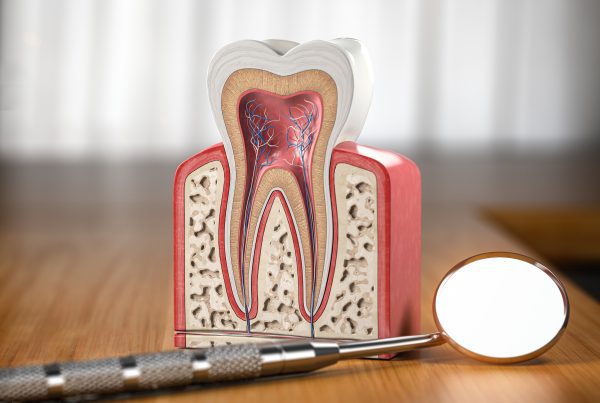


Root Canal vs Tooth Extraction: How to Decide
When a tooth is badly damaged or infected, you generally have two paths: save it with a root canal, or remove it with an extraction. This guide breaks down the difference in cost, procedure, recovery, and long-term outcome, and explains how a dentist decides which is right for your tooth. Best Dental performs both at its Richmond, TX office, serving patients across the Houston metro.
In This Guide
The two procedures side by side, the deciding factors, costs, and recovery.
The Two Options at a Glance
If a dentist has told you that a tooth is badly decayed, infected, or cracked, you are likely weighing two options: a root canal to save the tooth, or a tooth extraction to remove it. This is one of the most common decisions in dentistry, and the right answer depends entirely on the condition of the specific tooth.
The general principle most dentists follow is straightforward: save the natural tooth whenever it is reasonably possible to do so. A natural tooth, even one that has had a root canal, preserves the jawbone, maintains your natural bite, and avoids the cost and time of replacement. Extraction becomes the better path only when the tooth is too damaged to save reliably, or when the long-term outlook for saving it is poor.
That said, the decision is rarely as simple as "always save the tooth." Cost, the tooth's location, your overall oral health, and what happens after the procedure all factor in. This guide walks through both procedures in detail, puts them side by side, and explains exactly how the choice is made.
What a Root Canal Involves
A root canal is a procedure that saves a tooth whose inner pulp (the soft tissue containing nerves and blood vessels) has become infected or inflamed. This typically happens due to deep decay, a crack that reaches the pulp, or trauma to the tooth. Rather than removing the whole tooth, a root canal removes only the damaged pulp, cleans and disinfects the inside of the tooth, and seals it.
Here is what the process looks like at Best Dental. First, the area is numbed with local anesthesia, so the procedure itself is comfortable (modern root canals feel similar to getting a large filling). The dentist creates a small opening in the top of the tooth, removes the infected pulp, cleans and shapes the inner canals, and fills them with a biocompatible material. The tooth is then sealed. Because a tooth that has had a root canal becomes more brittle over time, it almost always needs a crown afterward to protect it and restore full chewing function.
The key advantage of a root canal is that you keep your natural tooth. The tooth continues to function in your bite, the root continues to stimulate and preserve the jawbone, and there is no gap to manage. A well-restored root-canal-treated tooth can last for many years, often for the rest of your life.
Root canal at a glance
- Goal: save the natural tooth by removing infected pulp
- Anesthesia: local anesthesia, comfortable during the procedure
- Follow-up: a crown is almost always needed afterward to protect the tooth
- Recovery: mild soreness for 2 to 3 days, back to normal quickly
- Outcome: natural tooth preserved, jawbone maintained, bite unchanged
- Best Dental pricing: $750 anterior, $850 premolar, $950 molar, plus $950 crown
What a Tooth Extraction Involves
A tooth extraction is the complete removal of the tooth from its socket in the jawbone. It is the right choice when a tooth is too damaged to save, when a root canal has already failed, or in certain other situations described later in this guide. Extractions range from simple (for a tooth that is fully erupted and accessible) to surgical (for a tooth that is broken at the gumline, impacted, or has complex roots).
At Best Dental, the process begins with local anesthesia to numb the area completely. For a simple extraction, the dentist loosens the tooth and removes it. For a surgical extraction, a small incision may be needed to access a tooth that has broken off or is below the gumline. After removal, the socket is cleaned, and in many cases a bone graft is placed to preserve the bone volume for a future implant. Gauze is placed to control bleeding, and you are given aftercare instructions for the healing period.
The important thing to understand about extraction is that removing the tooth is usually not the end of the process. Unless the extracted tooth is a wisdom tooth or in a position that does not require replacement, leaving the gap empty causes problems over time: neighboring teeth drift into the space, the opposing tooth over-erupts, and the jawbone in the empty socket gradually shrinks. For this reason, most extracted teeth are replaced, typically with a dental implant or a bridge.
Tooth extraction at a glance
- Goal: remove a tooth that cannot be saved or restored
- Anesthesia: local anesthesia, comfortable during the procedure
- Follow-up: most teeth need replacement (implant or bridge) to prevent shifting and bone loss
- Recovery: socket healing takes 1 to 2 weeks, full bone healing several months
- Outcome: problem tooth removed, but a gap remains to be managed
- Best Dental pricing: $250 flat-rate extraction, plus $500 bone graft if needed, plus $1,995 implant if replacing
Root Canal vs Extraction: Head to Head
Here are the two options side by side on the factors that matter most to patients.
Root Canal + Crown
- Saves your natural tooth
- Preserves the jawbone naturally
- Keeps your natural bite intact
- No gap to manage afterward
- Fast recovery, 2 to 3 days
- One tooth, no impact on neighbors
- Tooth becomes more brittle, needs a crown
- Not possible if tooth is too damaged
Extraction + Implant
- Removes the problem tooth completely
- Implant is a permanent replacement
- Good when tooth cannot be saved
- Implant does not decay
- Resolves a failed prior root canal
- Implant matches natural tooth function
- Longer total treatment and healing time
- Higher total cost when replacing the tooth
The pricing above reflects Best Dental's published rates. Root canal plus crown is the root canal fee ($750 to $950 depending on tooth type) plus a $950 crown. Extraction plus implant is the $250 extraction plus the $1,995 all-inclusive implant, with a $500 bone graft added when needed. Note that these two totals are close, which is why the decision usually comes down to whether the tooth can be saved rather than cost alone.
| Factor | Root Canal + Crown | Extraction + Implant |
|---|---|---|
| Keeps natural tooth | Yes | No, tooth is removed |
| Preserves jawbone | Yes, root stimulates bone | Implant preserves bone once placed; bone graft often needed |
| Total cost (Best Dental) | $1,700 to $1,900 | $2,245+ ($2,745 with bone graft) |
| Number of visits | Typically 2 (root canal, then crown) | Multiple over several months (extraction, healing, implant, crown) |
| Total timeline | 2 to 4 weeks | 3 to 6 months including implant healing |
| Recovery discomfort | Mild, 2 to 3 days | Moderate, 1 to 2 weeks for socket |
| Long-term durability | Many years to lifetime with a crown | Implant can last a lifetime; does not decay |
| Best when | Tooth is restorable with healthy structure | Tooth is fractured, split, or unrestorable |
Not sure which option applies to your tooth?
Only an exam with X-rays can tell you whether your tooth can be saved with a root canal or needs extraction. Best Dental performs both in-house and gives you a clear recommendation with published pricing before treatment.
Schedule an EvaluationThe Factors That Decide It
When a dentist evaluates whether to recommend a root canal or an extraction, several factors come into play. Here is how each one tends to point.
Tooth structure remaining
Favors Root CanalIf enough healthy tooth structure remains to support a crown (generally at least 50 percent), a root canal is usually preferred. If too little structure is left, extraction may be the only reliable option.
Vertical root fracture
Favors ExtractionA crack that runs lengthwise down the root cannot be sealed by a root canal. This type of fracture almost always requires extraction, since bacteria can enter through the fracture line.
Crack below the gumline
Favors ExtractionWhen damage extends below the gumline, there is not enough structure above the gum for a crown to attach to. Extraction with implant replacement is typically the path forward.
Infection severity
DependsA root canal can resolve most infections by removing the infected pulp. Very severe infections that have destroyed surrounding bone or structure may push the decision toward extraction.
Previous failed root canal
Often ExtractionIf a tooth has already had a root canal that failed, retreatment is sometimes possible, but extraction with an implant is frequently the more durable long-term choice. See the failed root canal guide for details.
Long-term cost
Favors Root CanalWhen the tooth needs replacing after extraction, saving it with a root canal plus crown usually costs less than extraction plus implant, and takes far less total time.
The bottom line on deciding
The decision almost always comes down to a single question: can the tooth be reliably saved? If yes, a root canal is generally the better choice on cost, time, and preserving your natural anatomy. If the tooth has a vertical root fracture, a crack below the gumline, too little healthy structure, or a failed prior root canal, then extraction with implant replacement is the path forward. An exam with X-rays at Best Dental answers this question definitively, and you get the recommendation in writing with published pricing before any treatment begins.
Cost Comparison at Best Dental
Best Dental publishes flat-rate pricing on both procedures so you can compare the true cost, including what happens after each procedure. Here is the full breakdown.
| Procedure | Cost | Notes |
|---|---|---|
| Root Canal (Anterior) | $750 | Front teeth. Crown typically needed after. |
| Root Canal (Premolar) | $850 | Premolars. Crown typically needed after. |
| Root Canal (Molar) | $950 | Molars. Crown typically needed after. |
| Dental Crown | $950 | Flat-rate, all materials. Completes the root canal restoration. |
| Tooth Extraction | $250 | Flat-rate, all extraction types including surgical. |
| Bone Graft (when needed) | $500 | Often placed at extraction to preserve bone for an implant. |
| Complete Dental Implant | $1,995 | All-inclusive: post, abutment, and crown. Replaces an extracted tooth. |
Putting it together: saving a molar with a root canal plus crown is about $1,900 ($950 root canal + $950 crown). Extracting that same molar and replacing it with an implant is $2,245 ($250 extraction + $1,995 implant), or $2,745 if a bone graft is needed. So for most restorable teeth, the root canal route is both less expensive and faster. Extraction only becomes the more economical choice if you leave the gap unfilled, which is generally not recommended for functional teeth because of the shifting and bone loss that follow.
Payment options at Best Dental
- PPO insurance verified in advance. Both root canals and extractions are typically covered by PPO plans as basic or major services. Best Dental is in-network for Delta Dental, Cigna, Aetna, Blue Cross Blue Shield, Guardian, MetLife, and United Healthcare. Benefits are verified before treatment with your patient balance in writing. Best Dental does not accept HMO, DMO, or DHMO plans.
- Published flat-rate pricing. Every procedure has a published fee, so you know the cost before booking.
- Best Dental Discount Plan. For uninsured patients, $199 per year per member includes 2 free comprehensive exams, 2 free regular cleanings, and member pricing on all other treatments.
- CareCredit and Cherry healthcare financing. Accepted for the patient balance, with application terms handled directly with the lender.
When Each Option Is Recommended
A root canal is usually recommended when:
The tooth has enough healthy structure remaining to support a crown. The infection or damage is confined to the pulp and has not destroyed the root or surrounding bone. The tooth is in a position important for chewing or appearance. There is no vertical root fracture or crack extending below the gumline. In these cases, saving the natural tooth is almost always the better long-term decision.
An extraction is usually recommended when:
The tooth has a vertical root fracture that cannot be sealed. A crack extends below the gumline, leaving no structure for a crown to attach to. Less than roughly half of the healthy tooth structure remains. A previous root canal has failed and retreatment is not feasible. The tooth is a wisdom tooth or is so poorly positioned that replacement is unnecessary. In these situations, removing the tooth and (in most cases) replacing it with an implant is the more reliable path.
Frequently Asked Questions
Key Takeaways
Root Canal vs Tooth Extraction: The Essentials
Related Reading
More on root canals, extractions, and tooth restoration from Best Dental.
Root Canal or Extraction? Let's Find Out.
An exam with X-rays at Best Dental gives you a clear answer on whether your tooth can be saved with a root canal or needs extraction, with published pricing and PPO insurance verified before treatment. Serving Houston, Katy, Richmond, Sugar Land, and Rosenberg from 22377 Bellaire Blvd, Suite 400, Richmond TX 77407.