
Failed Root Canal: Symptoms & Treatment
A persistent ache months after a root canal. A pimple on the gum that keeps coming back. Tenderness every time you bite down on the same tooth. These are not normal. They are signs that a root canal may have failed, and they need attention. This guide explains what's happening inside the tooth, what symptoms mean what, and the three procedures that resolve a failed root canal.
In This Guide
How to recognize a failed root canal, what causes it, and the three procedures that fix it.
What Is a Failed Root Canal?
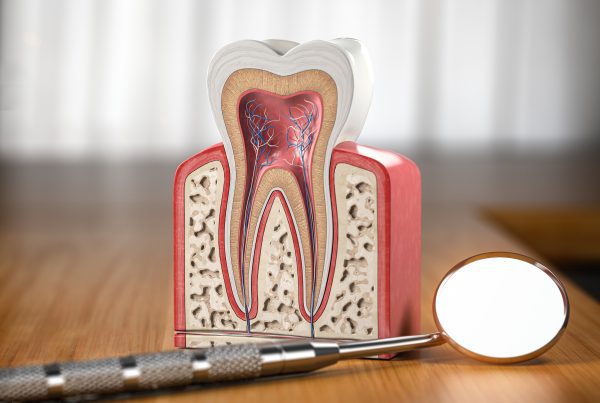
A root canal is meant to be a definitive treatment. The infected tissue inside the tooth (the pulp) gets removed, the canal system gets cleaned and shaped, and then filled with a biocompatible material called gutta-percha to seal the inside of the tooth from further bacterial entry. When the procedure is done well and the tooth is properly restored with a crown afterward, success rates run between 85 and 97 percent based on published endodontic literature. The majority of root canals last a lifetime.
A failed root canal is one that did not achieve, or did not maintain, that definitive seal. Either the original infection was not fully eliminated, or new bacteria found their way back into the canal system after treatment. The hallmark of failure is the return of symptoms that the original root canal was supposed to fix: pain, tenderness, swelling, or signs of infection at the root tip. These symptoms can appear within weeks of the procedure or many years later, and they tend to be intermittent at first before becoming more persistent.
The technical name for what's happening inside a failed root canal is persistent or recurrent apical periodontitis. Bacteria are either still present in the canal system after the original treatment (persistent) or have re-entered through a microscopic breach in the seal (recurrent). In both cases, the bacterial colony at the root tip continues to provoke an immune response in the surrounding bone, which is what produces most of the symptoms. The good news is that a failed root canal is almost always treatable. Three procedures can resolve it, and we'll cover each in detail below.
7 Symptoms of a Failed Root Canal
The symptoms of a failed root canal fall into three groups: pain-based symptoms, infection-based symptoms, and visible structural signs. Most patients experience a combination across these categories. The severity and progression matter for triage: persistent mild symptoms warrant a regular appointment, while symptoms with swelling or fever require same-day evaluation.
1. Persistent or Recurring Pain
See dentist soonOngoing dull ache or sharp pain in the previously treated tooth that does not resolve over weeks or months. Pain may come and go but keeps returning to the same tooth. This is the single most common symptom of root canal failure.
2. Tenderness to Bite Pressure
See dentist soonThe treated tooth hurts specifically when you bite down on it or when food touches it during chewing. The tooth feels different than its neighbors when you tap on it. This points to inflammation at the root tip.
3. Gum Swelling Near the Tooth
Same-day evaluationLocalized swelling of the gum tissue immediately adjacent to the treated tooth. The area may feel warm, look red, and be tender to touch. Swelling indicates active infection in the surrounding tissue.
4. Sinus Tract or "Pimple" on Gum
Same-day evaluationA small bump that looks like a pimple appears on the gum near the tooth root. This is a sinus tract (fistula) where infection is draining out of the bone. The pimple may temporarily disappear and reappear. It is a clear sign of established infection.
5. Bad Taste in the Mouth
See dentist soonA persistent salty, sour, or foul taste coming from the area of the treated tooth. This often indicates pus drainage from a fistula, even if the fistula itself isn't visible or symptomatic at the moment.
6. Tooth Discoloration
Schedule evaluationThe previously treated tooth darkens over time, turning gray, yellow, or brown. This can indicate breakdown of pulp remnants or hemorrhagic byproducts. While discoloration alone is not always a sign of failure, it warrants evaluation.
7. Facial Swelling or Fever
EmergencyVisible facial swelling on the side of the treated tooth, fever over 101F, difficulty swallowing, or difficulty breathing. This indicates a spreading infection that requires immediate emergency care. Go to a hospital emergency room if breathing is affected.
Bonus: Sensitivity to Hot or Cold
Note & monitorA properly treated tooth should not feel hot or cold sensations because the pulp (which contains the temperature-sensing nerves) has been removed. New temperature sensitivity in a treated tooth can suggest a missed canal with residual vital tissue, or a crack allowing stimuli to reach adjacent structures.
How to use this symptom guide
Any one of these symptoms is worth an evaluation. The combination of two or more, particularly when one is in the "same-day evaluation" or "emergency" category, raises the urgency. If you've had a root canal in the past and are experiencing any of these symptoms in the same tooth, the most useful next step is a clinical exam with periapical X-rays of that specific tooth. Most failed root canals are easily diagnosed once a current X-ray is compared against the immediate post-treatment X-ray from the original procedure.
Why Root Canals Fail
Root canal failure is rarely random. There's almost always an identifiable cause, and understanding the cause helps determine the appropriate treatment. The six categories below account for the vast majority of failed root canals seen in clinical practice.
Missed canals
Teeth are not uniform. Many molars have three roots but four canals. Mandibular incisors sometimes have two canals where most have one. Maxillary first molars frequently have an extra canal in the mesiobuccal root (MB2) that runs alongside the main canal and is easily missed. When a canal is missed during the original treatment, the bacteria inside it continue to multiply unchecked, eventually producing symptoms. Missed canals are one of the leading causes of root canal failure, and modern endodontic technique includes specific protocols and CBCT imaging to identify these accessory canals during initial treatment.
Coronal leakage
The seal inside the root canal is only part of the equation. Once the root canal is sealed at the bottom with gutta-percha, the tooth still needs a strong restoration on top (typically a crown) to prevent bacteria from re-entering through the chewing surface. When the temporary filling is left in place too long, when the permanent crown is delayed, or when the crown or filling later breaks down or develops a small gap, bacteria from saliva can travel down the canal and re-infect the apex. This is called coronal leakage and it's one of the most common causes of late-stage root canal failure (months to years after treatment).
Cracked tooth
A vertical root fracture or crown crack creates a pathway from the oral environment directly into the root canal system. Even microscopic cracks invisible to the naked eye can allow bacterial infiltration. Cracked or broken teeth often present with confusing symptoms (pain that comes and goes, sensitivity to specific bite angles) and they can be difficult to diagnose. Once a root fracture is identified, the tooth typically cannot be saved and extraction is required. A crown crack above the gumline may sometimes be repaired, depending on the depth.
Persistent infection in dentinal tubules and apical biofilms
The mechanical cleaning of a root canal removes the bulk of the bacteria, but tooth structure has millions of microscopic tubules running through the dentin, and bacteria can survive in these tubules out of reach of the cleaning instruments and irrigation. Additionally, bacteria at the very tip of the root (apex) sometimes form biofilms that are highly resistant to disinfection. When a significant population of these persistent bacteria remains, they can re-colonize the canal system after the seal is placed.
Procedural issues from the original treatment
Less commonly, root canal failure traces back to procedural issues during the original procedure: a ledge created in the canal that prevented full cleaning to the apex, a perforation through the root wall, under-filling that left bacteria-friendly empty space at the apex, or over-filling that pushed material beyond the apex into surrounding tissues. These issues are usually visible on the original post-treatment X-ray, and they often produce symptoms within the first few months.
New decay reaching the canal
Decay (a cavity) developing in the treated tooth or in the adjacent margin between tooth and crown can eventually reach the canal system. New decay introduces a fresh bacterial population that the original treatment never addressed. This is especially common in patients with high cavity risk and in teeth with large pre-existing restorations. Maintaining good oral hygiene and regular dental checkups dramatically reduces this risk.
Timeline of Root Canal Failure
The time between the original root canal and the onset of failure symptoms gives important diagnostic clues about the underlying cause. The pattern of symptoms within that timeline matters too.
First 2 weeks: Normal post-treatment discomfort
Mild tenderness to bite pressure for 3 to 7 days after a root canal is normal. The surrounding tissues need to settle. Over-the-counter ibuprofen or acetaminophen usually controls this. Pain that progressively worsens after day 3, severe pain that doesn't respond to medication, or new swelling are not normal and should prompt a call to the treating dentist.
Weeks 2-6: Early failure window
Symptoms appearing in this window most often indicate a missed canal, an inadequate cleaning of the original infection, or a procedural issue from the original treatment. The original infection was likely not fully resolved. The treating dentist should be the first call, with a follow-up X-ray to compare against the immediate post-treatment image.
Months 2-12: Sub-acute failure
Symptoms in this window often indicate persistent infection from bacteria that survived in dentinal tubules or apical biofilms, or coronal leakage if the permanent crown was delayed. Many patients experience intermittent symptoms during this period (a few days of tenderness, then weeks of nothing, then the cycle repeats). A definitive evaluation with periapical X-rays is the right next step.
Year 1+: Late failure
Late failure most commonly traces to coronal leakage through a compromised crown or filling, new decay reaching the canal, or a cracked tooth that developed after treatment. Patients often forget that their pain is in the same tooth that was treated years ago. A current periapical X-ray of the treated tooth, compared against the original post-treatment image, reveals the change. Late failure is common and very treatable.
Year 5+: Long-term breakdown
Symptoms appearing 5 years or more after treatment most commonly indicate marginal breakdown of the crown allowing bacterial reentry, new decay, or accumulated stress fractures in the tooth structure. CBCT imaging is often useful at this stage to assess the full anatomy and rule out a root fracture before retreatment is attempted.
When a Failed Root Canal Is an Emergency
Most failed root canals are not emergencies. The infection is contained, the symptoms are tolerable, and treatment can be scheduled over the coming days or weeks. However, certain symptoms indicate a spreading infection that requires same-day evaluation, and a smaller subset of symptoms point to a life-threatening infection that requires emergency room care rather than a dental office.
Significant facial swelling that extends to the eye area or below the jawline. Difficulty swallowing your own saliva. Difficulty breathing or any sensation of throat tightness. Fever over 102F with chills. These symptoms can indicate a spreading infection (cellulitis, Ludwig's angina) that requires IV antibiotics and hospital monitoring. Go to the nearest emergency room, not a dental office. The hospital will stabilize the infection, then refer you back to a dentist for definitive treatment.
Localized gum swelling around the treated tooth without facial involvement. A visible pimple or sinus tract on the gum. Throbbing pain that does not respond to over-the-counter pain medication. Pain severe enough to disrupt sleep. New tooth mobility (the tooth feels loose). Fever between 100F and 101F. These signs indicate active infection but not yet a systemic spread. A dental office can typically see same-day patients for these symptoms. Call (281) 215-3065 first thing in the morning to confirm availability.
Standard scheduling is appropriate for:
Mild persistent pain that responds to over-the-counter medication. Intermittent tenderness to bite pressure. Mild tooth discoloration. A dull ache without swelling. These symptoms warrant evaluation within a few days to a week, but they do not require same-day care. Scheduling a regular consultation appointment is the appropriate response.
Three Treatment Options for a Failed Root Canal
When a root canal has failed, three procedures can resolve it. The right choice depends on the cause of failure, the tooth's structural integrity, and the patient's preferences. A dentist should explain the trade-offs of each before treatment.
Root Canal Retreatment
The most common treatment for a failed root canal. The dentist removes the existing crown (or accesses through it), removes the old gutta-percha filling material, recleans and reshapes the canals (often locating missed canals in the process), then refills and reseals the canal system. A new crown is typically required afterward. Retreatment is the right choice when access to the canals is unobstructed, no post is cemented, and no root fracture is present. Success rates of properly performed retreatment are 75 to 85 percent in published endodontic literature.
Apicoectomy (Surgical Endodontics)
A surgical procedure performed when conventional retreatment is not feasible. The dentist makes a small incision in the gum, accesses the root tip through the bone, removes the infected tissue and approximately 3 mm of the root tip, then places a biocompatible filling material to seal the root from below. Apicoectomy is indicated when a post is cemented in place blocking conventional retreatment access, when canal anatomy is too complex for non-surgical retreatment, or when previous retreatment has failed. Success rates of apicoectomy are 75 to 90 percent in published literature, with modern microsurgical techniques performing at the higher end of that range.
Extraction + Implant
When neither retreatment nor apicoectomy is feasible, or when the tooth is structurally compromised beyond saving, extraction followed by implant replacement is the alternative. At Best Dental, this is $250 for the extraction plus $1,995 all-inclusive for the complete dental implant (post, abutment, and crown), for a base total of $2,245. A bone graft ($500) is often added at the time of extraction or implant placement when there is bone loss from chronic infection at the root tip, which is common in failed root canal cases, bringing the total to approximately $2,745. Extraction with implant is also a reasonable first choice when a tooth has had multiple failed treatments, when there is a vertical root fracture, or when the remaining tooth structure cannot support a new crown. The implant restoration is permanent and does not develop the same failure modes as a root canal.
How a dentist chooses between the three options
The decision tree typically goes: 1) Is the tooth structurally sound enough to keep? If yes, proceed. If no, go to extraction. 2) Is conventional retreatment access available? If yes, retreatment is usually first choice. If no (post in place, complex anatomy), consider apicoectomy. 3) Has retreatment already been attempted? If yes and it failed, apicoectomy or extraction is next. 4) Is there a vertical root fracture? If yes, extraction is the only option. The dentist uses periapical X-rays and, in complex cases, CBCT imaging to make these determinations.
What Failed Root Canal Treatment Costs
Treatment costs depend on the procedure required, the tooth location, and whether a new crown is needed. The Best Dental published pricing for failed root canal treatment is below.
| Procedure | Cost at Best Dental | What's Included |
|---|---|---|
| Root Canal Retreatment (Anterior) | $750 | Removal of old filling material, recleaning and reshaping of canals, new gutta-percha seal. Front teeth. |
| Root Canal Retreatment (Premolar) | $850 | Same procedure for premolar teeth. Premolars typically have one or two canals. |
| Root Canal Retreatment (Molar) | $950 | Same procedure for molars. Molars typically have three to four canals, including the MB2 if present. |
| New Crown (After Retreatment) | $950 | Required in most retreatment cases. Flat-rate covers all crown materials (zirconia, porcelain, IPS e.max). |
| Apicoectomy | Varies by case | Surgical endodontic procedure pricing depends on tooth location, root anatomy, and case complexity. Quoted during the consultation. |
| Tooth Extraction | $250 | Flat-rate covering all extraction types including surgical extraction of a previously root-canaled tooth. |
| Complete Dental Implant | $1,995 | All-inclusive: implant post, abutment, and crown. Single fee for the complete restoration. |
| Bone Graft (when needed) | $500 | Added at extraction or implant placement when bone loss from chronic infection requires augmentation to support the implant. Common in failed root canal cases. |
| CBCT Imaging (when needed) | Varies | 3D imaging used for complex case planning. Not always required but useful for ruling out root fractures or mapping accessory canals. |
PPO insurance benefits typically apply to retreatment and crown procedures as restorative care. Best Dental verifies your insurance benefits before treatment with the patient balance confirmed in writing in advance.
Persistent symptoms after a root canal?
Schedule an evaluation with Best Dental in Richmond, TX. Periapical X-rays plus clinical exam to determine the cause and the appropriate treatment path. Most cases are resolvable with retreatment or apicoectomy. Extraction with implant is the alternative when retreatment is not feasible.
Schedule a ConsultationPreventing Future Failure
After successful treatment of a failed root canal, the goal is to prevent it from happening again. The factors that drove the original failure are the ones to address.
Get the permanent crown placed promptly
Coronal leakage through a temporary filling is one of the leading causes of root canal failure. Once a root canal (or retreatment) is completed, the permanent crown should be placed within 4 to 6 weeks. Delays beyond this window dramatically increase the risk of bacterial reentry through the temporary filling. If finances are an obstacle to crown placement, talk to the dentist about timing rather than skipping the crown entirely.
Maintain meticulous oral hygiene around the treated tooth
The margin between the crown and the natural tooth structure is the most vulnerable spot. Daily brushing and flossing around this margin removes the bacterial film that would otherwise cause marginal decay. Patients with previously failed root canals are at higher risk for recurrence, so this becomes especially important.
Address bite forces and grinding
Excessive bite forces (from clenching or grinding, especially at night) accelerate breakdown of the crown margin and increase the risk of tooth fracture below the crown. If you grind or clench at night, a custom nightguard is a worthwhile investment to protect both the treated tooth and your other teeth from accumulated stress damage.
Keep up with regular checkups
A previously root-canaled tooth should be checked at every dental visit. Periapical X-rays should be taken periodically (typically every 1 to 2 years) to monitor for any periapical changes. Early detection of subtle changes allows for intervention before symptoms develop, often through simpler treatment than would otherwise be required.
Frequently Asked Questions
Key Takeaways
Failed Root Canal: The Essentials
Related Reading
More on root canal treatment from the Best Dental blog and Richmond core pages.
Evaluate Your Failed Root Canal Today.
Best Dental in Richmond, TX provides root canal retreatment, apicoectomy coordination, and extraction with implant restoration. Periapical X-rays plus clinical exam to determine the cause and the right treatment path. Serving Richmond, Houston, Sugar Land, Katy, and Rosenberg.