Switching Dentists Near Me: A Practical Guide for Houston, TX Patients
Looking for "switching dentists near me" usually means you're already unhappy with your current practice. This guide covers the practical mechanics of switching for Houston patients: the signs it's time, what to look for in a new dentist nearby, how to transfer records, how PPO insurance handles a mid-year switch, and what to expect at your first visit. The advice applies whether you live in West Houston, the Energy Corridor, the Galleria area, Westchase, the Inner Loop, or anywhere in the Houston metro.
What's in This Guide
From recognizing the signs to your first visit at a new practice.
- Why People Switch Dentists
- Signs It's Time to Switch
- What to Look For in a New Dentist
- The 5-Step Switching Process
- Transferring Records & X-Rays
- Insurance & Coverage Mid-Year
- What to Expect at Your First Visit
- Handling Dental Anxiety When Switching
- Why Patients Switch to Best Dental
- Best Dental's Published Pricing
- Frequently Asked Questions
- Schedule Your First Visit
Why People Switch Dentists
Most people don't switch dentists casually. There's usually a specific trigger or accumulated frustration that finally tips the balance.
Surveys of patients who searched "switching dentists near me" and recently switched practices consistently turn up the same handful of reasons. Surprise bills top the list. A patient goes in for a cleaning, leaves with a $1,800 treatment recommendation that wasn't explained upfront, then gets billed for procedures they thought their insurance would cover. The pattern repeats and at some point the patient stops scheduling appointments altogether.
The second most common reason is feeling pressured into treatment plans the patient isn't convinced they need. A six-month checkup turns into a recommendation for four crowns, two implants, and a deep cleaning, with the front desk pushing same-day scheduling before the patient has time to consider it. Some treatment plans are absolutely necessary. Others reflect a practice's commercial pressure to keep chairs full.
Other common triggers: a relocation across Houston (someone who used to live in the Inner Loop moves out to West Houston, the Energy Corridor, or the Galleria area and the commute to the old dentist no longer makes sense); a major insurance change at work that takes the previous practice out-of-network; a dental emergency the previous office couldn't accommodate same-day; outdated technology (no digital X-rays, no intraoral cameras, paper charts); or simply feeling rushed through visits without time to ask questions.
Whatever the trigger, the decision to switch dentists is almost always rational. The patient has weighed the inconvenience of starting over (new paperwork, new staff, new chair) against the cost of staying with a practice that no longer fits. If you're reading this, you've probably already made the decision. The rest of this guide is about doing it efficiently.
Signs It's Time to Switch
Eight warning signs in your current practice, and eight positive signs to look for in a new one.
Warning Signs in Your Current Dentist
- Surprise bills. The amount you owe at checkout is regularly higher than what was discussed before treatment.
- Vague treatment plans. "You need a few things done" without a specific written estimate showing procedure codes, fees, insurance coverage, and your balance.
- Pressure to schedule same-day. "We have an opening this afternoon for the four crowns we just discussed."
- Emergency unavailability. A dental emergency means waiting 4-7 days for an appointment.
- Outdated tech. Film X-rays, no intraoral camera, paper charts, no digital intake.
- Long wait times. Routine appointments running 20-40 minutes behind schedule consistently.
- Treatment recommendations that change. One visit you needed two fillings, the next visit suddenly it's four crowns.
- Pricing opacity. Asking what a crown costs results in "it depends on insurance" with no actual number.
Positive Signs in a New Dentist
- Published pricing. The cost of every major procedure is on the website before you call.
- Written estimates before treatment. You get a written breakdown of fees, insurance coverage, and your balance before any work begins.
- Insurance verified in advance. The practice calls your carrier before your visit to confirm benefits, not after.
- Same-day emergency capacity. A toothache today means an appointment today.
- Modern equipment. Digital X-rays (90% less radiation than film), intraoral cameras, digital charts, online intake.
- Clear sedation options. Nitrous oxide, oral conscious sedation, and IV sedation all available for anxious patients or complex procedures.
- Honest treatment scope. "You have one cavity, here's the cost" rather than upselling unrelated cosmetic work at every visit.
- Recent reviews are consistent. Reviews from the last 6-12 months reflect the same experience, not just legacy 5-star reviews from 5 years ago.
What to Look For When Switching Dentists Near You
A practical checklist for evaluating a new practice nearby before you commit. Five minutes of vetting saves months of regret.
The Switching Dentists Vetting Checklist
- In-network with your PPO insurance.Confirmed through your carrier's "find a dentist" tool or by calling the new practice with your insurance information.
- Pricing on every major procedure published on the website.Crown, root canal, implant, extraction, cleaning, exam, Invisalign, braces. If pricing is hidden, ask why.
- Written cost estimate before treatment.Procedure code, fee, insurance estimated coverage, your expected balance. All in writing, before any work begins.
- Digital X-rays with significantly less radiation than film.Standard at any practice that has modernized in the last 15 years. If they still use film, the practice may be due for other technology updates too.
- Same-day emergency capacity."Yes, we can see you today" for a toothache or broken tooth, not "the soonest opening is Friday."
- Sedation options available.Nitrous oxide, oral conscious sedation, or IV sedation for anxious patients. Even if you don't need it, knowing it's there matters.
- Clear new-patient process.What the first visit includes, how long it takes, what it costs, what insurance covers. All explained before you book.
- Recent reviews (last 6-12 months) reflect consistent experience.Look for specific mentions of pricing transparency, communication, and follow-through. Generic 5-star reviews mean less.
- Modern facility with intraoral cameras and digital impressions where applicable.Lets you see exactly what the dentist is seeing during your exam. No "trust me, there's a problem" without visual evidence.
- Discount Plan or alternative for uninsured patients.If you're between jobs or don't have dental insurance, the practice should offer an in-house membership at a reasonable annual fee with member pricing on treatments.
How to vet a practice in 10 minutes
- Open the practice's website. Search for "pricing" or "fees." If you have to call to ask what things cost, that itself is information.
- Read 5 recent reviews on Google. Pay attention to the last 6-12 months. What patterns do you notice in what patients praise or criticize?
- Call the front desk. Ask: "Are you in-network with [your carrier]? What's the cost of a new patient exam? When's the next available appointment?" The clarity of the answers tells you a lot.
- Check insurance carrier's directory. Log into your PPO portal and confirm the practice is listed as in-network for your specific plan.
The 5-Step Switching Process
Most patients can complete the switch in under a week.
Pick the New Practice
Use the vetting checklist above. Confirm in-network status with your PPO. Read recent reviews. Look at the practice's published pricing. If you have specific concerns (anxiety, kids, a major procedure planned), call the front desk and ask about it directly before booking. The 10-minute phone call is the strongest signal you'll get about how a practice operates.
Schedule the First Visit
Most new-patient appointments are a comprehensive exam + digital X-rays + treatment plan discussion. At Best Dental this is $99, applied as a credit toward any treatment you schedule. Provide your insurance information when booking so the front desk can verify benefits before your appointment. The verification confirms your annual maximum, deductible, coverage percentages, and any waiting periods specific to your plan.
Sign a Records Release
You can do this at the new practice (which then contacts your old dentist) or directly with your old dentist. HIPAA requires dental practices to release your records to you or to a dentist you authorize, typically within 15 business days for Texas patients (most practices process this within 1-3 business days). The release covers your X-rays, charting, treatment history, and notes. There's typically no charge for the transfer.
Complete New Patient Intake
Most practices send digital intake forms by email or text before your first visit. The forms cover medical history, current medications, allergies, dental history, and any specific concerns. Filling these out in advance saves 15-20 minutes at the office and lets the dentist review your history before walking into the exam room. Bring your insurance card and photo ID to the first visit.
Attend the First Visit & Plan Forward
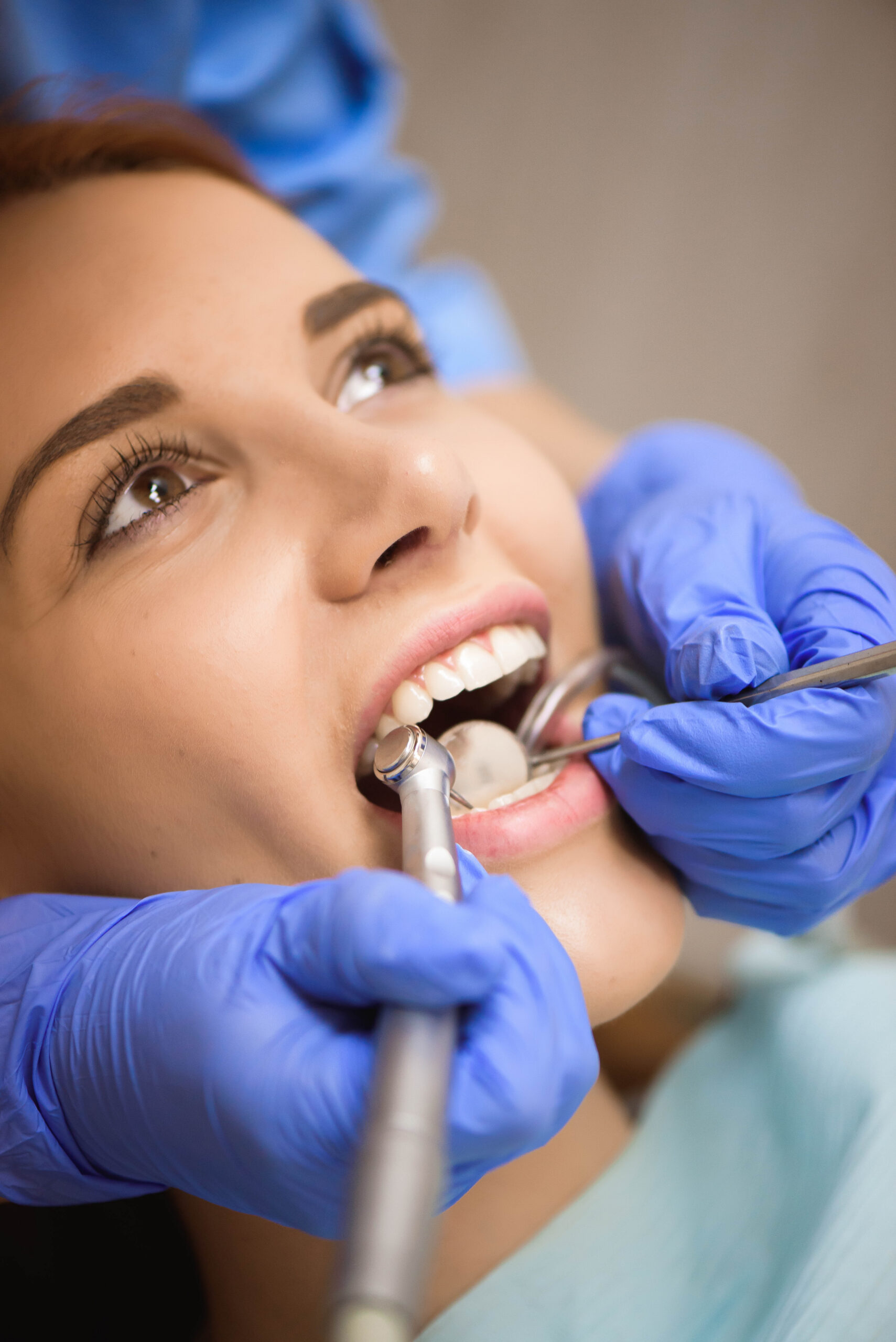
The first visit typically runs 60-90 minutes. The dentist reviews your medical and dental history, performs a comprehensive exam (including oral cancer screening, periodontal evaluation, and bite check), takes digital X-rays, and discusses any findings. If treatment is needed, you receive a written treatment plan with procedure codes, fees, insurance coverage estimates, and your patient balance. You decide what to schedule and when. No pressure for same-day commitments.
Transferring Records & Dental X-Rays
The mechanics of moving your dental history from one practice to another. Easier than most people expect.
Under HIPAA and Texas law, your dental records belong to you. Practices are required to release them on request to you personally or to a dentist you authorize. The transfer is usually electronic (encrypted email, secure portal, or fax for older practices) and typically happens within 1 to 3 business days, though Texas law gives practices up to 15 business days to comply.
What gets transferred: your full chart including diagnostic notes, treatment history, X-ray images, periodontal charting, and any specialist referrals. Some practices also share intraoral photos and digital impressions if available. The new dentist uses these records to build context for your care without you having to repeat your full dental history from scratch.
How recent X-rays affect the transfer: if your most recent X-rays are within 12 months, the new dentist can typically use them and avoid taking new ones (less radiation exposure and lower cost). If they're older than 12 months, the new dentist may want fresh X-rays anyway because conditions in your mouth may have changed. The American Dental Association generally recommends bitewing X-rays every 6 to 18 months depending on caries risk, and panoramic or full-mouth series every 3 to 5 years for adults.
How to request your records transfer in 3 steps
- Sign a release form. Either at the new dentist's office (and they request the records on your behalf) or directly with your old dentist (asking them to send records to the new practice). The release authorizes the transfer.
- Provide both addresses. Your old practice needs the new practice's name, address, and fax or secure email. Most practices have this transfer process standardized.
- Follow up after 5 business days. If the new practice hasn't received your records, call your old practice and ask for status. The release should be sufficient, but a phone follow-up usually clears any administrative delay.
Insurance & Coverage When Switching Mid-Year
Your annual maximum, deductible, and waiting periods all transfer with your insurance, not with your dentist.
One of the most common worries about switching dentists is that you'll somehow "lose" your insurance benefits or have to start over. You won't. PPO dental insurance benefits are tied to your plan and policy year, not to a specific dentist. Switching practices doesn't affect your annual maximum, deductible status, waiting periods, or accumulated benefits in any way.
Annual maximum carries forward. If your plan has a $1,500 annual maximum and you've used $400 of it at your old dentist this year, you have $1,100 remaining when you switch. The new dentist's office verifies remaining benefits during your first visit. The maximum resets on your plan's benefit year date (typically January 1, though some plans use a different anniversary).
Deductible status carries forward. If your plan has a $50 deductible and you already paid it through a filling at your old dentist this year, you won't have to pay it again at the new dentist. The deductible is satisfied for the benefit year regardless of which in-network dentist treats you.
Waiting periods don't reset. If your plan had a 6-month waiting period for major services and you've completed 4 months of it, you have 2 months remaining. Switching dentists doesn't restart the clock. Waiting periods are tied to your effective date of coverage, not to a specific dentist relationship.
Frequency limitations carry forward too. If your plan covers 2 cleanings per benefit year and you had one in March at your old dentist, you can have your second covered cleaning at the new dentist in September (or whenever your plan's 6-month frequency rule allows). The new practice verifies frequency limitations during benefit verification before scheduling.
What to tell the new dentist about your insurance
- Carrier and member ID. Provide your insurance card or member ID during scheduling so the front desk can verify benefits.
- Recent treatment. Mention any major treatment in the current benefit year (crowns, root canals, etc.) so the front desk can confirm how much of your annual maximum you've used.
- Family member coverage. If your family members are on the same plan, mention them too. Many plans have family aggregate maximums or separate per-person maximums.
- Recent changes. If you changed jobs or had a benefits enrollment recently, the new dentist should know so they can verify against the current plan, not last year's.
What to Expect at Your First Visit
A typical new-patient visit runs 60 to 90 minutes and covers more than just the exam.
Arrival and intake (15 minutes). Plan to arrive 15 minutes early for paperwork, or complete digital intake forms in advance if the practice offers them. You'll bring your insurance card, photo ID, list of current medications, and any known allergies. The front desk verifies your insurance information and confirms benefits if they weren't already verified during scheduling.
Medical and dental history review (10 minutes). A clinical team member reviews your medical history, current medications, dental history, and any specific concerns you have. This is the moment to mention anxiety, sensitivity, grinding, sleep issues, or anything else that affects your dental care. The history review is more thorough than at a typical established-patient visit because everything is new context for the dentist.
Comprehensive exam and X-rays (30-45 minutes). The dentist performs a full comprehensive exam including soft tissue check, oral cancer screening, periodontal evaluation (probing depths around each tooth), occlusion check (how your teeth come together), and visual inspection of each tooth. Digital X-rays are typically taken (a full-mouth series or panoramic X-ray plus bitewings). At practices with intraoral cameras, the dentist may show you images of specific teeth on a screen so you can see what they're seeing.
Treatment planning discussion (15-20 minutes). If everything looks healthy, the visit wraps up with a recommended cleaning schedule and any preventive guidance. If there are findings (cavities, periodontal disease, broken fillings, etc.), the dentist explains them and discusses treatment options. You receive a written treatment plan with specific procedures, fees, insurance coverage estimates, and your patient balance for each option.
What shouldn't happen at the first visit: high-pressure sales tactics ("We need to schedule all this today"), vague treatment recommendations ("You need a bunch of work done"), refusal to provide written estimates, or surprise costs at checkout that weren't discussed. If any of these happen, it's information about the practice and worth weighing before scheduling additional treatment.
What a first visit at Best Dental looks like
$99 new patient consultation: comprehensive exam with digital X-rays. Applied as a credit toward any treatment you choose to schedule. Often 100% covered by PPO preventive benefits. No pressure for same-day treatment commitments.
Call (281) 215-3065Handling Dental Anxiety When Switching Practices
Switching dentists is harder when you have anxiety because you've lost the predictability of your existing practice.
Dental anxiety is one of the most under-acknowledged reasons people stay with a dentist they're unhappy with. The known discomfort is preferable to the unknown of a new place. If this is you, two specific things help significantly when switching.
Ask for a tour before booking. Most modern practices accommodate a 10-15 minute walk-through where you meet the front desk, see the operatories, and talk to the dentist briefly without anything clinical happening. This dramatically reduces the cognitive load of the first actual visit because the environment is no longer new. Practices that refuse tours are signaling something about how patient-centered their operation is.
Confirm sedation options before the first visit. Three sedation levels are commonly available: nitrous oxide (laughing gas, mild relaxation, wears off quickly, you drive yourself home), oral conscious sedation (a pill taken before your appointment, moderate sedation, you don't drive), and IV sedation (deepest sedation, used for complex procedures or severe anxiety, you don't drive). Knowing these are available, even if you don't end up using them, often reduces anxiety enough to make routine visits comfortable.
Sedation at Best Dental (locked pricing)
- Nitrous oxide: available as needed. Mild relaxation that wears off within minutes of stopping the gas. You drive yourself home.
- Oral conscious sedation: available for moderately anxious patients. Pill taken before your appointment. You need a ride home.
- IV sedation: $500 flat-rate per session. Deeper sedation administered by an experienced provider. Used for complex procedures (multiple extractions, implant placement, longer cosmetic cases) or for severe dental anxiety. You need a ride home.
If you're switching dentists specifically because anxiety made your previous visits unmanageable, mention this when you schedule. Practices that handle dental anxiety well will adjust the first visit pacing, walk you through what's going to happen before each step, and offer sedation options before you ask.
Why Patients Switch to Best Dental
If you've read this far, you have a clear picture of what to look for. Here's how Best Dental near Richmond, TX maps to that checklist.
Best Dental is located at 22377 Bellaire Blvd, Suite 400, Richmond, TX 77407, just southwest of Houston off US-59 (I-69). The Richmond office is approximately 20 to 30 minutes from most West Houston neighborhoods (Memorial, Energy Corridor) via the Westpark Tollway or Beltway 8, 25 to 35 minutes from the Galleria area, 25 to 40 minutes from Westchase and Sharpstown, and 35 to 50 minutes from Inner Loop neighborhoods (Heights, Montrose, Midtown, River Oaks) depending on traffic. Houston patients have been switching to Best Dental for the reasons that mirror the vetting checklist above.
Published pricing on every major procedure. Cleaning $99, exam $99, composite filling $125-$175, crown $950 flat, root canal $750 anterior / $850 premolar / $950 molar, extraction $250 flat (all extraction types including surgical), complete dental implant $1,995 all-inclusive (post + abutment + crown as a single fee), Invisalign special $3,999, traditional metal braces from $2,999, in-office whitening $450, dentures $1,250, IV sedation $500. The full pricing table is later in this article and on every relevant page of the website. No surprise costs because no costs are hidden.
Written cost estimate before treatment. When treatment is recommended, you receive a written estimate showing the published procedure fee, the portion your PPO will cover, and your patient balance. You see your exact out-of-pocket cost before any work begins. The estimate goes in your patient file so there's no dispute later about what was discussed.
PPO insurance verified in advance. Best Dental is in-network for seven major PPO carriers: Delta Dental, Aetna, Cigna, Blue Cross Blue Shield Texas (BCBSTX), Guardian, MetLife, and United Healthcare. Before your scheduled visit, the front desk contacts your carrier to confirm your annual maximum, deductible status, coverage percentages, and any waiting periods specific to your plan. Verification happens before your appointment, not after.
Same-day emergencies. Dental emergencies like broken teeth, severe toothaches, knocked-out teeth, or lost crowns are accommodated same-day whenever possible during business hours (Monday through Friday, 9:00 AM to 6:00 PM). Houston patients who couldn't get same-day appointments at their previous practice frequently cite emergency availability as the main reason for switching.
Modern equipment. Digital X-rays (significantly less radiation than film), intraoral cameras (so you can see what the dentist is seeing on a screen during your exam), digital impressions for crowns and Invisalign, and CBCT scanning for implant planning where needed. Patients used to outdated technology at their previous practice often notice the difference immediately.
Sedation options. Nitrous oxide, oral conscious sedation, and IV sedation ($500 flat per session) are all available. Patients switching specifically because dental anxiety made their previous experience unmanageable usually mention this when scheduling. The first visit is adjusted to make sure you're comfortable.
An alternative for uninsured patients. The Best Dental Discount Plan is $199 per year per member and includes 2 free comprehensive exams, 2 free regular cleanings, and member pricing on all other treatments. No waiting periods. No annual maximums. Cash patients only (cannot be combined with insurance on the same procedure). Each family member enrolls separately. CareCredit and Cherry healthcare financing are also accepted for patient balances on larger treatment plans. See Houston payment plan options for details.
Both Drs. Naderi. Dr. Sonny Naderi leads implant, family, and surgical dentistry. Dr. Jasmine Naderi leads cosmetic, restorative, and orthodontic care. The two doctors collaborate on complex cases (a patient needing both implant work and cosmetic finishing, for example), which means you can have most of your treatment under one roof rather than being referred out to multiple specialists.
How Best Dental maps to the vetting checklist
- In-network with 7 major PPO carriers. Delta, Aetna, Cigna, BCBSTX, Guardian, MetLife, UHC.
- Pricing published on the website. Every major procedure has a flat-rate fee. No hidden costs.
- Written cost estimate before treatment. Procedure code, fee, insurance coverage, your balance. All in writing, in advance.
- Digital X-rays. Standard at every appointment. No film.
- Same-day emergency capacity. Dental emergencies accommodated same-day during business hours.
- Sedation options. Nitrous, oral conscious sedation, and IV sedation ($500 flat).
- Clear new-patient process. $99 new patient consultation (comprehensive exam + digital X-rays), applied as credit toward treatment.
- 4.9 stars from over 1,600 reviews on Google. Reviews from the last 6-12 months consistently mention pricing transparency and communication.
- Modern facility. Intraoral cameras, digital impressions, CBCT scanning where needed.
- Discount Plan for uninsured patients. $199 per year per member. 2 free exams + 2 free cleanings + member pricing on all other treatments.
Best Dental's Published Pricing
Every procedure has a published flat-rate fee. PPO insurance covers a percentage; the patient balance is the remainder. The full pricing is also on each procedure's individual page.
| Procedure | Fee | Notes |
|---|---|---|
| New Patient Consultation | $99 | Comprehensive exam with digital X-rays. Applied as credit toward treatment. Often 100% covered by PPO preventive benefits. |
| Routine Cleaning | $99 | Prophylaxis. Typically 100% covered by PPO preventive benefits. |
| Composite Filling | $125-$175 | Tiered by surfaces. Tooth-colored composite resin. PPO basic services typically 70-80% covered. |
| Dental Crown | $950 | Flat-rate, all materials. PPO major services typically 50% covered. |
| Root Canal (Anterior/Premolar/Molar) | $750/$850/$950 | Tiered by tooth type. Crown typically needed after. |
| Tooth Extraction | $250 | Flat-rate, all extraction types including surgical. |
| Complete Dental Implant | $1,995 | All-inclusive: post, abutment, and crown as a single fee. |
| Bone Graft (when needed) | $500 | Often placed at extraction or implant site. |
| Invisalign Clear Aligners | $3,999 | Special pricing. Full aligner series and final retainer included. |
| Traditional Metal Braces | From $2,999 | Pricing varies with case complexity. Final retainer included. |
| In-Office Whitening | $450 | Same-day treatment. Custom take-home trays $250. |
| Dentures (Complete) | $1,250 | Flat-rate per arch. |
| IV Sedation | $500 | Flat-rate per session. For anxious patients or complex procedures. |
| Best Dental Discount Plan | $199/year | Per member. 2 free exams + 2 free cleanings + member pricing on all other treatments. Cash patients only. |
More on dental care near Houston
- See the Houston dental services hub for the full menu of services with Houston-specific pricing.
- For patients in specific Houston neighborhoods: Memorial & Eldridge, Energy Corridor, Westchase, Briar Grove, and Alief.
- For cosmetic procedures: Houston cosmetic dentistry, veneers, teeth whitening, and smile makeover.
- For complex restorative work: full mouth reconstruction, dentures, and wisdom teeth removal.
- See how dental insurance verification works for what to expect when scheduling your first visit.
Switching Dentists: FAQs
Switching Dentists Near Me in Houston: Key Takeaways
Searching "Switching Dentists Near Me" in Houston, TX?
Schedule a new patient consultation at Best Dental, a dentist nearby for switching patients from Houston, TX. $99 comprehensive exam with digital X-rays, applied as credit toward any treatment you choose to schedule. PPO insurance verified before your appointment. Office at 22377 Bellaire Blvd, Suite 400, Richmond TX 77407, just southwest of Houston via US-59 (I-69).