Non-Surgical Dental Implants for Houston Residents
If you have been avoiding a dental implant because the word "surgery" gives you pause, this guide covers what flapless minimally invasive implant placement actually involves for qualifying Houston patients, including the procedure, recovery, sedation options, cost, and PPO insurance coverage at Best Dental in Richmond, TX.
What's in This Guide
Everything Houston residents need to know about non-surgical flapless implant placement.
What "Non-Surgical" Actually Means
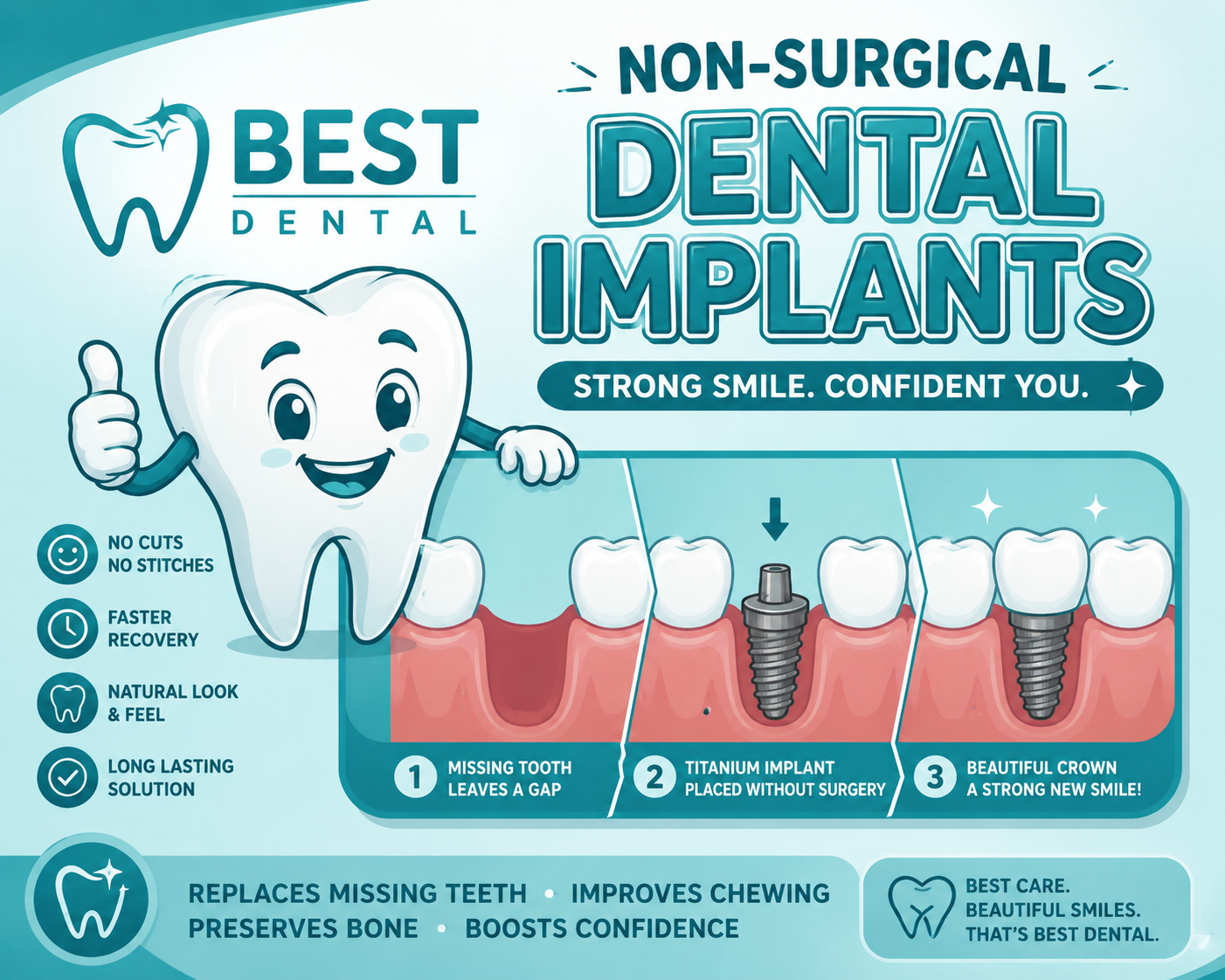
The phrase "non-surgical dental implant" is slightly misleading, and it is worth clearing up before anything else. Placing a titanium post into the jawbone is, by definition, a surgical act. The bone is entered. Local anesthesia is required. Healing takes months. Calling it "non-surgical" does not change any of that.
What "non-surgical" means in this context is that the soft tissue technique is different from traditional implant placement. In conventional implant surgery, the gum is cut open along a line, the tissue is folded back to expose the underlying bone (this is called reflecting the flap), the implant is placed into the bone, and the tissue is sutured back into position and left to heal. The sutures are typically removed 7 to 10 days later. The reflected tissue heals over 2 to 3 weeks. Swelling is common for the first several days.
In flapless placement, that entire sequence does not happen. A small circular tissue punch, roughly the diameter of the implant itself, removes a precise disc of gum tissue at the planned implant site. No incision is made. No tissue is reflected. The implant is seated through the small opening, guided by the position pre-mapped on a 3D cone-beam CT scan taken before the procedure. The surrounding tissue closes naturally around the implant without sutures in most cases.
The practical difference for Houston patients: no stitches in most qualifying cases, minimal swelling, and a return to your normal routine within 24 to 48 hours rather than the several-day disruption associated with conventional placement. The implant itself is the same. The healing phase (osseointegration, where the implant fuses with the bone) takes the same 3 to 6 months regardless of technique. What changes is the first week.
Who Qualifies for Flapless Implants Near Houston?
Candidacy for flapless placement is determined by 3D imaging at your consultation. Here is how the patient profiles break down.
Good Candidates for Flapless Placement
- Adequate bone volume and width confirmed by 3D CBCT scan at the implant site
- Healthy gum tissue with no active periodontal disease or inflammation
- Single-tooth gap with well-defined bone contours and no need for simultaneous grafting
- Non-smokers or committed to cessation during the healing period
- Good general health able to tolerate a minor in-office procedure
- Houston professionals who need to minimize post-procedure downtime and return to client-facing work quickly
- Patients who previously delayed implants due to concern about conventional surgery
Cases That Typically Need Conventional Placement
- Thin or narrow bone ridges where direct visualization is needed to safely place the implant
- Simultaneous bone grafting needed at the implant site, requiring access to the bone surface
- Anatomical proximity to nerves or sinus requiring extra visual confirmation during placement
- Multiple adjacent implants where soft tissue management affects long-term aesthetic outcomes
- Cases where bone has resorbed significantly from a long-missing tooth, leaving irregular contours
- Patients who need a bone graft still qualify for implants; conventional technique is simply the appropriate approach for those cases
Why 3D Imaging Is Non-Negotiable for Flapless Placement
In conventional implant placement, the surgeon reflects the gum tissue and can directly see and palpate the bone. If it is narrower than expected, if there is an unexpected anatomical variation, or if the planned position needs adjustment, the surgeon sees it in real time and adapts. In flapless placement, that direct visual feedback does not exist. The surgeon works entirely from the pre-planned 3D map.
This is why 3D cone-beam CT (CBCT) imaging is not optional for flapless implants. A conventional 2D dental X-ray (panoramic or periapical) shows bone height but not bone width. A site that looks adequate on a 2D X-ray may have insufficient width for safe flapless implant placement when viewed in three dimensions. The 3D scan gives Dr. Sonny Naderi a full picture of bone dimensions in all three planes, the position of the inferior alveolar nerve in the lower jaw, the floor of the sinus in the upper jaw, and any bone irregularities that would change the treatment plan.
What the 3D CBCT scan shows for flapless implant planning
- Bone width at the implant site. The critical measurement that 2D X-rays cannot show. Too narrow means conventional placement is safer.
- Bone height and density. Determines implant length and confirms there is enough volume for osseointegration.
- Inferior alveolar nerve position (lower jaw). Must maintain safe distance from the implant tip.
- Sinus floor position (upper jaw). Determines whether the site can accommodate the planned implant length or requires a sinus lift.
- Bone defects or pathology. Any irregular bone contours or pathology that would affect flapless candidacy.
- Pre-surgical implant position planning. The exact position, angle, and depth of the implant are planned digitally before any procedure is scheduled.
Best Dental includes 3D CBCT imaging in every implant consultation. For Houston patients who have received implant quotes from practices that did not include a 3D scan at the initial consultation, this is a meaningful quality signal worth asking about. Planning flapless placement without 3D imaging is working with an incomplete map of your anatomy.
Flapless vs. Conventional Placement: What Changes
The most important point first: both techniques produce an identical long-term result when used for the appropriate case. The difference is in the first week, not in the implant outcome.
Technique selected at consultation based on 3D CBCT imaging. Same $1,995 all-inclusive price either way.
The Flapless Implant Procedure at Best Dental Near Houston
From consultation to crown delivery. Everything handled in-house. No specialist referrals. No split billing.
3D CBCT Consultation
Your first visit includes a comprehensive clinical exam and a 3D cone-beam CT scan. Dr. Sonny Naderi reviews the scan to assess bone dimensions, nerve proximity, and sinus position at the implant site. If flapless placement is appropriate for your anatomy, a digital surgical plan is created showing the exact implant position, angle, and depth. You receive a written treatment plan with your all-in cost before committing to anything. The $99 consultation fee is applied as a credit toward your implant. PPO benefits are verified before treatment begins.
Anesthesia
On the day of placement, the implant site is anesthetized with local anesthetic. The area is fully numb before any instrument is used. The procedure is comfortable throughout. For Houston patients with dental anxiety, sedation is available: nitrous oxide for mild relaxation, oral conscious sedation, or IV sedation at $500 flat per session. Sedation options are discussed at consultation so you arrive knowing exactly what to expect.
Tissue Punch
A small circular tissue punch, approximately the diameter of the implant, removes a precise disc of gum tissue at the planned placement site. This is not an incision and not a cut. No tissue is reflected, no flap is created, and no sutures are placed afterward. The opening gives direct access to the underlying bone at the exact position mapped by the 3D scan.
Implant Placement
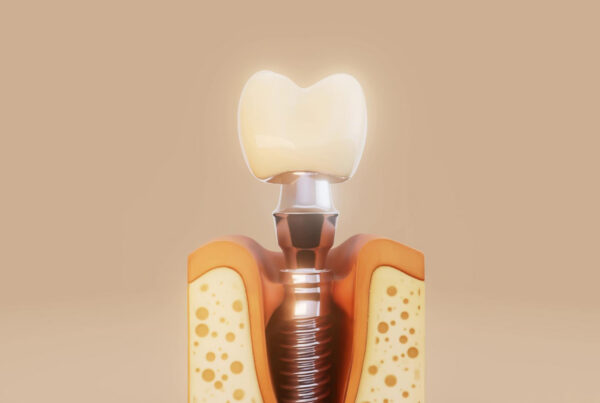
Using the 3D plan as a guide, Dr. Sonny drills a precisely sized channel into the jawbone through the tissue punch opening and seats the titanium implant to the planned depth and angle. The entire surgical phase typically takes 15 to 30 minutes per implant. Most Houston patients are surprised by how quickly and uneventfully this goes.
Healing Cover and Post-Procedure Instructions
A healing cover or healing abutment is placed on top of the implant. Because no tissue was reflected, the area closes naturally without sutures in most flapless cases. You leave with written post-procedure instructions: soft foods for a few days, gentle salt-water rinsing, and avoiding direct brushing at the implant site for 24 hours. Most Houston patients take over-the-counter pain relievers for 1 to 2 days and return to work the following day.
Osseointegration (3 to 6 Months)
The titanium implant fuses with the jawbone through osseointegration. This phase is identical for flapless and conventional placement. It happens below the gum line and does not interfere with daily life. A temporary tooth can fill the visible gap during this period if the implant is in the smile zone. Follow-up visits confirm integration is progressing normally.
Crown Delivery
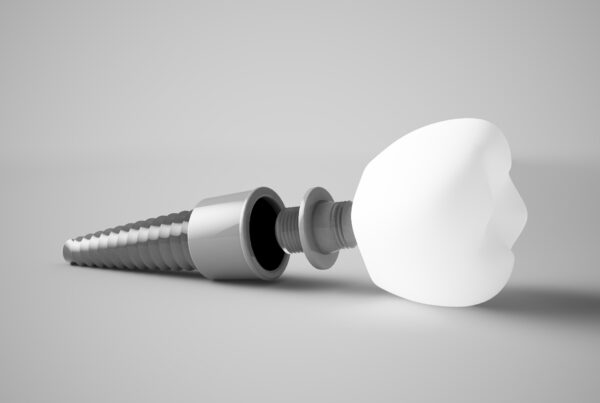
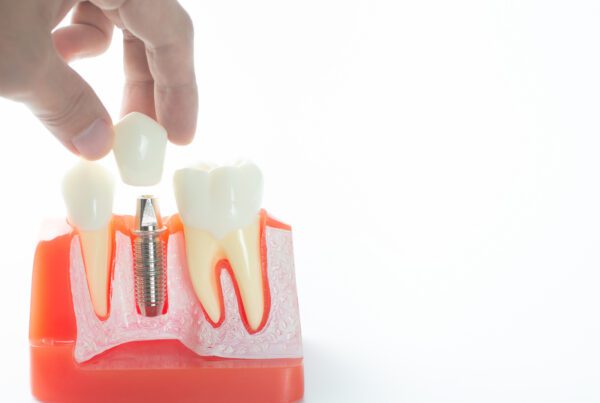
Once Dr. Sonny confirms full integration, the abutment connector is attached and Dr. Jasmine Naderi designs and seats the final custom porcelain crown. The crown appointment takes about an hour. You leave with a fully functioning, natural-looking tooth. Total cost: $1,995 all-inclusive, the same price you were given at the consultation visit.
Recovery After Flapless Implant Placement
Flapless placement reduces surface healing time. The bone fusion timeline is the same as conventional placement. Here is what the first week looks like for most Houston patients.
Flapless Placement Recovery
- Day of procedure: Mild numbness while anesthesia wears off. Very light oozing at the tissue punch site. Soft foods only. Rest at home.
- Days 1 to 2: Mild gum soreness at the implant site. Swelling is minimal because no tissue was reflected. Most Houston patients return to desk work within 24 to 48 hours.
- Days 3 to 5: Soreness fades. Soft foods continue but more variety is comfortable. Normal oral hygiene resumes around the site.
- Days 6 to 7: Most patients are fully back to normal activity with no discomfort. The tissue punch site has healed.
- Week 2 onward: Tissue fully healed. Normal diet. Osseointegration continues silently below the surface for 3 to 6 months.
Conventional Placement Recovery (for comparison)
- Day of procedure: Same immediate care. Bleeding is somewhat more due to the tissue flap.
- Days 1 to 3: Moderate swelling peaks around day 2 to 3. Most patients take 2 to 5 days before returning to work.
- Days 4 to 7: Swelling resolves. Sutures still in place. Some patients have tenderness around the suture line.
- Days 7 to 10: Sutures removed at a follow-up appointment. Tissue healing continues.
- Weeks 2 to 3: Tissue fully healed. Same osseointegration timeline as flapless from this point forward.
Sedation Options for Houston Implant Patients
Dental anxiety is one of the most common reasons Houston patients delay implant treatment. Best Dental offers three levels of sedation for patients who want more than local anesthesia.
Nitrous Oxide
A mild sedative gas inhaled through a small nose mask. Produces a calm, relaxed feeling without putting you to sleep. Effects wear off within minutes of stopping the gas. You can drive yourself home afterward.
Oral Conscious Sedation
A prescription pill taken 30 to 60 minutes before your appointment. You remain conscious and responsive but feel deeply calm with little memory of the procedure afterward. Requires a ride home from the appointment.
IV Sedation
Administered through a small IV. The deepest available option at Best Dental. Used for significant anxiety or longer procedures. You remain in a controlled semi-conscious state throughout. $500 flat per session. Requires a ride home.
For Houston patients who have been avoiding implants because of anxiety
- Mention your anxiety when you schedule. The front desk will note your preference and discuss sedation options before your consultation appointment. Nothing happens at the consultation itself.
- The consultation requires no procedure. Your first visit is 3D imaging, exam, and a treatment plan discussion. There is no pressure to schedule treatment during the visit.
- Flapless placement plus sedation is the most comfortable implant experience available for qualifying Houston patients. The minimally invasive technique reduces post-procedure soreness; the sedation removes anxiety from the procedure itself.
- Sedation is available for both flapless and conventional placement. The technique Dr. Sonny recommends for your anatomy is independent of whether you want sedation.
Dental anxiety should not cost you a tooth.
Call Best Dental near Houston and tell the front desk you have dental anxiety. Sedation options and what to expect will be discussed before you book anything.
Call (281) 215-3065Cost & PPO Insurance for Non-Surgical Implants Near Houston
| Procedure | Fee | Notes |
|---|---|---|
| Complete Single Implant (flapless or conventional) | $1,995 | All-inclusive: titanium post, abutment, and custom porcelain crown. Same price regardless of technique used. |
| Bone Graft (if needed) | $500 | Only if 3D imaging shows insufficient bone. Performed in-house. Patients needing a graft typically receive conventional placement. |
| Tooth Extraction (if needed) | $250 | Flat-rate, all types including surgical, if the failing tooth is still present. |
| IV Sedation (if requested) | $500 | Flat-rate per session. Nitrous oxide and oral conscious sedation also available. |
| 3D CBCT Consultation | $99 | Comprehensive exam, 3D scan, and written treatment plan. Applied as credit toward your implant. |
PPO insurance for dental implants near Houston
- In-network for all 8 major PPO carriers: Delta Dental, Aetna, Cigna, BCBS Texas, Guardian, MetLife, UnitedHealthcare, and Ameritas PPO. Best Dental does not accept HMO, DMO, or DHMO plans.
- Most PPO plans provide partial implant coverage of $500 to $1,500 per implant. Benefits are verified with your carrier before your appointment so you know your exact patient balance before any treatment is scheduled.
- Written cost estimate before treatment. The estimate shows your Best Dental fee, your PPO estimated coverage, and your patient balance. No surprise costs at checkout.
- CareCredit and Cherry financing available for the remaining patient balance. Both offer payment terms based on credit approval. Cherry uses a soft credit pull with no impact to your score for the initial inquiry.
- FSA and HSA accepted. Dental implants are fully IRS-eligible expenses. Pre-tax payment through your FSA or HSA reduces your effective cost by your marginal tax rate.
The $1,995 all-inclusive price at Best Dental applies to both flapless and conventional placement. PPO insurance applies to the same $1,995 fee regardless of which technique is used. There is no premium for the minimally invasive approach. The technique is chosen for the best clinical outcome for your anatomy.
The 30-Year Cost Math
Houston patients who compare a $1,995 implant against a $1,250 denture or a $2,850 bridge often focus on the upfront price difference. The 30-year math tells a different story.
| Option | Upfront Cost | Typical 30-Year Total | Notes |
|---|---|---|---|
| Dental Implant (Best Dental) | $1,995 | ~$2,000 to $3,000 | Crown may need replacement once. Implant post is permanent. No replacements, no adhesives. |
| 3-Unit Dental Bridge | $2,850 | ~$8,550+ | Bridge replacement every 10 to 15 years. Adjacent teeth ground down. Potential for additional treatment if those teeth fail. |
| Partial Denture | $1,250 | ~$7,500+ | Replacement every 5 to 10 years plus adhesives. Accelerates bone loss, often requiring more complex treatment later. |
Beyond direct cost, dental implants are the only tooth replacement option that prevents jawbone loss at the extraction site. A missing tooth that is replaced by a bridge or denture continues to lose bone beneath the replacement. Over years, that bone loss can affect the adjacent teeth and eventually require more complex and expensive treatment. An implant stimulates the bone the way a natural root does, stopping the resorption process.
For Houston patients who are weighing the cost of an implant, the relevant comparison is not just the upfront number. It is what you will spend on the alternative over the years you would have lived with the implant. In almost every scenario, the $1,995 implant wins the 30-year math.
See the full implant cost and comparison breakdown on the Houston dental implants page and our detailed are dental implants worth it analysis.
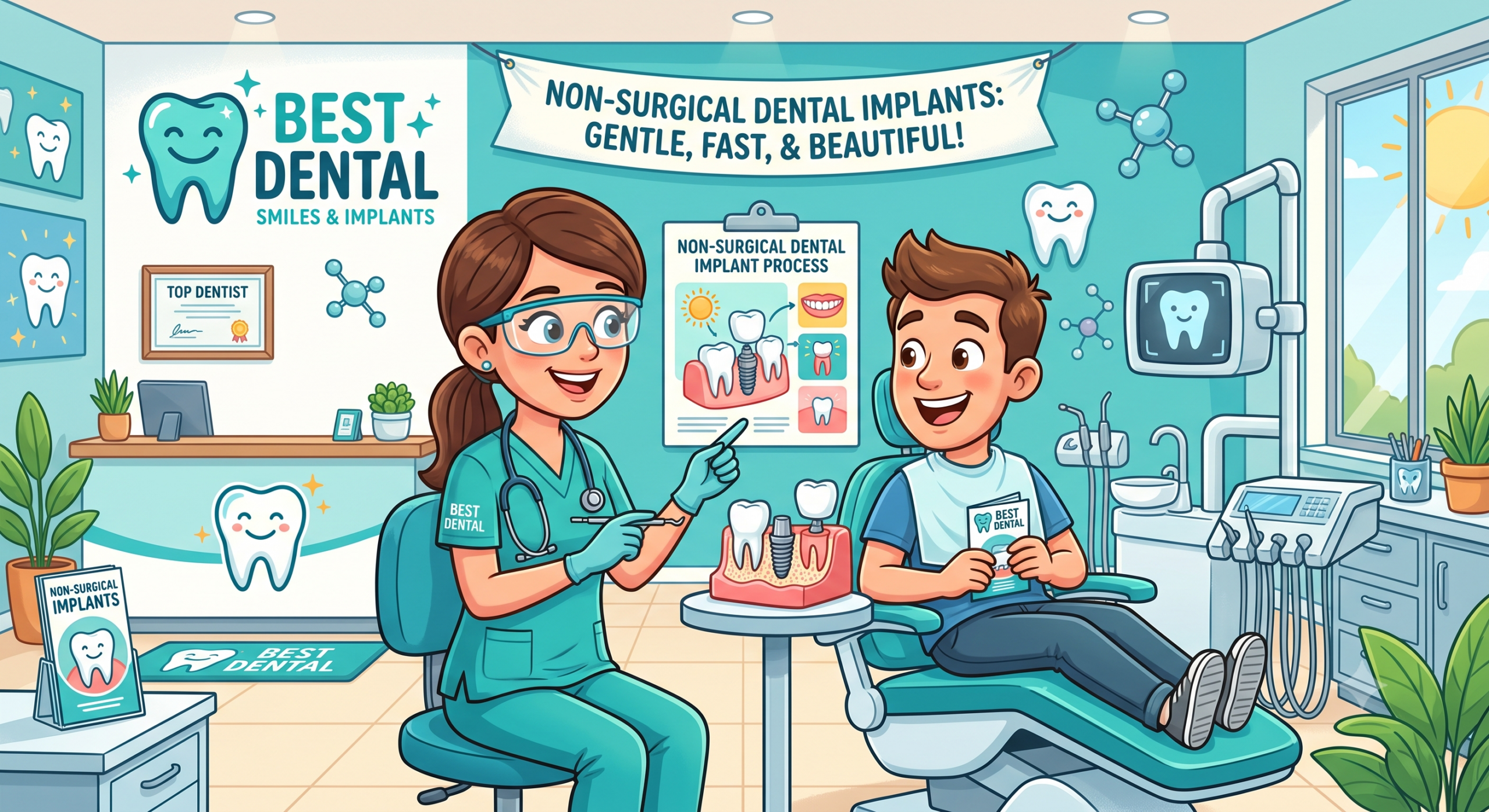
Serving Houston Patients for Non-Surgical Implants
Best Dental's Richmond location is the closest in-network non-surgical implant provider for Southwest Houston and Fort Bend County patients.
Houston patients visiting Best Dental for implants also use the same visit for crowns, root canals, extractions, wisdom teeth removal, Invisalign, and dental emergencies. See the full Houston services hub for the complete picture.
More implant resources for Houston patients
- Dental implants near Houston: complete overview of all implant types, candidacy, and the full $1,995 breakdown.
- Richmond dental implant cost guide: detailed breakdown of what drives implant cost and how the $1,995 price compares.
- Are dental implants really worth it?: honest cost-benefit analysis covering implants vs bridges vs dentures over 25 years.
- PPO insurance and dental implants: how PPO coverage works for implants and how to maximize your benefit.
- Complete implants overview: all implant procedures available at Best Dental including single tooth, multiple teeth, All-on-4, and implant crowns.
- Houston payment plan options: CareCredit and Cherry financing for the patient balance after PPO coverage.
- Houston dentist specials: all current flat-rate specials available to Houston patients at Best Dental.
Non-Surgical Implants Near Houston: FAQs
Non-Surgical Dental Implants Near Houston: Key Takeaways
Non-Surgical Dental Implants Near Houston, TX
$1,995 all-inclusive. Flapless placement for qualifying patients. 3D CBCT-guided. Sedation available. In-network for all 8 major PPO carriers. Benefits verified before treatment. 22377 Bellaire Blvd, Suite 400, Richmond TX 77407, 20 to 25 minutes from Southwest Houston.