Are Dental Implants Worth It?
An honest cost-benefit analysis. When implants make sense, when they don't, and what they actually cost at Best Dental in Richmond, TX.
At national prices of $4,000 to $6,500 per implant, the question "are dental implants worth it?" deserves a real answer, not a sales pitch. For most patients with one or more missing teeth, the answer is yes. Implants last 25+ years, preserve your jawbone, restore full chewing function, and avoid grinding down healthy adjacent teeth. But for some patients with specific medical conditions or financial constraints, the honest answer is no. This article walks through the math, the alternatives, and the cases where implants are absolutely the wrong choice.
Yes, dental implants are worth it for most patients. Here's the simple math.
A complete dental implant at Best Dental is $1,995 all-inclusive (post + abutment + crown) and lasts 25+ years. That's about $80 per year, or $6.65 per month, for a permanent replacement tooth. By comparison, a traditional 3-unit bridge costs $2,850, lasts 10 to 15 years, and requires grinding down two healthy adjacent teeth in the process.
For most patients with one or more missing teeth, implants are the better long-term investment. The "not worth it" cases are real, however: uncontrolled diabetes, untreated gum disease, heavy smokers who won't quit during healing, and patients who can't commit to daily oral hygiene. We'll cover all of it.
Why "Are Dental Implants Worth It?" Is the Wrong Question
The better question is: "What does this missing tooth actually cost me over 10, 15, 25 years if I leave it alone, replace it with a bridge, or replace it with an implant?"
People typically frame the implant decision as a $2,000 to $5,000 expense. But that framing ignores three real costs that show up over time:
1. The cost of doing nothing
A missing tooth that goes unreplaced causes adjacent teeth to drift, the opposing tooth to over-erupt, and jawbone to resorb at the missing tooth site. Within 5 to 10 years, you've usually lost significant bone at that site (which is why implants get harder and more expensive the longer you wait). Within 10 to 20 years, the bite collapse and dental drift often require thousands in corrective work, including potentially full-mouth reconstruction. The do-nothing option has a real price tag, it just gets paid later, all at once, when it has become much harder to fix.
2. The cost of choosing the cheap option
A removable partial denture (sometimes called a "flipper") runs $450 to $800 at most practices. Cheap upfront. But flippers are temporary, frequently broken or lost, and provide zero jawbone stimulation, meaning bone loss continues at the missing-tooth site. Patients who choose a flipper typically end up needing an implant 3 to 8 years later anyway, plus a bone graft they wouldn't have needed if they'd done the implant from the start. The $700 flipper becomes a $2,500 implant-plus-graft.
3. The replacement cost of a bridge
A traditional 3-unit bridge costs about $2,850 at Best Dental ($950 per crown unit) and lasts 10 to 15 years before needing replacement. Over a 25-year span, that's typically two bridges, which is $5,700 total. Plus the two healthy adjacent teeth had to be ground down to anchor the original bridge, which means those teeth now need crowns for life. The implants-vs-bridge math almost always favors the implant when you run a 25-year horizon.
The right question is not what dental implants cost today. The right question is what your missing tooth will cost you over the next 25 years if you choose the implant, the bridge, or doing nothing.
— Dr. Sonny Naderi, DDSWhat a Dental Implant Actually Is
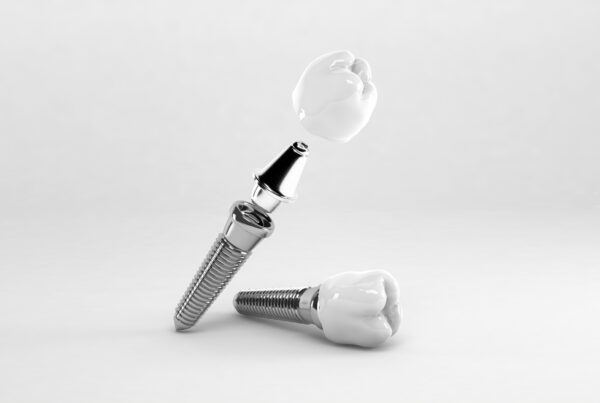
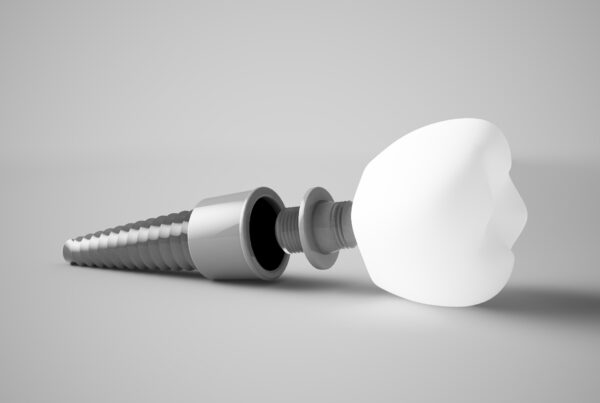
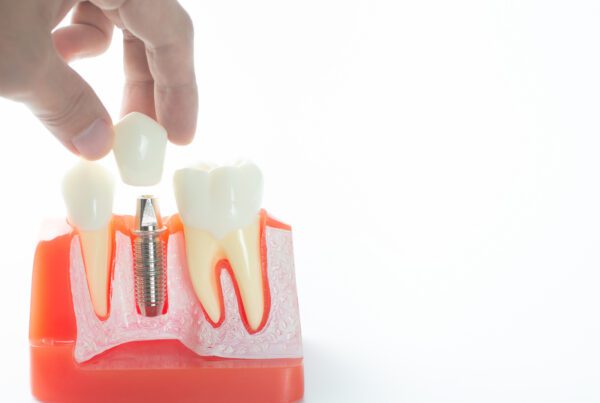
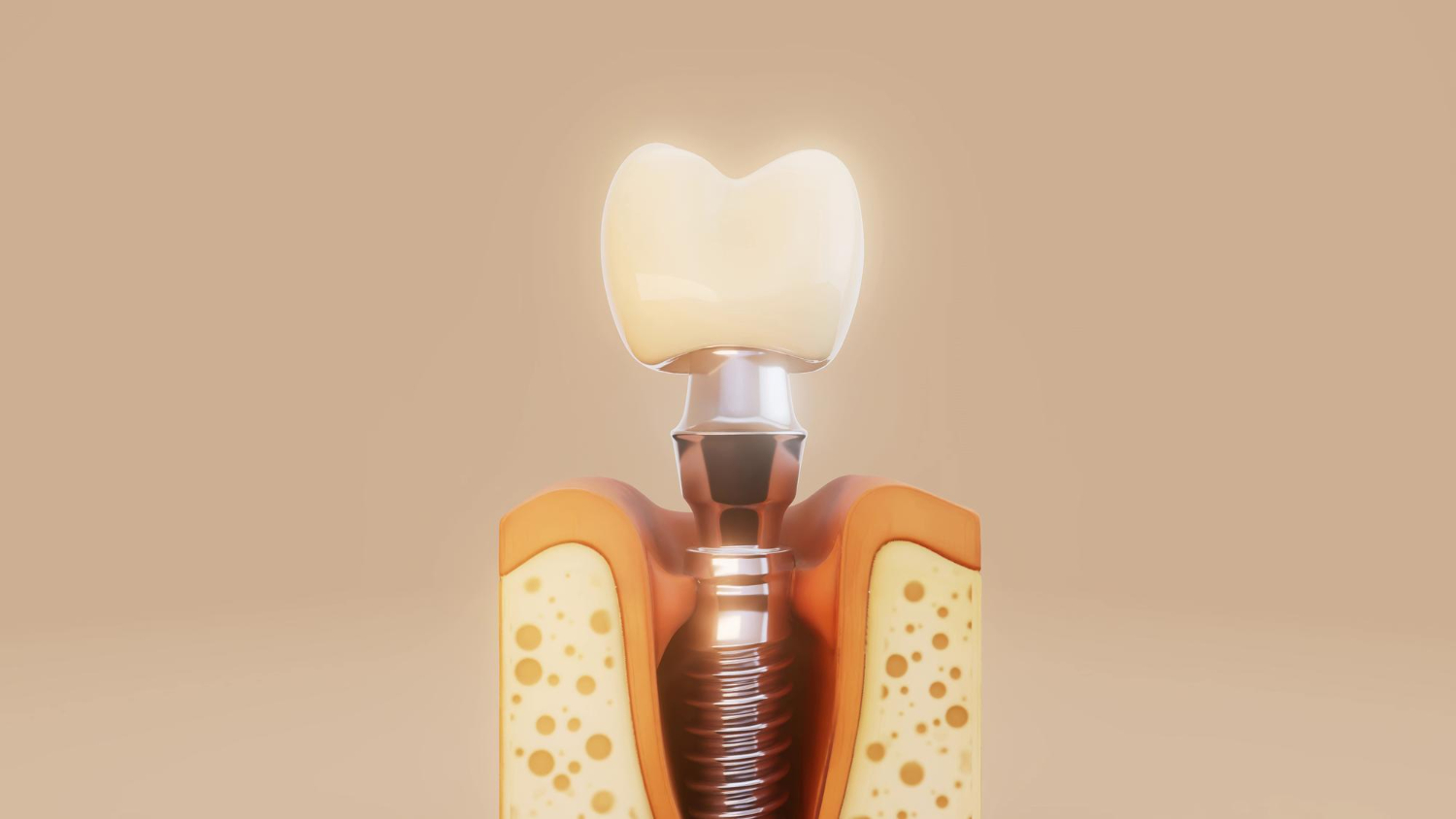
An implant is three components that together replace a missing tooth root and the visible tooth above it:
The implant post (the titanium "root")
A titanium screw-shaped post is surgically placed into the jawbone where the missing tooth root used to be. Over the next 3 to 6 months, the bone grows around and fuses with the titanium (a process called osseointegration). This is why dental implants last 25+ years: the post is literally integrated into your skeleton, not glued to anything.
The abutment (the connector)
Once the post is fused, a small connector piece called an abutment is attached to the top of the post. The abutment sticks up just above the gumline and is the part that the visible crown attaches to. Some practices charge for the abutment separately ($300 to $600). At Best Dental it's included in the $1,995 all-inclusive price.
The crown (the visible tooth)
A custom porcelain or zirconia implant crown is fabricated to match your surrounding teeth in shape, size, and color, then permanently cemented or screwed onto the abutment. The result looks and functions like a natural tooth. It can be flossed, brushed, and even bitten down on with full force.
Many practices price each component separately and add on the surgical fee, the imaging fee, the anesthesia fee, and the follow-up appointment fees, which is how single-tooth implant quotes balloon to $4,000 to $6,500. Best Dental's $1,995 all-inclusive price covers all three components plus the surgery, imaging, anesthesia, and post-op visits. See the Richmond dental implant cost breakdown for the full transparent itemization.
Want to see exactly what goes into your implant cost?
Best Dental publishes every fee. No surprises at the chair. Call to verify your specific case in writing.
☎ Call (281) 215-3065How Implants Compare to Every Other Option
Every patient with a missing tooth has four real options. Comparing them honestly:
Dental Implant
3-Unit Bridge
Partial Denture
Do Nothing
The numbers tell a clear story for most patients with one missing tooth: the implant is the cheapest option upfront among the permanent solutions (cheaper than a 3-unit bridge), and dramatically cheaper over a 25-year horizon than any alternative. The partial denture is cheaper upfront but you'll usually need to upgrade to an implant later anyway, often after losing bone that requires additional bone grafting.
For two or more missing teeth in a row, implant-supported bridges typically outperform traditional bridges. For full-arch cases, All-on-4 dental implants have largely replaced traditional dentures as the preferred option for patients who can afford the upfront investment.
The 25-Year Math That Most Dentists Don't Show You
Most dental practices quote you the upfront cost of an implant and the upfront cost of a bridge, and let you draw conclusions. The real conclusion only shows up when you run the math over the lifetime that actually matters: 25 years.
Here is what one missing tooth actually costs you over 25 years, in three scenarios:
Most implants last 25+ years with the original crown. The crown replacement at year 18-20 is conservative budgeting.
Plus: the two adjacent teeth are permanently crowned and can never go back to natural state. If either anchor tooth fails, the entire bridge has to be redone or converted to an implant case anyway.
Doing nothing is almost never actually free. The cost just gets deferred and compounded.
For most single-tooth cases, the implant is roughly 60% cheaper than the bridge path over 25 years, and 70-75% cheaper than the do-nothing path. This is why budgeting for dental implants as a multi-decade investment, not a single-year expense, gives you the right answer.
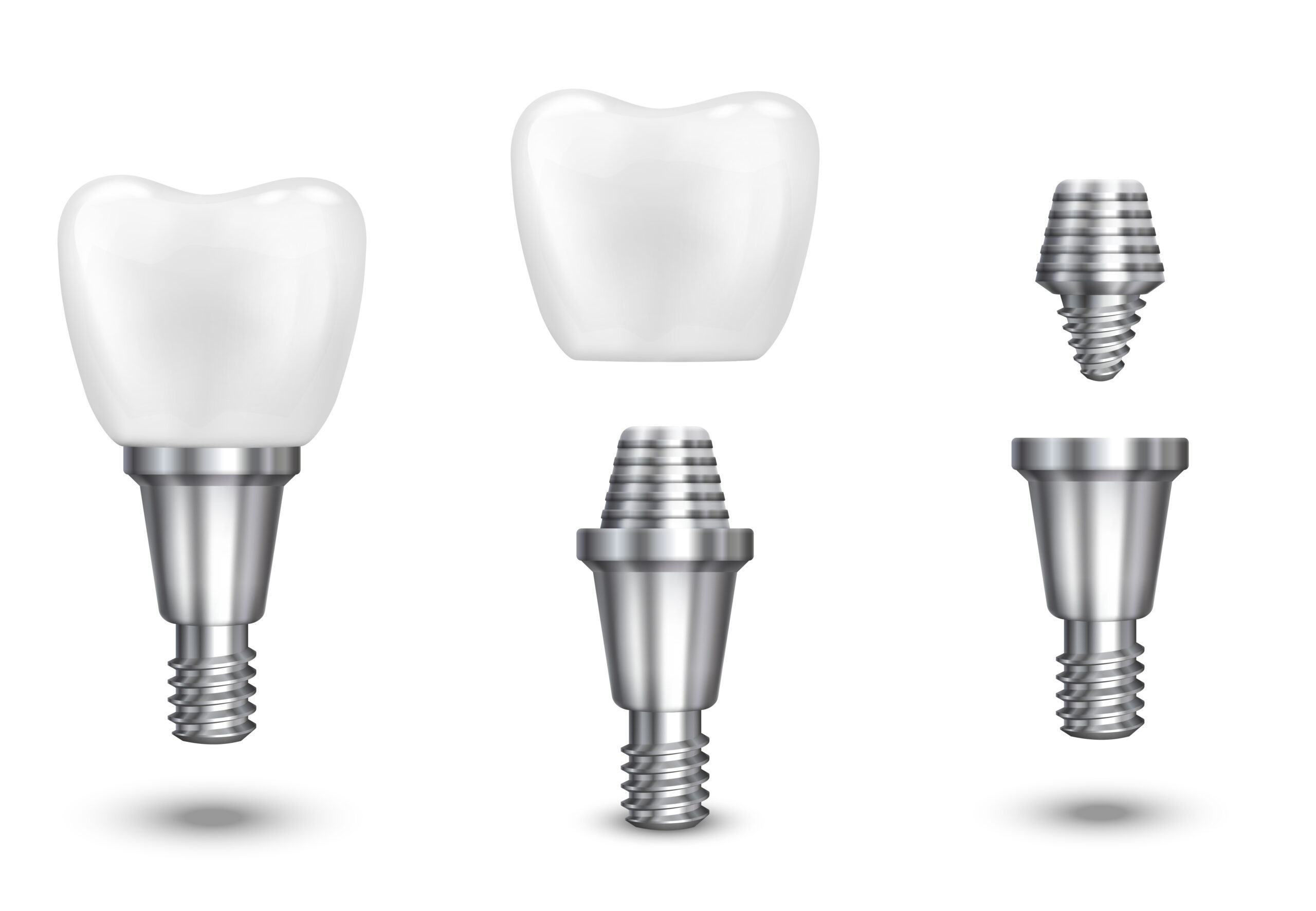
A complete dental implant. Three components working as one: the titanium post fused into the jawbone, the abutment connector, and the porcelain crown above the gumline. All three are included in the $1,995 all-inclusive price at Best Dental.
When Dental Implants Are Absolutely Worth It
These are the clear yes cases. If you fit one of these descriptions, the math overwhelmingly supports the implant decision:
One Missing Tooth, Adjacent Teeth Healthy
The classic case. An implant preserves both adjacent teeth completely intact, while a bridge would require grinding them down for crowns. The implant is also cheaper upfront ($1,995 vs $2,850) and lasts 2-3x longer. Easy yes.
Failed Root Canal, Tooth Needs to Come Out
If you've had a failed root canal and the tooth must be extracted, replacing it with an implant prevents the cascade of dental drift and bone loss that follows extraction. Best to plan the implant placement at or shortly after the extraction.
Multiple Missing Teeth in Sequence
Two or more missing teeth in a row: implant-supported bridges restore full function without removing any natural teeth. Three or more missing teeth: usually 2 implants supporting a multi-unit bridge is the optimal solution. Implant bridges are a strong middle option.
Full Arch Missing or Failing
For patients who would otherwise need a full denture, All-on-4 dental implants restore an entire arch with just 4 implants supporting a fixed bridge. Lifetime cost is dramatically lower than repeated denture replacement, plus you keep your jawbone intact. Investment range is $25,000-$40,000 per arch.
Younger Patients (Under 60)
The longer you have left to use the implant, the better the return. A 35-year-old getting an implant gets 30-40 years of use. The cost-per-year drops to under $60 annually. Younger patients also typically have better bone density and healing capacity.
You Have Healthy Gums and Bone
If your dental exam shows no active periodontal disease and adequate jawbone at the missing tooth site, you're an ideal implant candidate. Success rates in healthy patients run 95-98% at the 10-year mark.
When Dental Implants Are NOT Worth It
Most dental practices have a financial incentive to recommend the implant. We don't. These are the cases where Best Dental recommends against implants, or recommends fixing other issues first before considering implants:
Uncontrolled Diabetes (A1C above 8)
High blood sugar impairs healing and significantly increases implant failure risk. Get your A1C under control first, then re-evaluate. Diabetic patients with well-managed glucose (A1C under 7) are typically good candidates.
Active Untreated Gum Disease
Placing an implant in a gum-disease patient sets it up to fail (peri-implantitis). Get the gum disease treated and stabilized first with periodontal care, then place the implant once the tissue is healthy. This isn't optional, it's the difference between a 5-year implant and a 25-year implant.
Heavy Smoker Unwilling to Pause
Smoking during the 4-6 month healing phase triples failure risk. If you're not willing to quit (or at least stop) during healing, the honest recommendation is to wait. The $1,995 you'd spend on an implant that fails could have been spent on a procedure that actually lasts.
Severe Bone Loss + Refusing Grafting
The implant needs adequate jawbone to integrate. Patients with severe bone loss who reject bone grafting aren't candidates. A removable partial denture or implant-supported denture may make more sense in that case.
Cannot Commit to Daily Oral Hygiene
Implants require daily brushing, daily flossing, and 6-month professional cleanings to last 25+ years. Patients who can't or won't do this aren't going to get full value from the investment. A bridge or denture has the same hygiene requirement but is more forgiving in the early failure mode.
Very Limited Lifespan or Health Issues
For elderly patients with multiple health concerns or limited expected lifespan, the 25-year payoff math doesn't apply. A traditional denture or implant-supported denture restores function much faster (weeks instead of months) and at lower cost.
If a dentist is recommending implants without discussing whether you fall into any of these categories, get a second opinion. Implants are expensive enough that the honest evaluation matters more than maximizing case acceptance.
What You're Actually Paying at Best Dental
The national average for a single complete implant in 2026 is $4,000 to $6,500. Best Dental's published price is $1,995 all-inclusive. Here's exactly what that covers and what (if anything) you might pay extra for:
Most single-tooth implant patients pay $1,995 to $2,745 total, depending on whether prep work like an extraction or graft is needed. Your specific case is quoted in writing during the consultation. See the full Best Dental pricing list for transparency on every procedure.
How Insurance and Financing Change the Math
If you have PPO dental insurance or are open to financing, the out-of-pocket implant cost can drop significantly below the $1,995 number. Here's how the real numbers shake out:
PPO Insurance Coverage
PPO coverage for implants has improved dramatically over the past decade. Most PPO plans now cover 25-50% of the implant procedure up to your annual maximum (typically $1,500 to $2,500 per year). Some plans cover the implant crown but exclude the implant post itself, while others reverse this. Best Dental verifies your specific implant coverage in writing before any treatment begins, so you know your real out-of-pocket before you commit.
Best Dental is in-network for seven major PPO carriers: Delta Dental, Cigna, Aetna, Blue Cross Blue Shield, Guardian, MetLife, and United Healthcare. Best Dental does not accept HMO, DMO, or DHMO plans. For specific carrier coverage details, see the PPO insurance and dental implants guide.
If you're not sure about your specific plan, request insurance verification and the front desk team will return with your exact benefits and your projected out-of-pocket within a business day.
Best Dental Discount Plan (for uninsured patients)
The Best Dental Discount Plan costs $199 per year per member. It includes 2 free comprehensive exams, 2 free regular cleanings, and member pricing on all other treatments including implants. There are no annual maximums, no waiting periods, and the plan cannot be combined with insurance on the same procedure. Most uninsured patients save more on a single implant procedure than the annual membership costs.
Third-Party Financing (Cherry and CareCredit)
For patients who want to spread payments over time, Best Dental partners with Cherry and CareCredit. Both offer payment terms based on credit qualification, with options ranging from 3 to 60 months. Cherry tends to be more accessible for patients with limited credit history. Approval is typically same-day. See all financing options for the current rate structures.
Verified PPO benefits, in writing, before you commit.
Call (281) 215-3065 and the team can verify your specific implant coverage with your carrier. You'll know your real out-of-pocket before scheduling.
☎ Verify Benefits NowWhat to Ask Any Dentist Before Saying Yes to Implants
Before you commit to a $2,000-plus procedure, run through this checklist with the consulting dentist. Any practice that won't answer these in writing is not the practice to use:
The 10-question implant vetting checklist
- Is the implant actually the right option for me? Get the honest yes-or-no with reasoning, not the automatic upsell. A bridge, partial denture, or "do nothing for now" recommendation is appropriate in some cases.
- What is the all-in price including the crown? Many quotes price the post separately from the abutment separately from the crown. Get the bundled all-in total in writing.
- Will I need bone grafting? At what cost? Bone grafts are sometimes legitimately necessary, sometimes oversold. Get a CBCT scan to verify the bone is truly insufficient.
- What is your published failure rate? A dentist who can't quote a number is hiding from the question. Realistic answer: 2-5% 10-year failure rate is good.
- Who places the implant? Is it the same dentist who does my crown? Continuity matters. Practices that outsource the surgical placement to a periodontist add cost and complexity.
- What happens if the implant fails? What is your warranty? Some practices replace failed implants at no charge in the first year. Get this in writing.
- Does my PPO insurance cover this? How much will I really pay? The front desk should be able to verify this in writing within 24-48 hours.
- What financing do you offer if I can't pay upfront? Cherry, CareCredit, or in-house financing should be available. Avoid practices that pressure you into specific high-interest financing.
- Will my bite be evaluated before the implant is placed? A bad bite shortens implant lifespan. Bite evaluation should be standard.
- What is the healing timeline and what should I expect during it? 3-6 months for osseointegration. You should know the schedule of follow-up appointments before scheduling.
If you've received an implant quote elsewhere and want a candid second look, Best Dental offers second opinion consultations specifically for cases where patients have been quoted what feels inflated. The goal of a second opinion is honest assessment, not maximizing the treatment plan.
Frequently Asked Questions About Dental Implants
Run Your Specific Numbers Before You Decide
The honest answer to "are dental implants worth it?" depends on your specific case: which tooth, your bone, your medical history, your insurance, your timeline. Best Dental publishes prices, verifies your PPO benefits in writing, and gives you a straight yes-or-no recommendation on whether the implant is the right move for your case.