
How Long Do Dental Implants Last?
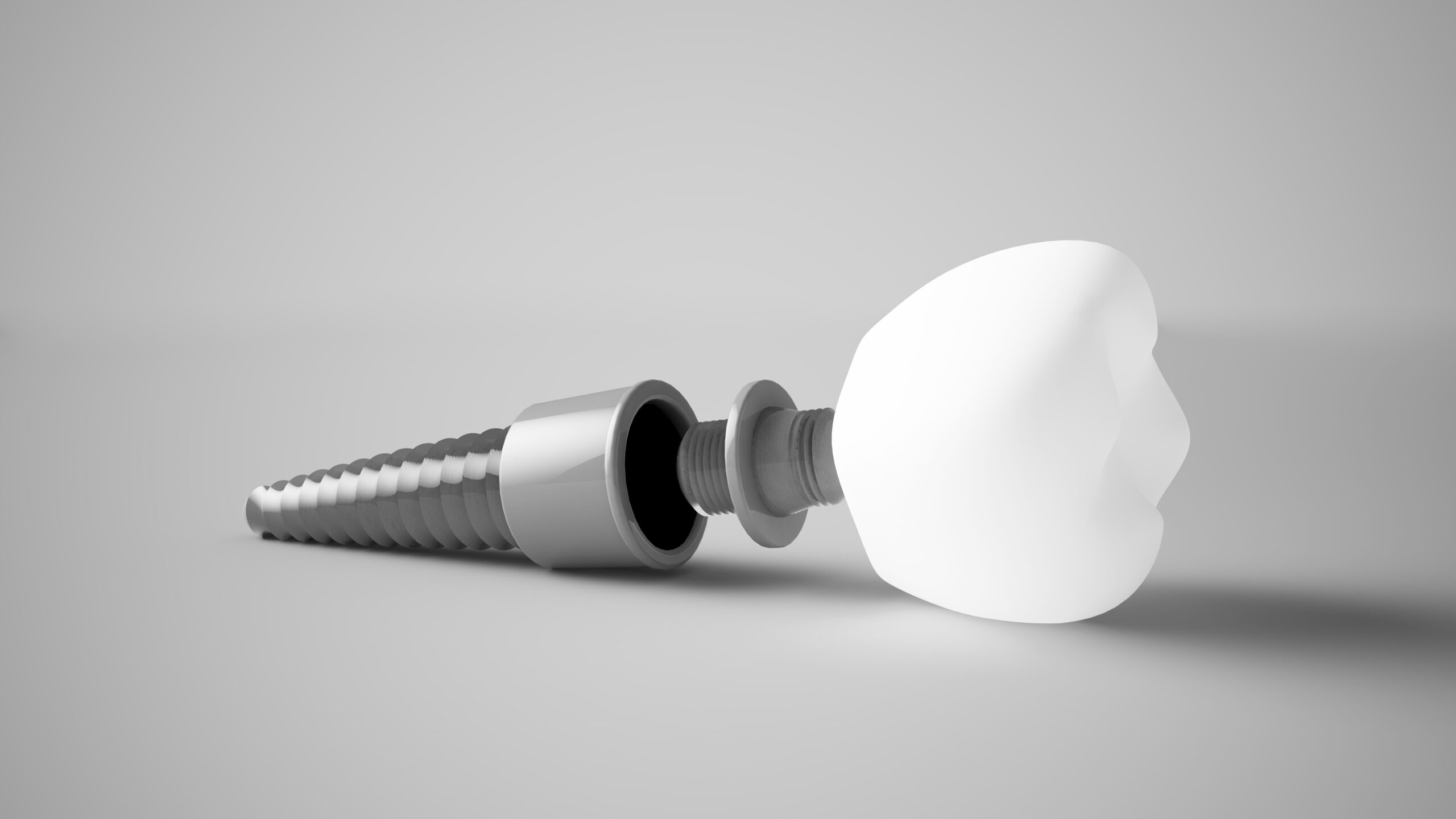
Patients investing thousands in dental implants want to know one thing above all: will this last? The honest answer separates the two components. The titanium implant post typically lasts 25 years or longer, often a lifetime. The porcelain crown on top lasts 10 to 15 years before replacement. Success rates published in dental literature confirm 90 to 95 percent of implants remain functional at the 10-year mark when placed and maintained properly. This guide walks through the data, the failure modes, and what you can control.
The titanium post: 25+ years, often a lifetime. The crown: 10 to 15 years before replacement.
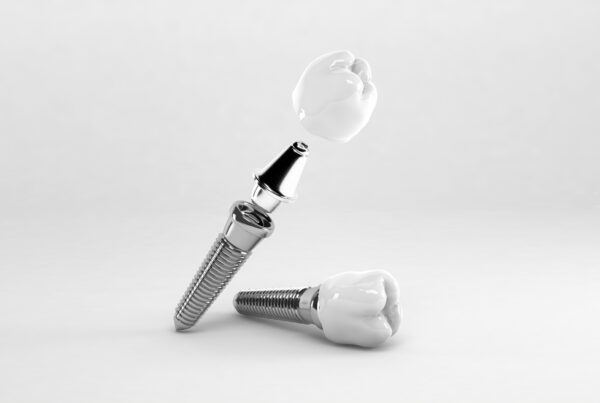
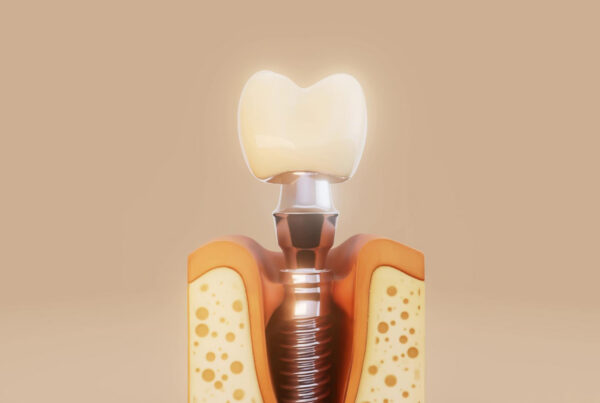
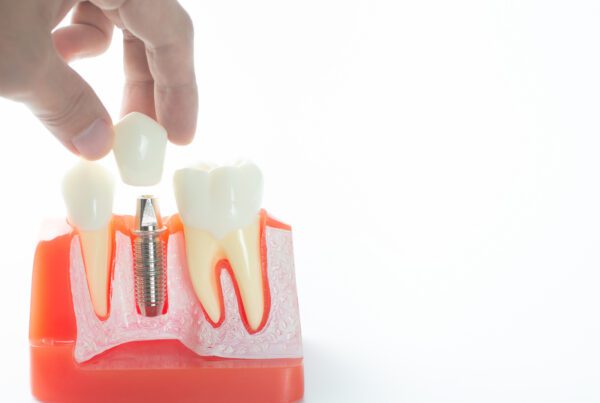
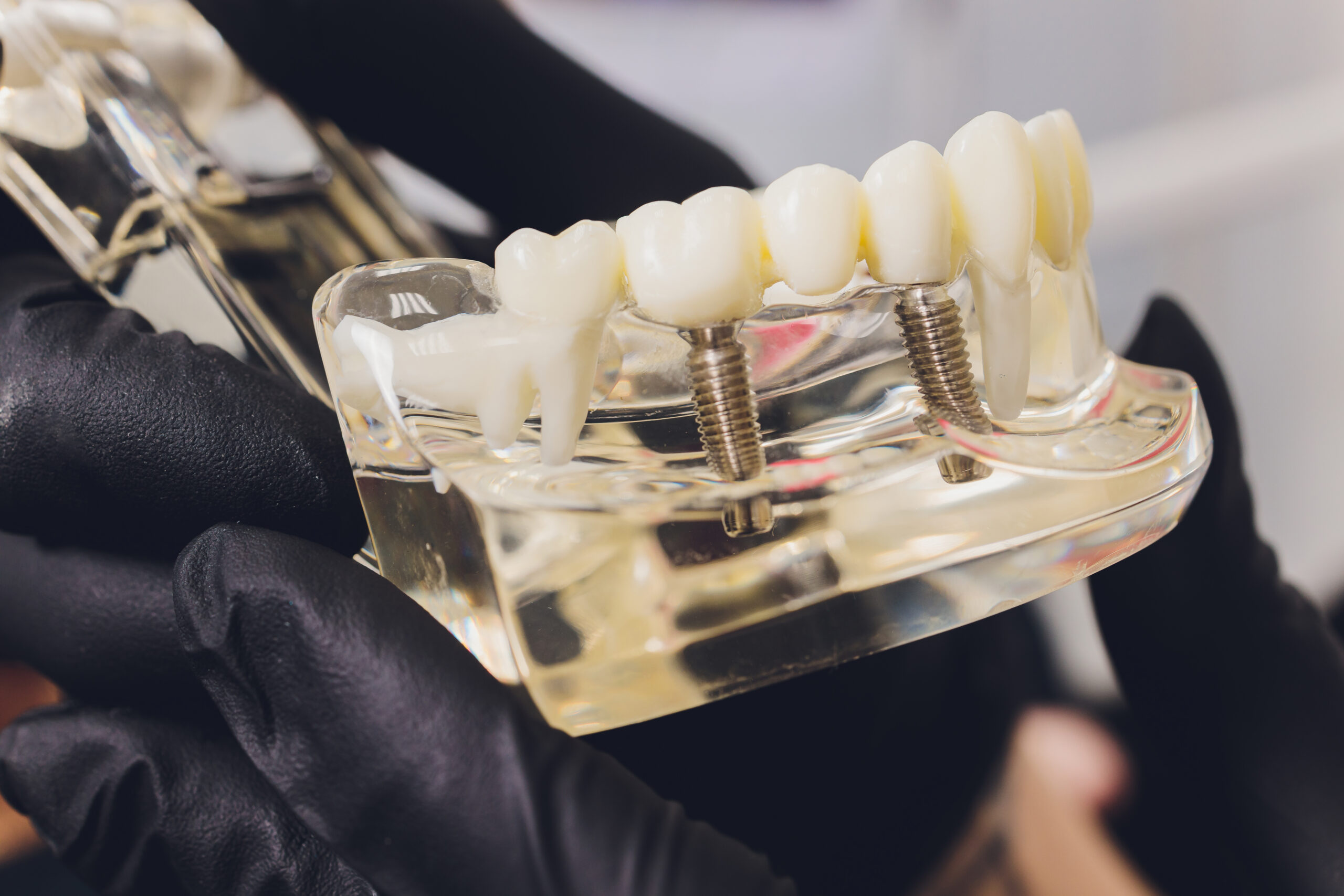
A dental implant has two parts with very different lifespans. The titanium post is surgically placed into the jawbone and fuses with the bone over 3 to 6 months. Once integrated, the post is permanent for most patients. Long-term studies tracking implants over 20 to 30 years show the titanium post commonly remains functional that long.
The porcelain crown is the visible tooth attached to the post above the gumline. It faces daily wear from biting and chewing, so it typically needs replacement after 10 to 15 years. When patients say "my implant failed," it's almost always the crown that wore out or detached, not the underlying post.
Success rate data from dental literature consistently shows 90 to 95 percent of single tooth implants remain functional after 10 years. After 20 years, the success rate drops only modestly. This makes dental implants one of the most predictable and long-lasting tooth replacement options in dentistry.
What's in This Guide
Lifespan data, factors that affect longevity, common failure modes, and how to maximize your implant's life.
- Implant Post vs Crown: Two Different Lifespans
- Success Rate Data: What the Research Shows
- 7 Factors That Affect Implant Lifespan
- Common Reasons Dental Implants Fail
- How to Maximize Implant Lifespan
- What Happens If an Implant Fails
- Implant Lifespan vs Other Tooth Replacements
- Are Cheaper Implants Less Durable?
- The Real Cost Math: Per-Year Calculation
- Frequently Asked Questions
- Schedule Your $89 Implant Consult

Implant Post vs Crown: Two Different Lifespans
Most lifespan confusion happens because patients think of "the implant" as one thing. It's actually two components engineered to last different amounts of time.
The Titanium Implant Post
A small titanium screw surgically placed into the jawbone. Over 3 to 6 months, the bone grows directly into the surface of the titanium in a process called osseointegration. Once integrated, the post becomes a permanent part of the jaw, functioning the same way a natural tooth root would.
Titanium is biocompatible (the body doesn't reject it), corrosion-resistant, and has a tensile strength stronger than the bite forces of human chewing. Properly placed and properly integrated, the post rarely fails outside of two specific scenarios (severe gum infection or significant trauma). For most patients, the post will outlive every other dental restoration they have.
Long-term clinical studies have tracked implant posts over 25-year and 30-year periods. The success rates at these long horizons remain remarkably high, particularly for posts placed in healthy bone and maintained with routine dental care.
The Porcelain Crown
The visible "tooth" portion of the implant. Custom-fabricated in a dental lab to match the patient's natural tooth shape, color, and bite. Attached to the implant post via an abutment connector and either cemented or screw-retained in place.
Unlike the titanium post, the crown faces daily mechanical stress from biting and chewing. Even with perfect care, porcelain eventually shows wear, microscopic cracks, or marginal staining. Patients who grind their teeth at night accelerate crown wear significantly.
The good news: replacing the crown is far less expensive than the original full implant procedure because the surgical placement is already done. The post stays in place, only the crown is removed and a new one fabricated and attached. Most patients will have one or two crown replacements over the implant's full lifespan.
Why this matters for the cost conversation
When dental marketing claims "implants last a lifetime," they're typically referring to the titanium post, not the full restoration. The crown will likely need replacement once or twice during the implant's life. This isn't a defect or failure, it's expected wear on a part designed to absorb chewing forces.
Success Rate Data: What the Research Shows
Dental implants have one of the best-documented long-term success rates in restorative dentistry. The numbers are consistent across decades of research.
Modern dental implants have been studied extensively since the 1960s, when the principle of osseointegration was first documented. The accumulated research now spans over 60 years of clinical data, hundreds of thousands of tracked implants, and consistent findings across studies from multiple countries and dental schools.
The headline numbers from peer-reviewed dental research:
Implant success rates by time horizon
- 5-year success rate: Approximately 95 to 97 percent for single tooth implants placed in healthy bone. The first 5 years are when osseointegration failures (if any) typically reveal themselves.
- 10-year success rate: Approximately 90 to 95 percent. The drop from 5-year to 10-year success is small, reflecting that once implants survive the first few years, they tend to remain functional long-term.
- 15-year success rate: Approximately 87 to 92 percent depending on the study and patient population. Most failures at this horizon are related to peri-implantitis (gum infection) rather than mechanical failure.
- 20+ year success rate: Approximately 80 to 90 percent in well-studied cohorts. Long-term studies tracking implants placed in the 1980s and 1990s show majority remain functional decades later.
For context, compare these rates to other tooth replacement options. Traditional dental bridges have a 10-year survival rate around 85 percent, and they require grinding down adjacent healthy teeth to place. Removable partial dentures have significantly lower long-term retention and typically need adjustment or replacement every 5 to 7 years. Among the standard tooth replacement options, dental implants consistently produce the best long-term survival data.
What "success" means in this data: the implant remains in place, functional for chewing, and shows no signs of failure requiring removal or major intervention. Crown replacement during the implant's life is not counted as implant failure since the underlying post is still functional.
7 Factors That Affect Implant Lifespan
Some factors are entirely within patient control. Others are determined by genetics or pre-existing health. Understanding which is which helps set realistic expectations.
Oral Hygiene (Most Important, Fully Controllable)
The single biggest factor in long-term implant success is daily oral hygiene. Plaque accumulates on implants just like on natural teeth, and bacterial buildup around the gum line can lead to peri-implantitis (the implant equivalent of severe gum disease). Twice-daily brushing with a soft-bristle brush, daily flossing including around the implant, and antimicrobial mouthwash use significantly extend implant life. Patients with excellent hygiene routinely keep implants functional for 25+ years.
Smoking Status (Major Risk Factor, Patient Controllable)
Smokers experience implant failure rates 2 to 3 times higher than non-smokers. Smoking restricts blood flow to the gums and bone, impairs healing during the critical osseointegration phase, and accelerates peri-implantitis when it does develop. The first 12 months after implant placement are the highest-risk period for smokers. Patients who quit smoking before and during implant healing dramatically improve their long-term success rate. Some practices won't place implants in heavy smokers due to the elevated failure rate.
Diabetes Management (Major Risk Factor, Partially Controllable)
Uncontrolled or poorly managed diabetes significantly increases implant failure rates. High blood glucose impairs healing, reduces immune response, and accelerates infection. Diabetic patients with well-controlled blood sugar (HbA1c under 7) achieve success rates similar to non-diabetic patients. Diabetic patients with HbA1c above 8 experience much higher failure rates and may not be candidates for implant treatment until their diabetes is better managed.
Bone Density at Placement (Fixed at Treatment Time)
Adequate jawbone density and volume are required for successful osseointegration. Patients with bone loss from prior tooth extraction, periodontal disease, or aging may need bone grafting before implant placement. Bone grafting at Best Dental is $500 when needed. Implants placed in adequate bone have significantly higher long-term success rates than those placed in compromised bone, which is why pre-treatment 3D imaging is essential for treatment planning.
Bite Forces and Bruxism (Affects Crown Lifespan Most)
Patients who grind their teeth at night (bruxism) generate forces several times greater than normal chewing. These forces wear down the crown faster, increase the risk of crown chipping or detachment, and can in extreme cases affect the underlying post. A night guard reduces these forces and significantly extends crown lifespan for bruxers. The titanium post is generally robust enough to handle bruxism long-term, but the crown bears the wear.
Implant System and Materials (Practice Selection)
The major FDA-approved implant systems (Straumann, BioHorizons, Hiossen, Zimmer, Nobel Biocare) all have decades of clinical data showing similar long-term success rates. Differences between these brands are smaller than the differences between patient risk factors. Best Dental uses major brand-name implant systems, the same products used at premium-priced practices. Generic or knock-off implant systems with limited clinical data are a different category and should generally be avoided regardless of cost.
Routine Dental Visits (Fully Controllable)
Routine cleanings every 6 months (and in some cases every 3 to 4 months for implant patients with elevated risk) catch peri-implantitis early when it's still treatable. The single best predictor of implant failure isn't the implant itself, it's whether the patient sees a dentist regularly after placement. Patients who skip cleanings for years and then return with peri-implantitis face much harder treatment and higher failure rates than patients with routine care.
Find out if you're a strong implant candidate
The $89 limited implant consultation at Best Dental includes 3D imaging, bone density evaluation, risk factor assessment, and a written treatment plan with your exact cost. Discover whether your implant case is straightforward or whether bone grafting or other preparatory work would maximize long-term success.
Call (281) 215-3065Common Reasons Dental Implants Fail
When implants fail, the failure mode is usually one of three specific issues. Knowing which is which determines how the failure is addressed.
Peri-Implantitis (Most Common Long-Term Failure)
A bacterial infection affecting the gum and bone around the implant. Essentially the implant equivalent of severe periodontal disease. Develops over years from poor oral hygiene combined with risk factors like smoking or uncontrolled diabetes. Symptoms include gum redness, bleeding, pus, bad breath, and eventually bone loss visible on X-rays. Early peri-implantitis can sometimes be treated with deep cleaning and antimicrobial therapy. Advanced peri-implantitis often requires removing the implant. Roughly 60 to 70 percent of long-term implant failures are caused by peri-implantitis.
Osseointegration Failure (Early Failure, Within 6 Months)
The bone fails to properly fuse with the titanium post. Usually occurs in the first 3 to 6 months after placement, before the crown is even attached. Causes include insufficient bone density at placement, infection during healing, smoking during healing, uncontrolled diabetes, and rarely surgical placement issues. When osseointegration fails, the implant is removed and the site allowed to heal. A replacement implant can usually be placed at the same site after 3 to 6 months, often with a bone graft. Roughly 15 to 25 percent of implant failures are osseointegration-related and almost all occur in the first year.
Mechanical Failure (Crown or Component Issues)
The crown chips, fractures, detaches from the post, or the abutment connector loosens or breaks. This is usually fixable without removing the underlying post. Crown chips may be repaired with composite filling material or the crown may be remade. Detached crowns can typically be re-cemented if the underlying post is sound. Loose abutments can be tightened. Roughly 10 to 15 percent of "implant issues" are actually crown or abutment mechanical problems, not true implant failures.
Warning signs that something is wrong with an implant
- Persistent gum redness or swelling around the implant not resolving within a few days. Could indicate early peri-implantitis.
- Bleeding when brushing or flossing around the implant gumline. Should never be normal once healing is complete.
- Bad taste or odor coming from the implant area. Suggests bacterial buildup or infection.
- Visible mobility of the crown or the whole implant. Should never move once integrated.
- Pain when chewing on the implant. Should never be painful once healed.
- Visible gum recession around the implant exposing the metal portion. May indicate bone loss.
- A change in how the bite feels on that tooth. May indicate the crown has loosened or the implant has shifted.
Any of these warrant a same-week dental visit. Early intervention on peri-implantitis dramatically improves the chance of saving the implant.
How to Maximize Implant Lifespan
Five practical steps that consistently produce the longest implant lifespans. None are exotic, expensive, or time-consuming.
Brush, Floss, and Use Mouthwash Daily
Twice-daily brushing with a soft-bristle toothbrush, daily flossing including around the implant (use floss threaders or interdental brushes if access is tight), and an antimicrobial mouthwash at least once daily. This is the single highest-impact thing you can do. Patients with excellent hygiene routinely have implants functioning at 25+ years. Patients with poor hygiene see peri-implantitis develop and accelerate over a much shorter timeline.
Routine Cleanings Every 6 Months (or More Often)
Professional cleanings remove plaque and tartar that home care can't reach. They also let the dentist or hygienist check the implant for early signs of trouble. For implant patients with elevated risk (smoking history, diabetes, prior peri-implantitis), cleanings every 3 to 4 months are often recommended instead of the standard 6 months. The cost of routine cleaning is negligible compared to the cost of treating advanced peri-implantitis or replacing a failed implant.
Don't Smoke (Or Quit Before Implant Placement)
Smoking is the single largest avoidable risk factor for implant failure. The 2 to 3x elevated failure rate in smokers compresses across the first 12 months of healing. Patients who quit smoking 6+ weeks before implant placement and remain smoke-free during healing achieve success rates approaching non-smokers. If you can't quit fully, even reducing significantly during the healing period helps. Vaping has less long-term data but appears to have similar effects on healing and is best avoided during the implant recovery window.
Manage Diabetes and Systemic Health
Controlled diabetes (HbA1c under 7) doesn't significantly increase implant failure risk. Uncontrolled diabetes (HbA1c above 8) dramatically increases risk. If you have diabetes, getting your A1c into the controlled range before implant placement is one of the highest-impact preparatory steps you can take. Other systemic conditions to manage: blood pressure, autoimmune conditions, osteoporosis (which affects bone quality), and any medications that impair healing.
Wear a Night Guard If You Grind
If you grind your teeth at night (often without realizing it), a night guard is the highest-impact thing you can do for crown longevity. Bruxism generates forces several times greater than normal chewing and accelerates crown wear, chipping, and detachment. A custom-fitted night guard typically costs $400 to $700, and it extends crown lifespan substantially while also protecting your natural teeth. If you notice morning jaw soreness, headaches, or worn-down tooth surfaces, you probably grind.
What Happens If an Implant Fails
Implant failure isn't catastrophic. The path forward depends on which component failed and why.
If the crown fails (chips, cracks, detaches, or wears out): the underlying titanium post is almost always still functional. The crown can be repaired (small chips with composite filling material), re-cemented (for detached but otherwise intact crowns), or replaced entirely (for worn or fractured crowns). Crown replacement costs significantly less than the original full implant procedure because the surgical placement, abutment, and healing are already complete. At Best Dental, replacement crowns for existing implants are quoted at the standard crown fee ($950) since the surgical components are already in place.
If the post fails from peri-implantitis: the infected implant needs to be removed surgically. The site is cleaned and allowed to heal for several months. Once healing is complete (and any necessary bone grafting is done), a replacement implant can usually be placed at the same site. The new implant follows the same osseointegration timeline as the original. Total cost for this scenario depends on what's needed: bone graft ($500), replacement implant ($1,995), and any periodontal treatment for the remaining gum tissue.
If the post fails from osseointegration failure: usually detected in the first 6 months. The unintegrated implant is removed (a simpler procedure than removing an integrated implant). The site is allowed to heal for 3 to 6 months, then a replacement implant can be placed, sometimes with a bone graft if bone quality was the cause of the initial failure. Many practices replace the implant at reduced cost if osseointegration fails within the first 12 months, though policies vary. Best Dental's specific replacement policy is discussed during the implant consultation.
If the post fails from trauma: a forceful impact to the face from an accident, sports injury, or fall can fracture the post or cause it to lose integration. Treatment depends on the extent of damage. Sometimes the post can be removed and replaced. Sometimes the site requires more extensive reconstruction. Dental insurance may cover trauma-related implant repair as restorative dentistry, particularly if documented as accidental injury.
Implant Lifespan vs Other Tooth Replacements
When comparing implants to bridges, dentures, or doing nothing, lifespan dramatically changes the long-term cost calculation.
| Tooth Replacement Option | Typical Lifespan | Replacement Frequency |
|---|---|---|
| Dental Implant (post) | 25+ years to lifetime | Rarely replaced once integrated |
| Dental Implant (crown) | 10-15 years | 1-2 replacements over implant life |
| Traditional Dental Bridge | 10-15 years | Replace entirely; adjacent teeth at risk |
| Removable Partial Denture | 5-7 years | Relined every 2-3 years, replaced every 5-7 |
| Complete Dentures | 5-10 years | Relined every few years, replaced every 7-10 |
| All-on-4 Full Arch Implants | 20+ years | Prosthetic above implants may be replaced |
| Doing Nothing | Worsens over time | Bone loss, tooth shifting, bite changes |
The lifespan advantage of implants becomes most obvious over 20+ year horizons. A 50-year-old patient choosing an implant at $1,995 has a single restoration likely to last the rest of their life with one crown replacement. The same patient choosing a partial denture at $1,250 will likely go through 4 to 6 dentures over the same period, totaling $5,000 to $7,500 in denture costs plus the ongoing inconvenience of relining and replacement.
The "doing nothing" option is the most expensive long-term. A missing tooth that isn't replaced leads to predictable consequences: bone loss in the jaw (typically 25 percent of bone volume within the first year), shifting of adjacent teeth into the gap, bite changes that affect chewing efficiency, and aesthetic changes to the face shape. Treating these downstream issues 10 to 15 years later typically costs significantly more than placing an implant at the time the tooth was lost. Full-arch options like All-on-4 are available when multiple teeth are missing.
Are Cheaper Implants Less Durable?
A fair question, particularly given some practices market implants at prices below typical Houston metro averages. The honest answer separates real concerns from marketing fear.
When patients see Best Dental's $1,995 implant fee alongside typical Houston metro pricing of $4,500 to $7,500, a reasonable question is whether the cheaper option compromises something that affects lifespan. The honest answer requires breaking down what actually determines an implant's longevity.
Four things determine implant lifespan:
What actually affects how long an implant lasts
- 1. The implant brand and material. Major FDA-approved systems (Straumann, BioHorizons, Hiossen, Zimmer, Nobel Biocare) all have decades of clinical data with similar long-term success rates. Generic or knock-off systems with limited clinical history are a real concern. Best Dental uses major brand-name systems, the same products used at premium-priced practices.
- 2. The surgical placement technique. Proper placement angle, depth, and primary stability at the time of surgery are determined by the dentist's training and experience. This is independent of how much the practice charges. Dr. Sonny Naderi places dental implants and handles surgical dentistry at Best Dental.
- 3. The bone quality at placement. Determined by the patient's pre-existing bone, not by the practice's pricing. Pre-treatment 3D imaging identifies bone deficiencies and bone grafting is performed when needed regardless of which practice is doing the implant.
- 4. Patient maintenance after placement. Daily hygiene, routine cleanings, smoking status, diabetes management. None of these change based on what the patient paid for the implant.
None of the four lifespan factors are determined by the practice's pricing structure. The price difference between a $1,995 implant and a $5,500 implant typically comes from commercial overhead, the practice's pricing model (itemized vs flat-rate), and the practice's volume. The clinical procedure and materials are the same.
What WOULD compromise implant lifespan (and what patients should actually watch out for):
- Implants from countries without FDA equivalents or from manufacturers without clinical track records. These are genuinely lower quality regardless of price.
- Practices that skip pre-treatment 3D imaging. Placing implants without proper imaging risks improper positioning. Best Dental uses 3D imaging for every implant case.
- Practices that don't perform bone grafting when needed. Placing implants in inadequate bone significantly increases failure risk. Best Dental quotes bone grafting at $500 when indicated.
- Practices with extremely high implant volumes performed by under-credentialed providers. Some implant mill operations process volumes that exceed the providers' ability to maintain quality. This isn't determined by pricing alone but is something to research.
For patients comparing Best Dental's pricing vs typical Houston metro implant pricing, the savings come from operational efficiency and pricing model, not from compromised materials or technique. The expected lifespan of a $1,995 implant at Best Dental matches the expected lifespan of a $5,500 implant at a higher-priced practice using the same major implant brands.
Per-Year Cost: The Math That Matters
Dividing the implant cost across its expected lifespan changes the conversation from "this is expensive" to "this is one of the most cost-effective restorations in dentistry."
Patients evaluating an implant against a $1,250 partial denture or a $2,850 bridge often focus on the upfront cost. The lifespan-adjusted math tells a different story.
Per-year cost across replacement options (Best Dental pricing)
- Best Dental implant at $1,995, expected 25-year post lifespan: approximately $80 per year. One crown replacement around year 12 to 15 adds approximately $950, bringing total cost to roughly $2,945 over 25 years, or $118 per year.
- Typical Houston metro implant at $5,500, same 25-year lifespan: approximately $220 per year. Same crown replacement bumps the 25-year total to $6,450, or $258 per year.
- Best Dental 3-unit bridge at $2,850, expected 12-year lifespan: approximately $238 per year. Over 25 years, the bridge would need replacement at least once, totaling $5,700 plus the risk of damage to the two anchor teeth.
- Best Dental partial denture at $1,250, expected 6-year lifespan: approximately $208 per year. Over 25 years, requires 4 replacements totaling $5,000, plus periodic relining and adjustment.
The implant is the lowest per-year cost among permanent restoration options when the lifespan is properly accounted for. The upfront $1,995 looks higher than the $1,250 denture, but the lifespan-adjusted math reverses the comparison. Patients in their 30s, 40s, or 50s especially benefit from this math because they have many years of expected use ahead.
For patients without dental insurance, the math improves further with the Best Dental Discount Plan at $199 per year per member. The Discount Plan provides member pricing across all treatments at Best Dental, including the implant procedure, and includes 2 free exams plus 2 free cleanings annually (the cleanings being critical for long-term implant maintenance). For patients planning an implant plus routine ongoing dental care, the Discount Plan pays for itself across the first year easily.
Implant Lifespan: FAQs
How Long Do Dental Implants Last: Key Takeaways
Find Out If You're a Strong Dental Implant Candidate
Schedule an $89 limited implant consultation at Best Dental. Comprehensive clinical exam, 3D imaging, bone density evaluation, risk factor assessment, and a written treatment plan with your exact cost. Discover whether your implant case is straightforward or whether bone grafting or other preparatory work would maximize long-term success. Office at 22377 Bellaire Blvd, Suite 400, Richmond TX 77407. See affordable dental implants in Houston for full pricing and what's included.