How to Find a Dentist for Extreme Dental PhobiaA plain guide for people who are too scared to go
If the thought of a dentist makes your heart pound, you’re not weak and you’re not alone. This guide shows you what to look for, what to ask and how to take the first step without being pushed.
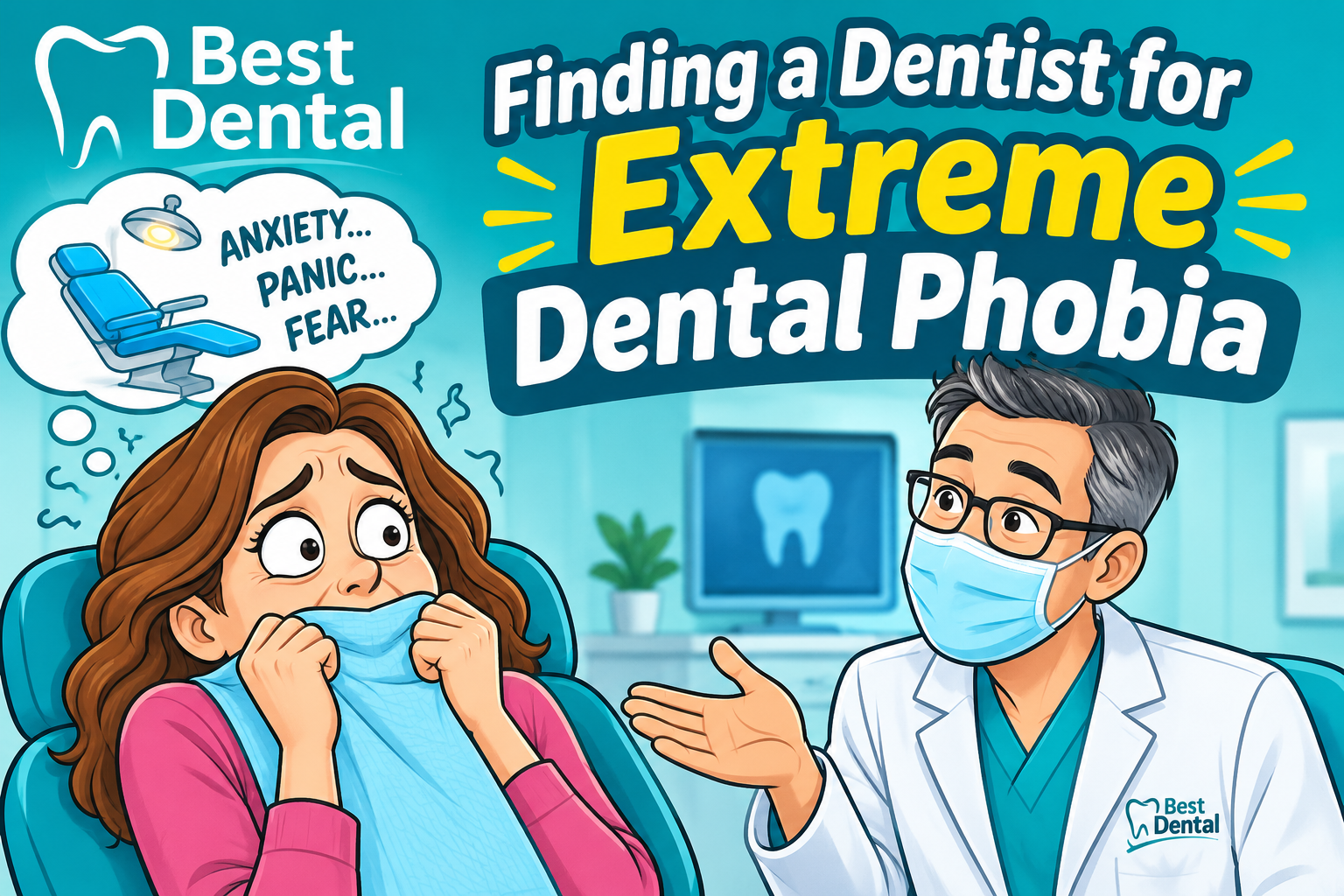
Look for a dentist who offers sedation, patience and clear prices.
The right dentist for extreme dental phobia offers more than one level of sedation and has the state permit for it. They let you meet them before any treatment, give you a written plan and price up front and let you stop at any time. Most of all, they never shame you for how long you’ve waited.
Start with a phone call, not an appointment. Ask the questions in this guide. If an office rushes you or won’t answer, keep looking. If you live near Richmond, Sugar Land, Rosenberg or west Houston, you can see how we care for nervous patients at Best Dental.
Is It Anxiety or a Phobia?
Research suggests about 36% of people feel some fear of the dentist, and about 12% feel extreme fear. Knowing which one you have helps you pick the right kind of help.
Dental anxiety
You feel nervous before and during a visit, but you still go.
- Butterflies in the waiting room
- Tense in the chair
- Relief when it’s over
Dental phobia
The fear is so strong that you avoid the dentist, even when something hurts.
- Racing heart, sweating or nausea just thinking about it
- Trouble sleeping before a visit
- Canceling or never booking at all
- Living with pain to avoid the chair
Doctors call extreme dental fear dentophobia. The Cleveland Clinic describes it as a fear that’s out of proportion to the situation and that keeps people from care. If that sounds like you, you’ll want a dentist who has real tools for it, not just a friendly smile.
8 Things to Look For in a Dentist
Not every dentist is set up for extreme fear. These are the things that matter most.
More than one level of sedation
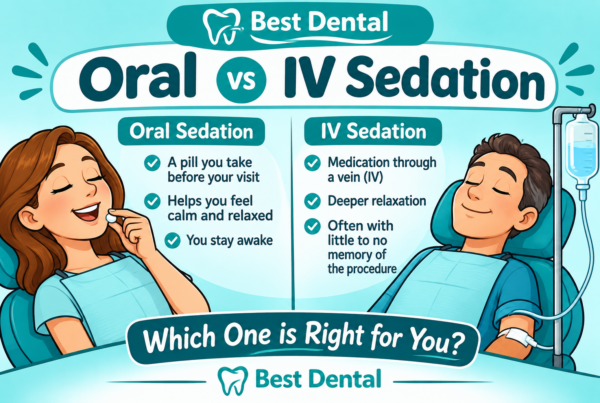
Look for laughing gas, a calming pill and IV sedation. That way the dentist can match the level to your fear. In Texas, each level needs its own state permit.
A chance to meet first
A good office lets you meet the dentist and see the room before any treatment. Some offer a visit where nothing touches your mouth at all.
Prices and plans in writing
Fear of a surprise bill makes everything worse. Ask for a written plan with every price before work starts.
A stop signal you control
You should be able to raise your hand and have the dentist stop right away. Agree on the signal before you start.
No shame, no lectures
If you haven’t been in years, the dentist should focus on what’s next, not scold you about the past.
The same dentist each time
Trust takes time. Seeing the same dentist every visit means you don’t have to start over with a stranger.
They explain as they go
Knowing what comes next lowers fear. Look for a dentist who tells you each step before they do it.
Most care under one roof
Being sent across town to a new office for each treatment means building trust all over again. Fewer handoffs are easier.
Questions to Ask on the Phone
A phone call is a safe first step. You don’t have to book anything. Use these questions and listen to how the office answers.
What to ask, and what a good answer sounds like
If an office can’t answer these clearly, that tells you something.
Red Flags to Watch For
You deserve a dentist who makes you feel safe. These signs mean an office may not be the right fit for extreme fear.
They rush you
The front desk hurries you off the phone or the dentist starts before your questions are answered.
They lecture or shame you
Comments about how bad your teeth are or how long you waited. That only makes fear worse.
No prices until you’re in the chair
If they won’t give a price ahead of time, you may face pressure and surprises later.
Vague answers about sedation
They can’t tell you which permit the dentist has or how they keep you safe while sedated.
Pressure to do it all at once
A big plan pushed on the first day. A good dentist starts with what’s urgent and lets you pace the rest.
They brush off your fear
“Just relax, it’s nothing.” Your fear is real, and a good dentist treats it that way.
Sedation, Therapy or Both?
Sedation helps you get through a visit. Therapy can help the fear shrink over time. Many people use both.
Therapy can work well for dental phobia. In one study, 21 people who needed IV sedation tried CBT first. After that, 20 of them got dental work with no sedation. The Cleveland Clinic also lists exposure therapy, relaxation and hypnosis as options.
But therapy takes time. If you have pain or an infection now, sedation lets you get care today. You can work on the fear later. A good dentist will be happy to work alongside your therapist.
Wondering about cost? Our post on what sedation dentistry costs breaks it down.
Near Richmond, Sugar Land or Houston? We’re built for this.
Three levels of sedation, a written plan before any work and the same two doctors every visit. No lectures, ever.
See How We Care for Nervous Patients →Your First Steps, Made Small
Big goals feel scary. Small steps don’t. Here’s a simple path from “I can’t” to sitting in the chair.
Make a short list
Find 2 or 3 nearby offices that offer sedation. Read their reviews and look for words like “patient,” “gentle” and “no judgment.”
Check the dentist’s license
Look each dentist up on the Texas license search. It takes a minute and helps you feel safe.
Call, but don’t book yet
Ask the questions from this guide. Tell them about your fear up front. Notice how they make you feel.
Meet before any treatment
Ask for a visit just to talk and see the room. Bring someone you trust if that helps.
Plan your coping tools
The ADA’s tips for dental anxiety include headphones, a stop signal and slow breathing. Pick the ones that work for you.
Start with what’s urgent
Your first treatment can be small. Each good visit makes the next one easier.
Questions About Dental Phobia
Tap a question to open it.
More for Nervous Patients
Your First Step Can Be Just a Phone Call.
No appointment and no commitment. Tell us what scares you, and we’ll tell you how we’d help. Learn more about our sedation dentistry for nervous patients, or call when you’re ready.