Deep Teeth Cleaning Cost in Houston, TX — What You'll Actually Pay in 2026 | Best Dental
Deep Cleaning · Scaling & Root Planing · Houston Area · 2026 Pricing Guide

Deep Teeth Cleaning Cost
in Houston, TX
What You'll Actually Pay in 2026

Houston-area deep cleaning (scaling & root planing) typically costs $150–$350 per quadrant — or $600–$1,400 for a full mouth. Best Dental charges $150 per quadrant or $600 for a full mouth, just 25 minutes from Southwest Houston.

$150–$350 Per Quadrant in Houston
4 Quadrants in a Full Mouth
~1 hr Typical Appointment Length
25 min From SW Houston
Book a Periodontal Evaluation

What Is Deep Teeth Cleaning?

Deep teeth cleaning — clinically called scaling and root planing (SRP) — is a non-surgical periodontal treatment that removes plaque, tartar, and bacterial deposits from below the gum line. Unlike a regular prophylaxis cleaning that polishes the surfaces of your teeth, deep cleaning targets the roots and the pockets that form between your teeth and gums when periodontal disease sets in.

When bacteria accumulate below the gum line and are left untreated, they cause the gums to pull away from the teeth, forming deepening pockets. Those pockets trap more bacteria, leading to bone loss, loose teeth, and eventually tooth loss. Deep cleaning is the front-line treatment to stop that progression before it reaches stages that require surgery or extractions.

"Deep cleaning doesn't just remove buildup — it reshapes the root surface so the gum tissue can reattach to the tooth. That reattachment is what halts the disease progression."

The procedure is performed in two stages: scaling, which removes tartar and plaque from above and below the gum line using ultrasonic instruments and hand scalers, and root planing, which smooths the root surfaces to discourage future bacterial adhesion and allow healthy gum reattachment. Most patients are surprised by how manageable the procedure is — local anesthesia keeps discomfort minimal, and most people return to normal activity the same day.

Deep cleaning is typically recommended when periodontal pocket depths exceed 4mm, when there is visible tartar buildup below the gum line on X-rays, or when a patient shows signs of active periodontal disease. A routine exam and gum charting at Best Dental will tell you definitively whether you need it — and give you a transparent cost estimate before any treatment begins.

Deep Cleaning Costs in Houston in 2026

Deep cleaning is priced per quadrant — the mouth is divided into four sections. Here's what each scenario typically costs in the Houston metro.

Best Dental · Richmond, TX · 25 Min from Houston
$150
Per Quadrant
or
$600
Full Mouth (4 Quadrants)
✓ Local Anesthesia Included ✓ X-Rays Included ✓ Transparent Written Estimate ✓ Insurance Applied ✓ Same-Week Appointments
Book a Periodontal Evaluation
Single Quadrant
One Section of the Mouth
$150–$350
per quadrant · Houston market rate
Mild localized disease affecting only one area. Less common — most patients require 2–4 quadrants.
Two Quadrants
Half-Mouth Treatment
$300–$700
combined · Houston market rate
Often split across two appointments — upper and lower, or left and right. Common presentation.
Periodontal Maintenance
Ongoing After Deep Clean
$100–$200
per visit · every 3–4 months
Required after SRP to maintain results. More thorough than a standard cleaning — targets the same subgingival areas.
Service Houston Market Rate Best Dental
Scaling & Root Planing (per quadrant) $150–$350 $150
Full Mouth Deep Clean (4 quadrants) $600–$1,400 $600
Periodontal Exam & Charting $50–$150 Included in plan
X-Rays (if not current) $100–$250 Included
Local Anesthesia Usually included Included
Antibiotic Therapy (if needed) $50–$150 Quoted if needed
Periodontal Maintenance Visit $100–$200 Every 3–4 months after SRP
⚠️ Before accepting any deep cleaning quote, ask: (1) Is local anesthesia included or billed separately? (2) Are X-rays included or additional? (3) How many quadrants are being treated — and do I actually need all of them? At Best Dental, X-rays and local anesthesia are included in the $150/quadrant price. A thorough periodontal evaluation with pocket depth measurements should always precede any deep cleaning recommendation.

Deep Cleaning vs. Regular Cleaning — What's the Difference?

Patients often confuse the two. They are fundamentally different procedures with different purposes, different tools, and very different price points.

Factor Regular Cleaning (Prophylaxis) Deep Cleaning (Scaling & Root Planing)
Purpose Preventive maintenance for healthy gums Treatment for active gum disease
Where It Cleans Above the gum line (crown surfaces) Above and below the gum line (roots)
Anesthesia Needed No — no numbing required Yes — local anesthesia per quadrant
Pocket Depths Targeted Normal (1–3mm) Diseased (4mm+)
Appointment Length 30–60 minutes 60–90 min per session (2 sessions typical)
Houston Cost $100–$200 $600–$1,400 full mouth
Insurance Coverage Usually covered 100% twice/year Partially covered when medically indicated
Follow-Up Required Next cleaning in 6 months Periodontal maintenance every 3–4 months

The most important thing to understand is that a regular cleaning cannot treat gum disease — it can only maintain healthy gums that don't have it. If your hygienist is measuring pocket depths of 4mm or more, bleeding on probing, or seeing bone loss on X-rays, a regular cleaning is the wrong procedure. Performing a prophy on a patient who needs SRP is one of the most common under-treatment errors in general dentistry — and it allows the disease to continue progressing while giving the patient a false sense that their mouth has been treated.

Signs You May Need a Deep Cleaning

Periodontal disease is often silent in its early stages — many patients don't know they have it until a proper examination reveals the damage. Here are the most common warning signs.

🩸
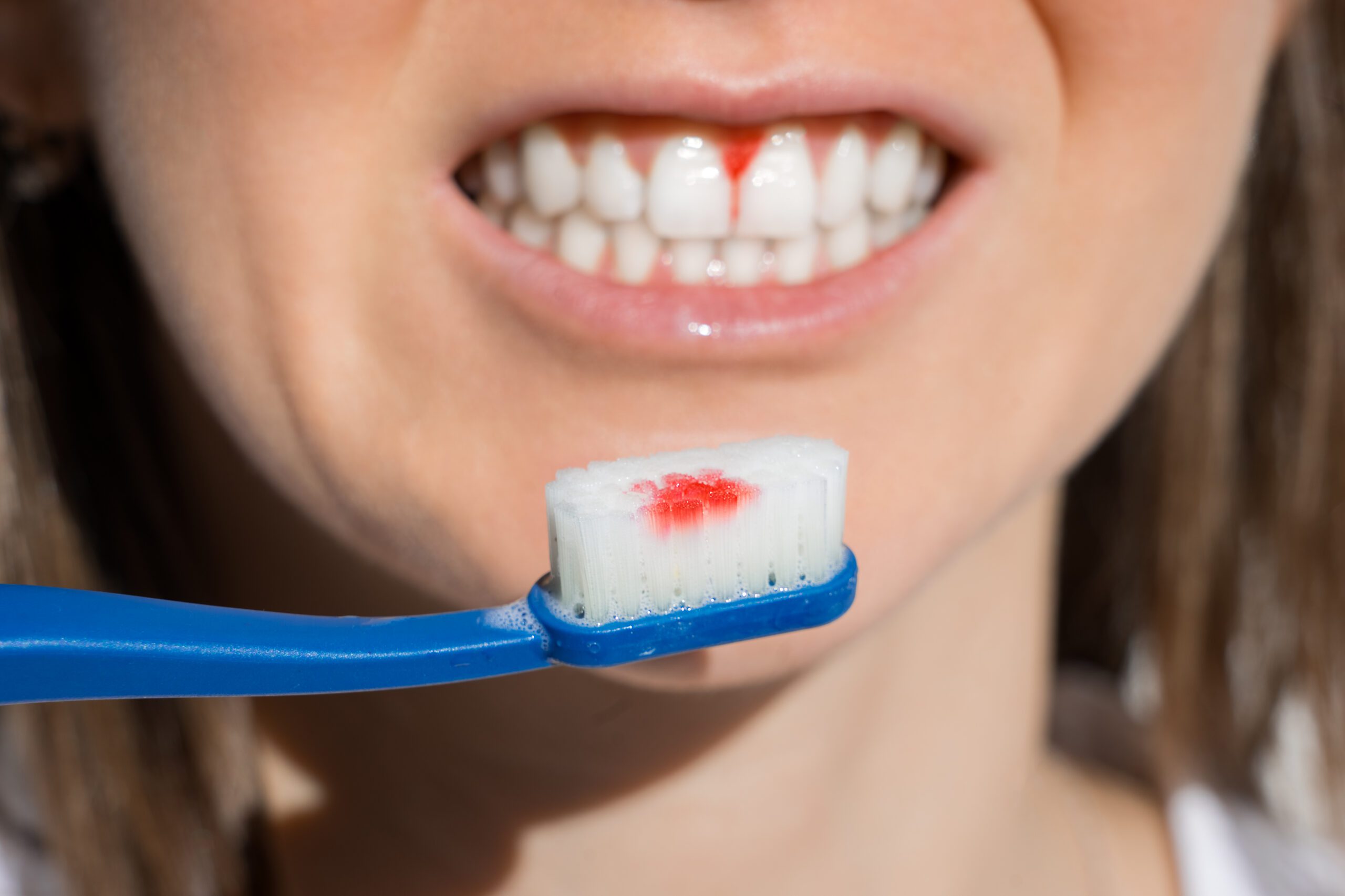
Gums That Bleed When You Brush or Floss

Bleeding is not normal — it signals inflammation. Healthy gums don't bleed from gentle brushing. Persistent bleeding is often the earliest detectable sign of gingivitis or early periodontitis.

📏
Pocket Depths of 4mm or More

At your exam, your hygienist measures the space between tooth and gum. Normal is 1–3mm. Depths of 4mm+ indicate periodontal disease. Depths of 5mm or more usually require immediate SRP treatment.

😬
Persistent Bad Breath

Halitosis that doesn't resolve with brushing and mouthwash is a classic sign of subgingival bacteria. The pockets formed by gum disease harbor anaerobic bacteria that produce sulfur compounds — the source of the odor.

↕️
Gum Recession

Gums that look like they are "pulling away" from the teeth — making teeth appear longer — indicate that the attachment between gum and tooth is breaking down. This is a hallmark of advancing periodontal disease.

🦷
Loose or Shifting Teeth

When bone loss progresses, teeth lose their support structure and begin to feel loose or shift position. This indicates advanced periodontitis that requires prompt treatment to prevent tooth loss.

🔬
Tartar Visible Below the Gum Line on X-Rays

Calculus (hardened tartar) deposits on root surfaces below the gum line are visible on dental X-rays. This is a definitive indicator that subgingival deposits exist and that deep cleaning is needed to remove them.

🫀
Systemic Risk Factors

Diabetes, smoking, and cardiovascular disease significantly increase periodontal disease risk and severity. Patients with these conditions warrant more frequent periodontal evaluations even without visible symptoms.

📅
No Dental Visit in 2+ Years

Long gaps between dental visits allow plaque and tartar to accumulate in areas that brushing can't reach. A full periodontal evaluation after a prolonged absence frequently reveals the need for SRP before returning to regular maintenance.

⚠️ Important: You cannot diagnose your own need for deep cleaning based on symptoms alone — many patients with significant periodontal disease have no pain whatsoever. The only way to know for certain is a periodontal examination with pocket depth measurements and current X-rays. If you haven't had a full periodontal evaluation recently, schedule one before assuming a regular cleaning is sufficient.

What Drives Deep Cleaning Costs Up or Down

Six factors explain most of the price variation you'll see across Houston-area dental and periodontal offices.

🗺️
Number of Quadrants Treated
Deep cleaning is billed per quadrant of the mouth. If only one or two quadrants show active disease, you pay less. Full-mouth treatment (all four quadrants) costs more but is often what's required for patients with generalized periodontitis. Never pay for quadrants that don't need treatment — a good provider will show you the charting that justifies each area treated.
Highest Impact
📊
Severity of Disease
Mild periodontitis with 4–5mm pockets requires less chair time and fewer instrument passes than advanced disease with 7–9mm pockets. More advanced cases may also require adjunctive antibiotic therapy — either localized (placed directly in the pocket) or systemic — which adds to the total cost.
High Impact
🏙️
Practice Location & Overhead
A periodontal practice or general dentist inside Loop 610 or in high-rent Houston corridors like the Galleria or River Oaks passes significantly higher overhead costs to patients. Suburban practices in Fort Bend County — with lower rent and operating costs — routinely charge 20–40% less for identical procedures performed with the same instruments and materials.
High Impact
👩‍⚕️
General Dentist vs. Periodontist
Periodontists — specialists who focus exclusively on gum disease — typically charge more per quadrant than general dentists. For most patients with mild to moderate periodontitis, a skilled general dentist with hygienists trained in SRP delivers equivalent outcomes at lower cost. Severe or refractory cases may warrant a specialist referral, but the majority do not.
Moderate Impact
Ultrasonic vs. Hand Instruments
Modern practices use ultrasonic scalers — which use high-frequency vibration to break up tartar efficiently and flush bacteria from pockets — alongside traditional hand instruments. Ultrasonic-only or combined approaches are faster and often more comfortable. Practices that rely exclusively on hand scaling may charge less but require more time per quadrant.
Lower Impact
📸
Imaging & Diagnostic Add-Ons
If your X-rays are more than 12–18 months old, a new set will be needed before treatment — adding $100–$250. Microbiological testing (identifying specific bacteria in your pockets) is sometimes recommended for severe cases and adds cost. Always ask which diagnostic fees are included in your quoted treatment price.
Lower Impact

What to Expect During Your Deep Cleaning

Most patients are surprised by how straightforward the procedure is. Here's a step-by-step walkthrough of what happens at Best Dental from evaluation through completion.

1
Before Treatment
Periodontal Evaluation & Charting
Your hygienist or dentist measures the pocket depth at six points around every tooth using a periodontal probe — a small, calibrated instrument placed between tooth and gum. Depths of 1–3mm are healthy. Readings of 4mm+ indicate disease. This charting, combined with a review of your X-rays, creates the treatment map that determines which quadrants need deep cleaning and how involved the procedure will be.
2
Start of Appointment
Local Anesthesia
Each quadrant is numbed with local anesthesia before treatment begins. Most practices apply topical numbing gel first, then inject the anesthetic. Onset takes 2–3 minutes. The goal is complete numbness in the treated area — you should feel pressure but no pain throughout the procedure. Deep cleaning without adequate anesthesia is not acceptable practice.
3
Core of the Procedure
Scaling — Removing Deposits
Using ultrasonic scalers and fine-tipped hand instruments, your hygienist systematically removes calculus (hardened tartar) and bacterial biofilm from the crown surfaces, the gum margin, and down into the periodontal pockets. Ultrasonic tips vibrate at high frequency to break apart calculus while simultaneously flushing the pocket with water. The scraping sounds and pressure are normal — they don't indicate pain.
4
Root Treatment
Root Planing — Smoothing the Surfaces
After scaling removes the deposits, your hygienist uses curettes to smooth the root surfaces — removing roughened cementum and any residual bacterial toxins that have penetrated the root. A smooth root surface is critical because it allows healthy gum tissue to reattach to the tooth and prevents bacterial adhesion going forward. This is what distinguishes SRP from a standard cleaning.
5
If Indicated
Antibiotic Therapy
For patients with deep pockets (6mm+) or significant bacterial load, your provider may place localized antibiotic gel directly into the treated pockets, or prescribe a short course of oral antibiotics. This adjunctive therapy reduces residual bacteria and improves healing outcomes, particularly in areas where instrumentation alone may not fully eliminate the infection.
6
4–6 Weeks Later
Re-Evaluation
After treatment, a re-evaluation appointment measures your pocket depths again to assess healing response. Healthy tissue typically shows a 1–2mm reduction in pocket depth as the gums reattach. This visit determines whether additional SRP is needed or whether you can transition to a standard periodontal maintenance schedule (typically every 3–4 months, replacing your twice-yearly regular cleanings).

Deep Cleaning Aftercare & What to Expect

Most patients tolerate deep cleaning very well and return to normal activity the same day. The anesthesia wears off within 2–4 hours, and the most common post-procedure experience is mild soreness and sensitivity — similar to what you'd feel after an unusually thorough cleaning. Here's what to expect in the hours and days that follow:

First 24 hours: Avoid extremely hot or cold foods while sensitivity is elevated. Soft foods are recommended — avoid anything hard, crunchy, or sharp (chips, seeds, popcorn) that could irritate treated tissue. Don't smoke for at least 24 hours, as nicotine impairs healing and reduces the effectiveness of treatment. Rinse gently with warm salt water if your provider recommends it.

Days 2–7: Mild swelling and tenderness are normal and typically peak at 48 hours before subsiding. Over-the-counter ibuprofen or acetaminophen manages most post-procedure discomfort. Your gums may bleed slightly when you brush — this is normal and will decrease as healing progresses. Continue brushing and flossing gently; stopping oral hygiene to "protect" the area actually impedes healing.

Weeks 2–6: Gum tissue heals and begins reattaching to the cleaned root surfaces. You may notice your gums look slightly more receded — this is the swelling resolving, not your gums receding further. Sensitivity to cold typically decreases as the gum tissue stabilizes. Your 4–6 week re-evaluation will measure whether the treatment achieved its goals.

"The treatment doesn't end at the appointment. Periodontal disease is a chronic condition — deep cleaning gets it under control, but consistent maintenance every 3–4 months is what keeps it there."

Long-term: After successful deep cleaning, you transition to a periodontal maintenance schedule — typically visits every 3–4 months rather than every 6 months. These maintenance appointments are more thorough than standard cleanings, targeting the same subgingival areas treated during SRP. Skipping maintenance is the single most common reason periodontal disease recurs after successful treatment.

Insurance & Financing for Deep Cleaning

Deep cleaning is a medically indicated procedure — most PPO plans provide meaningful coverage when gum disease is properly diagnosed.

PPO dental insurance: Most PPO plans cover scaling and root planing at 50–80% after your deductible when periodontal disease is documented and diagnosed. Unlike implants — which are commonly treated as elective — deep cleaning is a disease-treatment procedure that insurance companies generally recognize as medically necessary. Coverage typically requires documented pocket depths of 4mm+ and clinical signs of periodontal disease in the treated quadrants. Best Dental verifies your specific benefits and provides a written estimate before any treatment begins.

Annual maximums: Most PPO plans have an annual maximum of $1,000–$2,000. If your deep cleaning cost approaches that ceiling, we can phase treatment across two calendar years — completing two quadrants in December and two in January — to effectively double your insurance benefit toward the total cost.

CareCredit financing: Qualified patients can finance deep cleaning at 0% interest for 6–24 months through CareCredit. At Best Dental's $600 full-mouth rate, that breaks down to as little as $25/month with no interest. See our full pricing page →

No insurance: Our Dental Discount Plan provides savings on all services including periodontal treatment — no waiting periods, no annual maximums, no claims to file.

Serving Houston, Sugar Land, Missouri City & Fort Bend County

Best Dental's Richmond location brings the same thorough periodontal care Houston patients expect — at significantly lower overhead cost, just 25 minutes away.

Southwest Houston
~20 min via Hwy 90
Sugar Land
~15 min via US-59
Missouri City
~18 min via Hwy 6
Stafford
~12 min via US-90
Pearland
~28 min via Hwy 288
Katy
~30 min via I-10 / 99
Rosenberg
~10 min local
Cinco Ranch
~22 min via Grand Pkwy

Best Dental is located at 22377 Bellaire Blvd, Suite 400 in Richmond, TX — accessible via Grand Parkway 99 from Missouri City, Stafford, Sugar Land, and all of Southwest Houston. Free parking and same-week appointments mean you're not waiting weeks to address an active periodontal condition that continues to progress while you delay.

Every deep cleaning at Best Dental begins with a comprehensive periodontal evaluation — pocket charting, X-ray review, and a frank conversation about what your mouth actually needs. We don't recommend deep cleaning unless the clinical data supports it, and we don't treat more quadrants than necessary. Patients receive a written treatment plan and cost estimate before agreeing to anything.

For Houston-area patients looking for more information about periodontal care available at Best Dental, visit our Houston patient hub or view our full pricing page for a complete picture of what treatment costs.

Frequently Asked Questions

How much does deep teeth cleaning cost in Houston in 2026?
Deep teeth cleaning (scaling and root planing) in Houston typically costs $150–$350 per quadrant in 2026. A full-mouth deep cleaning covering all four quadrants ranges from $600 to $1,400 at most Houston-area practices. Best Dental charges $150 per quadrant or $600 for a complete full-mouth deep cleaning — X-rays and local anesthesia included, no hidden fees. Antibiotic therapy is quoted separately only if clinically indicated. Best Dental provides a written estimate covering all expected costs before treatment begins.
Is deep cleaning covered by dental insurance?
Yes — most PPO dental plans cover scaling and root planing at 50–80% after your deductible when periodontal disease is clinically documented. This is one of the more insurance-friendly dental procedures because it treats an active disease rather than being elective. Coverage requires documented pocket depths of 4mm+ and clinical signs of periodontal disease. Best Dental verifies your specific benefits and applies all coverage before calculating your out-of-pocket cost.
What is the difference between deep cleaning and regular cleaning?
A regular cleaning (prophylaxis) removes plaque and tartar from the surfaces of your teeth above the gum line and is a preventive maintenance procedure for patients with healthy gums. Deep cleaning (scaling and root planing) goes below the gum line to remove deposits from root surfaces and treats active periodontal disease. They are entirely different procedures — a regular cleaning cannot treat gum disease, and performing one on a patient who needs SRP leaves the underlying disease untreated.
Is deep cleaning painful?
The procedure is performed under local anesthesia, so you should not feel pain during treatment — only pressure and vibration from the instruments. Post-procedure soreness and mild sensitivity are common for 2–5 days and are typically managed with over-the-counter ibuprofen or acetaminophen. Most patients are surprised by how manageable the experience is. Sedation is available for anxious patients who want additional comfort during the procedure.
How many appointments does deep cleaning take?
Full-mouth deep cleaning is typically completed in two appointments — treating two quadrants per visit. This approach allows one side of the mouth to heal while the other is treated, and limits the amount of time you're numb during a single visit. Some practices treat the full mouth in one extended appointment. A re-evaluation appointment 4–6 weeks after completing treatment assesses healing and determines your ongoing maintenance schedule.
What happens if I skip deep cleaning when I need it?
Periodontal disease is progressive — it doesn't stabilize on its own. Untreated, the bacterial infection continues to destroy the bone and connective tissue supporting your teeth. Mild periodontitis that requires a $600–$800 deep cleaning today can progress to advanced disease requiring periodontal surgery ($1,000–$4,000+), bone grafting, or tooth loss and implants. Early intervention with deep cleaning is almost always the most cost-effective path.
How often do I need deep cleaning once I've had it done?
You don't repeat full SRP on a regular schedule — you transition to periodontal maintenance visits every 3–4 months. These maintenance appointments are more thorough than standard cleanings, targeting the same subgingival areas treated during your deep cleaning. Most patients on a consistent 3–4 month maintenance schedule successfully prevent recurrence of active disease and never need to repeat full SRP.
Does deep cleaning cause gum recession?
No — deep cleaning treats the disease that causes recession, not the other way around. After treatment, gums may appear slightly more receded as post-procedure swelling resolves, revealing the true position of the gum tissue. This is temporary and resolves within a few weeks. The untreated periodontal disease itself causes actual, progressive recession — deep cleaning stops that progression.
Do I need a periodontist for deep cleaning, or can a general dentist do it?
For most patients with mild to moderate periodontitis, a general dentist or dental hygienist trained in SRP delivers equivalent outcomes to a periodontist at lower cost. Periodontists are specialists appropriate for severe disease (advanced bone loss, aggressive periodontitis, patients who haven't responded to SRP), but the majority of patients do not need a specialist for their initial deep cleaning. Best Dental performs SRP in-house — no referral required for most cases.
Can I eat before a deep cleaning appointment?
Yes — you can eat normally before your appointment. Since you'll receive local anesthesia that takes 2–4 hours to fully wear off, it's practical to eat a meal beforehand so you're not hungry during that window. After treatment, wait until the numbness wears off before eating to avoid accidentally biting your cheek or tongue, and stick to soft foods for the rest of the day.
Key Takeaways
Deep cleaning in Houston costs $150–$350 per quadrant, or $600–$1,400 for a full mouth in 2026
Best Dental charges $150/quadrant or $600 full mouth — at the low end of the Houston market, 25 minutes away
Deep cleaning treats active gum disease — a regular cleaning cannot substitute for it when periodontal disease is present
Most PPO plans cover 50–80% of SRP cost when gum disease is clinically documented — one of the more insurance-friendly procedures
The procedure uses local anesthesia — most patients experience pressure, not pain, during treatment
Full-mouth treatment is typically split over 2 appointments, with a re-evaluation at 4–6 weeks to measure healing
After deep cleaning, you transition to periodontal maintenance every 3–4 months — this is what prevents recurrence
Untreated periodontitis leads to surgery, bone grafts, or tooth loss — early SRP is almost always the most cost-effective intervention
Best Dental serves Houston, Sugar Land, Missouri City, Stafford, and Pearland — 20–30 min via Grand Parkway 99, free parking
CareCredit financing available — spread your treatment cost with 0% interest for qualified patients
Get a Periodontal
Evaluation Today

Find out if you need deep cleaning — with a thorough exam, pocket charting, and a transparent written estimate before any treatment begins. Serving Houston, Sugar Land, Missouri City, Stafford, and Pearland. Same-week appointments available.
Dr. Naderi

Author Dr. Naderi

Dr. Sonny Naderi is a fellowship-trained in oral surgery with over 20 years of experience and 25,000+ wisdom teeth extractions. His expertise in surgical dentistry, implants, and complex procedures, combined with a gentle, patient-focused approach, makes him one of Richmond's most trusted dental professionals.

More posts by Dr. Naderi
Close Menu
Call Now
Request an Appointment