
What Causes Tooth Sensitivity
and How to Fix It
A complete guide to every cause of tooth sensitivity — and exactly what to do about each one.
In This Article
What causes tooth sensitivity?
Tooth sensitivity occurs when the dentin — the inner layer of your tooth — becomes exposed. Dentin contains thousands of microscopic channels (dentinal tubules) that lead directly to the tooth nerve. When temperature, pressure, or acidic foods reach these channels, they trigger sharp, brief pain.
The most common causes are: enamel erosion (from acidic foods or acid reflux), gum recession (exposing the root), a cavity, a cracked tooth, teeth grinding, a new or failing filling, gum disease, aggressive brushing, and recent whitening treatment. The cause determines the fix — some resolve with desensitizing toothpaste, others require a filling, crown, or root canal.
How Tooth Sensitivity Works
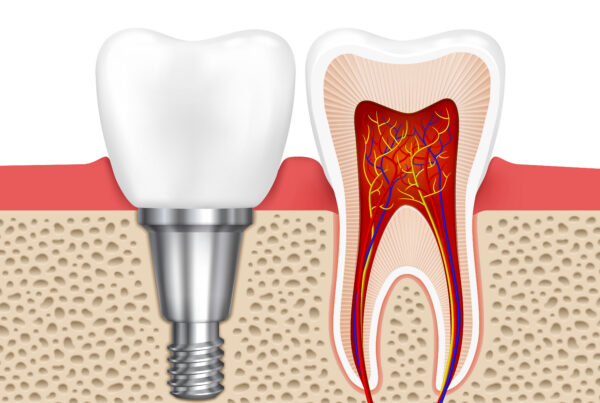
Understanding why teeth become sensitive requires a quick look at tooth anatomy. A healthy tooth has three layers: the hard outer enamel, the softer inner dentin, and the central pulp containing nerves and blood vessels.
Enamel covers the crown of the tooth above the gumline. Below the gumline, the root surface is covered by a softer tissue called cementum. Both enamel and cementum protect the underlying dentin.
When enamel wears away or gums recede, dentin is exposed. Dentin contains between 20,000 and 75,000 microscopic tubes — dentinal tubules — that run from the surface directly to the pulp nerve. When cold, heat, acidity, or pressure reaches these tubules, fluid inside them shifts, stimulating the nerve and producing the characteristic sharp, shooting pain of tooth sensitivity.
The 9 Most Common Causes of Tooth Sensitivity — and How to Fix Each
Enamel is the hardest substance in the human body — but it's not invincible. Acidic foods and drinks (citrus, soda, vinegar, sports drinks) gradually dissolve the mineral structure of enamel. Acid reflux (GERD) exposes teeth to stomach acid repeatedly. Once enamel is gone, it doesn't regenerate — the body cannot rebuild it. This leaves dentin permanently closer to the surface, producing sensitivity that worsens over time without intervention.
The root surface below the gumline is covered by cementum, a softer tissue than enamel. When gums recede — pulling back from the tooth — the root is exposed. Root surface dentin is significantly more sensitive than crown dentin because the dentinal tubules are wider and more numerous. Even a millimeter or two of recession can produce significant sensitivity, particularly along the gumline where the root meets the crown.
Causes of gum recession include aggressive brushing technique, periodontal disease, thin gum tissue, tooth grinding, and orthodontic movement.
A cavity is bacterial decay that breaks down tooth structure from the outside in — through enamel toward dentin. As decay progresses into dentin, the tooth becomes sensitive, particularly to sweet foods and cold. Many patients first notice a cavity as sensitivity to something sweet — this is a reliable indicator that decay has reached dentin and needs to be addressed. Left untreated, the decay continues toward the pulp, eventually causing infection.
A crack in a tooth can be invisible to the naked eye but produce significant sensitivity — often a sharp, shooting pain when biting down in a specific way, or sharp pain from cold that resolves quickly. Cracked tooth syndrome is notoriously difficult to diagnose because the crack may not show on an X-ray. The pain is often erratic — coming and going, triggered only by certain bite angles or temperatures.
If a crack extends into the pulp, the tooth becomes acutely sensitive, often with lingering pain. If the crack reaches the root, the tooth may not be salvageable.
Bruxism — habitual grinding or clenching of the teeth, typically during sleep — gradually wears down enamel from the biting surfaces. Over years, this flattens and thins the enamel until dentin is exposed, producing general sensitivity across multiple teeth simultaneously. Bruxism also generates cracks and fractures and places excessive stress on the jaw joint (TMJ). Many patients don't realize they grind until a dentist notices the wear pattern or a partner mentions noise during sleep.
A new filling can cause temporary sensitivity for one to three weeks as the tooth adjusts. This is normal — the tooth nerve has been disturbed during preparation and placement, and mild sensitivity to cold or biting is expected. If sensitivity from a new filling persists beyond three to four weeks, or worsens rather than improving, the filling may be too high (causing bite trauma) or the tooth may be progressing toward pulpitis.
An old failing filling that has cracked, shrunk, or separated from the tooth margins allows bacteria and fluids to reach dentin, producing renewed sensitivity in a tooth that was previously symptom-free.
Gum disease causes the supporting bone and gum tissue around teeth to break down. As bone is lost, gums recede, exposing root surfaces. The inflammation of active gum disease also makes teeth more sensitive generally. Unlike recession from brushing, recession from periodontitis is accompanied by bone loss — making it more structurally serious and not addressable with desensitizing toothpaste alone.
Brushing too hard with a medium or hard-bristled toothbrush physically abrades enamel from the tooth surface — particularly at the gumline where enamel is thinnest. This produces a characteristic notch or groove at the gumline (abrasion cavity) and causes gum recession simultaneously. More force does not equal cleaner teeth — plaque is soft and requires only light pressure to remove. Harder brushing primarily damages tooth and gum tissue.
Both professional and over-the-counter tooth whitening products use peroxide to bleach the tooth's internal structure. Peroxide temporarily increases the permeability of enamel and dentin, making the tooth more sensitive during and immediately after treatment. This is the most common side effect of whitening and affects roughly half of patients who bleach. The sensitivity is typically generalized, short-lived, and resolves completely within 48–72 hours after treatment ends.
Cold vs. Hot Sensitivity — What the Difference Tells You
The pattern of your sensitivity — specifically whether it's triggered by cold, heat, sweet, pressure, or nothing at all — provides diagnostic information about what's causing it and how urgently it needs attention.
| Trigger | Duration | Likely Cause | Urgency |
|---|---|---|---|
| Cold only — brief (<10 sec) | Resolves immediately | Dentin hypersensitivity, gum recession, enamel erosion | Monitor / home treatment |
| Cold — lingering (30+ sec) | Slow to resolve | Pulpitis (nerve inflammation), deep cavity | See dentist soon |
| Sweet foods / drinks | Brief | Cavity reaching dentin | See dentist — needs filling |
| Biting down — sharp pain | Brief, location-specific | Cracked tooth, high bite on filling | See dentist soon |
| Heat (warm / hot) | Brief to lingering | Pulpitis, dying nerve, abscess | See dentist urgently |
| Heat relieves cold pain | Pain stays until heat applied | Irreversible pulpitis — root canal needed | See dentist urgently |
| Spontaneous / throbbing | Constant or recurring | Abscess, pulp necrosis, acute infection | Emergency — same day |
| Multiple teeth generally | Brief | Enamel erosion, bruxism, new whitening | Monitor / home treatment |
When to See a Dentist for Tooth Sensitivity
Not all tooth sensitivity requires a dentist visit. General sensitivity across multiple teeth from a new whitening product is expected and self-resolving. But several patterns of sensitivity are clinical warning signs that should not be managed at home.
See a dentist promptly if:
- Sensitivity is localized to one specific tooth. Generalized sensitivity across all teeth is usually environmental (erosion, whitening). Single-tooth sensitivity points to a structural problem: cavity, crack, failing filling, or dying nerve.
- Pain lingers more than 30 seconds after the trigger is removed. Brief sensitivity that resolves immediately is dentin hypersensitivity. Lingering pain indicates pulp involvement.
- Sensitivity has persisted for more than two weeks without improvement from desensitizing toothpaste. It isn't resolving on its own.
- You have swelling, a visible bump on the gum, or a bad taste. These indicate an abscess — a dental emergency requiring same-day care.
- You experience pain when biting down. This is the hallmark of a cracked tooth or a bite problem that will worsen without treatment.
Treat as a dental emergency and call the same day if:
- Spontaneous, throbbing pain with no obvious trigger — this indicates pulp necrosis or active abscess.
- Pain that wakes you from sleep — a reliable indicator of irreversible pulpitis.
- Visible swelling of the face, jaw, or neck — dental infections can spread rapidly and become life-threatening.
- Heat relieves cold pain — a specific diagnostic pattern indicating irreversible pulpitis.
Sensitivity that needs attention?
Best Dental offers same-day appointments for dental pain. 22377 Bellaire Blvd, Suite 400, Richmond TX 77407.
Emergency Dental Care →Home Remedies That Actually Work for Tooth Sensitivity
Several evidence-based strategies reduce tooth sensitivity at home. These work best for dentin hypersensitivity from enamel erosion, gum recession, or aggressive brushing — not for sensitivity caused by cavities, cracks, or nerve problems.
Desensitizing toothpaste
The most effective over-the-counter treatment for dentin hypersensitivity. Two active ingredients are proven to work via different mechanisms:
- Potassium nitrate (Sensodyne Original, Colgate Sensitive) — diffuses into dentinal tubules and desensitizes the nerve over time. Takes 2–4 weeks of consistent use to show effect. Works by reducing nerve responsiveness.
- Stannous fluoride (Sensodyne Rapid Relief, Crest Pro-Health) — physically occludes (plugs) dentinal tubules, blocking the pathway to the nerve. Can provide noticeable relief within days. Also strengthens enamel.
For maximum effect, apply desensitizing toothpaste directly to the sensitive area with your finger after brushing and leave it — don't rinse. This concentrates the active ingredient at the exposure site.
Dietary changes
- Limit acidic foods and drinks — citrus, soda, vinegar, sports drinks, wine. Frequency matters more than quantity: sipping soda throughout the day is far more erosive than having one glass with a meal.
- Drink acidic beverages through a straw to reduce tooth contact.
- Rinse with plain water immediately after acidic exposure.
- Wait 30 minutes after acidic foods before brushing — acid-softened enamel is more vulnerable to abrasion.
Brushing technique
- Switch to a soft-bristled brush if you're using medium or hard.
- Use light pressure — the bristles should not splay.
- Use short circular or gentle horizontal strokes, not vigorous scrubbing.
- Consider an electric toothbrush with a pressure sensor — research consistently shows electric brushes cause less abrasion and recession than manual brushes used with heavy pressure.
How to Prevent Tooth Sensitivity
- Use fluoride toothpaste daily. Fluoride remineralizes enamel and strengthens it against acid attack. It's the single most effective preventive measure for enamel and dentin health.
- Wear a nightguard if you grind. Bruxism is one of the most destructive forces acting on teeth — a custom guard stops enamel wear dead in its tracks.
- Get regular dental checkups. Cavities caught early are small fillings. Cavities caught late are root canals and crowns. Recession caught early is managed; recession with bone loss requires more complex treatment. Early detection saves money and sensitivity.
- Treat acid reflux. Untreated GERD is one of the most severe causes of enamel erosion. Every reflux event bathes teeth in stomach acid. Managing the underlying condition protects enamel that no amount of careful brushing can replace.
- Don't use whitening products excessively. Professional whitening supervised by a dentist causes less sensitivity than at-home overuse of OTC products. Follow instructions and cycle in with desensitizing toothpaste.
Dental Treatments for Tooth Sensitivity
When sensitivity requires professional treatment, the right procedure depends entirely on the cause. Here are the treatments used at Best Dental:
Frequently Asked Questions — Tooth Sensitivity
Tooth Pain That Won't Go Away?
Best Dental in Richmond, TX offers same-day appointments for dental pain. 22377 Bellaire Blvd, Suite 400, Richmond TX 77407.