Dental Implants on a Low IncomeReal ways to make implants affordable
A missing tooth affects how you eat, talk and smile. Implants can feel out of reach on a tight budget, but there are real ways to make them work. Here’s an honest guide to your options.
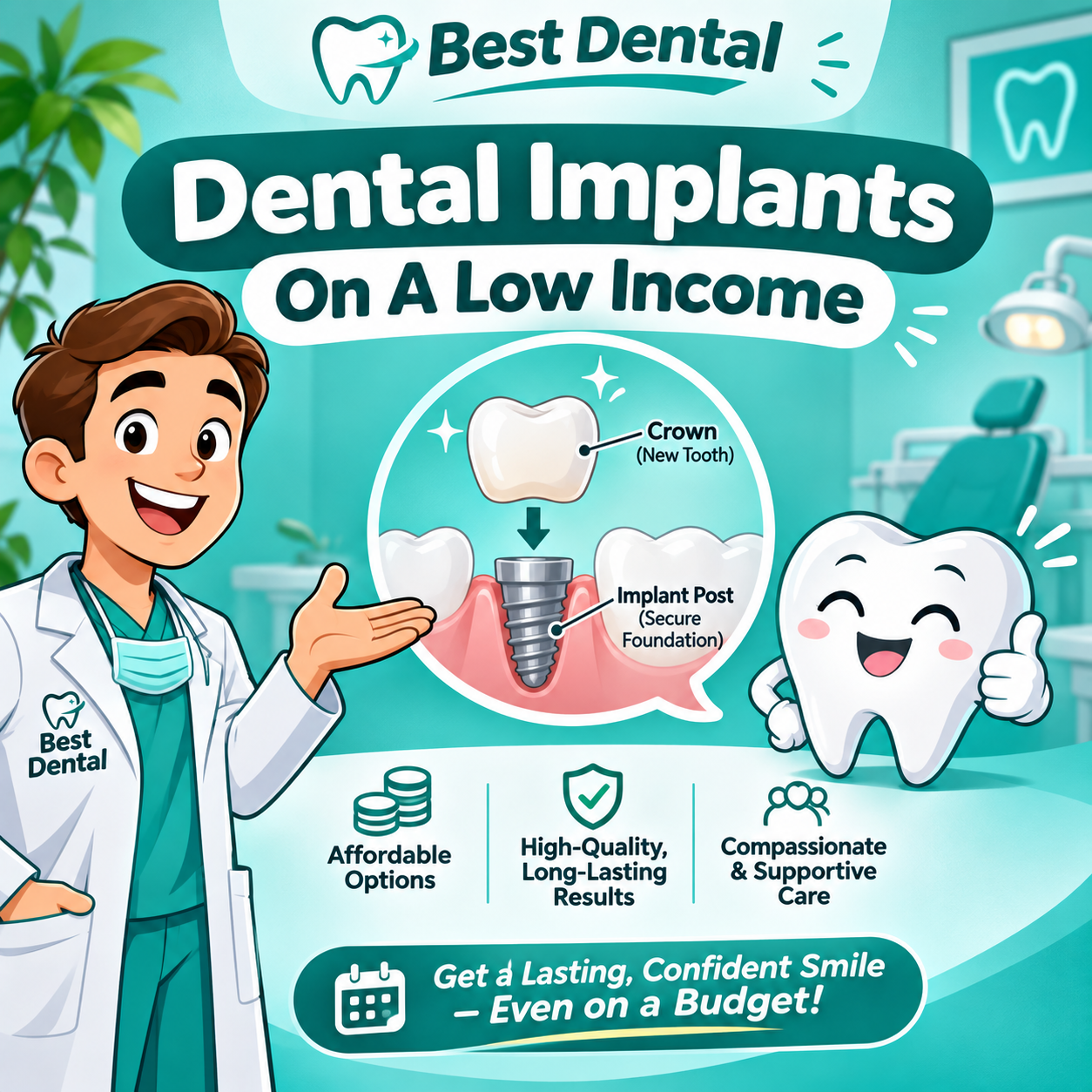
Start with a fair, all-in price and a payment plan.
The best ways to afford dental implants on a low income are an all-inclusive flat price, a monthly payment plan and doing the work one tooth at a time. Dental schools and donated care programs can help some people. If implants aren’t possible yet, dentures or a bridge can fill the gap now.
A full implant usually costs $2,800 to $5,600. At Best Dental, our price is $1,995 with the post, abutment and crown included. Spread over 12 months, that’s about $166 a month before interest. Learn more about our affordable dental implants.
What an Implant Really Costs
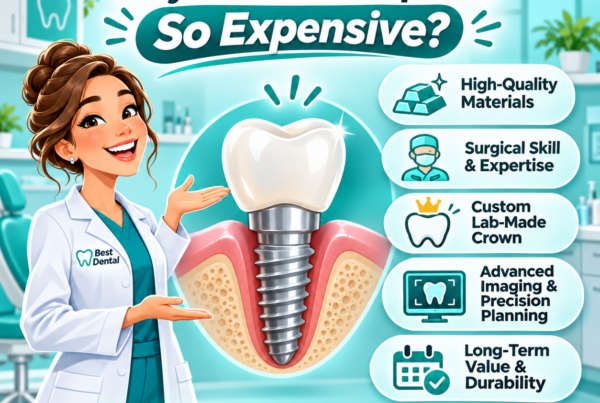
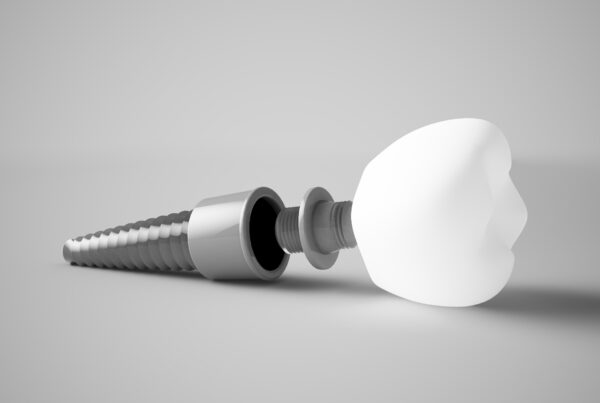
A low price only helps if it includes everything. A full implant has three parts: the post, the abutment and the crown.
Based on Delta Dental data, a full implant usually costs $2,800 to $5,600, or about $3,700 on average. Our price is $1,995.
Want your own estimate? Try our implant cost calculator. Some people need a bone graft first. Read about bone graft cost.
9 Ways to Make Implants Affordable
Most people use two or three of these together.
Choose an all-inclusive price
Ask if the price includes the post, abutment and crown. A full implant usually costs $2,800 to $5,600. Ours is $1,995, with all three included. A lower ad price that leaves out the crown can end up costing more.
Use a new patient special
New patients can get an exam, X-rays and cleaning for $99, and an extraction with a bone graft for $500 on their first tooth. See our current specials.
Pay over time
A payment plan turns one big bill into small monthly payments. Ask about our payment plans, including Cherry and CareCredit. If there’s a 0% promo, the CFPB warns that some plans charge all the interest if you don’t pay in full before it ends.
Do one tooth at a time
You don’t have to fix everything at once. Start with the tooth that matters most for chewing or your smile, then add more as your budget allows.
Use insurance and HSA money
Some PPO plans pay part of an implant, and many pay for the extraction or crown. Health savings account (HSA or FSA) money can usually be used too. See IRS Publication 502. We take plans like Delta Dental and Cigna.
Check Medicare and Medicaid
Original Medicare doesn’t cover implants. Some Medicare Advantage plans add dental care, so check yours. Medicaid dental care for adults varies by state and is often limited. Call your plan to ask.
Look into dental school clinics
Many dental schools run clinics where students treat patients while teachers check their work. Fees are often lower, but visits take longer. HRSA lists dental schools as one way to find lower-cost care. Call to ask if they offer implants.
Apply for donated care
Donated Dental Services from Dental Lifeline Network helps some older adults and people with a disability or serious health problems. There can be a wait. It’s worth applying if you qualify.
Try a community health center
Health centers often charge based on income. Many can handle extractions and dentures, even if they don’t place implants. Search the HRSA health center finder.
What It Looks Like Per Month
Here’s a $1,995 implant split into equal monthly payments. Interest is not included.
Healing also helps your budget. The Cleveland Clinic says the implant can take 3 to 9 months to bond with the bone before the crown goes on, so the work happens in stages.
One flat price. Crown included.
$1,995 for a full implant, a written plan before any work and payment plans to fit your budget.
See Our Implant Options →Lower-Cost Options for Now
If an implant isn’t possible yet, you can still fill the gap. Many people upgrade later.
Partial denture
Clips onto your other teeth to fill one or more gaps. Learn about dentures.
Full dentures
Replaces a whole row of teeth. Read about complete denture cost.
Dental bridge
A fixed tooth held by crowns on each side. See affordable bridges.
Add implants later
Start with a denture now, then add implants to hold it in place, or move to an implant bridge.
Not sure what you need? Our page on missing teeth treatment walks through the options.
What to Watch Out For
A low price is great, as long as it’s the whole price.
Questions to ask before you say yes
A good office will answer all of these clearly.
For more tips, read how to find a good implant dentist and what implant surgery is like.
Affordable Implant Questions
Tap a question to open it.
Key Takeaways
- A full implant usually costs $2,800 to $5,600. Ours is $1,995 with the crown.
- A payment plan can bring it to about $166 a month over a year.
- Do the work one tooth at a time to fit your budget.
- Original Medicare doesn’t cover implants. Check your plan.
- Dental schools and donated care can help some people.
- Dentures or a bridge can fill the gap now, with implants later.
More on Affordable Implants
A New Tooth Within Reach.
Call us for an exam and a written plan with every price and a payment option that fits. Learn more about our dental implant options.