How to Replace a Missing Tooth Without a Dental Bridge
A traditional bridge is not your only option. Here are the modern, bridge-free ways to fill the gap, restore your bite, and protect your smile for the long run.
In This Guide
Why Replacing a Missing Tooth Matters
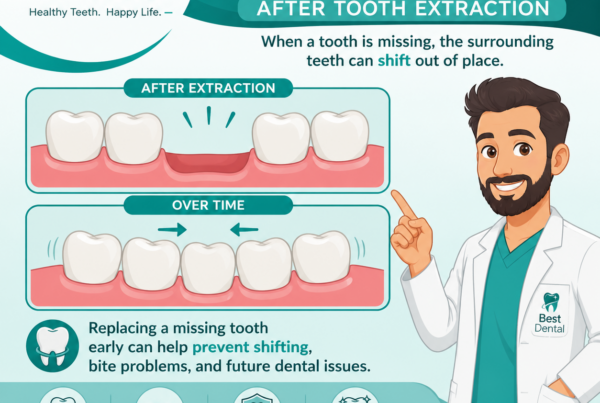
Losing a tooth is not only a cosmetic concern. The moment a tooth is gone, the jawbone that once supported its root begins to shrink, because that bone no longer receives the daily stimulation of chewing. Research has shown that the ridge can lose a meaningful share of its width within the first year alone, and the loss continues over time.
The gap also sets off a chain reaction. Neighboring teeth start to drift and tilt toward the empty space, the tooth above or below can drift out of position, and your bite can shift in ways that strain your jaw and make future treatment more complex. Replacing the tooth promptly keeps your remaining teeth where they belong.
Why Some Patients Look Beyond a Bridge
A traditional dental bridge is a proven, time-tested way to replace a missing tooth, and it remains a great fit for many situations. That said, it works by anchoring to the two teeth on either side of the gap, and to do that, those healthy neighboring teeth have to be filed down so crowns can be cemented over them.
For patients who would rather not alter otherwise healthy teeth, or who want a solution that also protects the jawbone, there are two strong bridge-free paths worth understanding.
The Two Main Bridge-Free Solutions
- Dental implant: a permanent, standalone replacement that does not touch the neighboring teeth and helps preserve bone.
- Removable partial denture: a non-surgical, lower-cost appliance that clips into place and lifts out for cleaning.
Option 1: The Dental Implant
How a single-tooth implant works
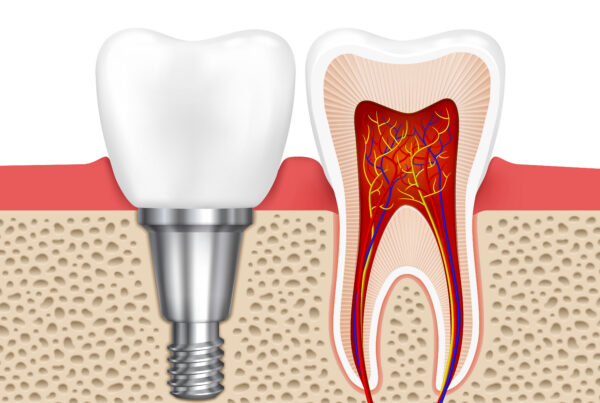
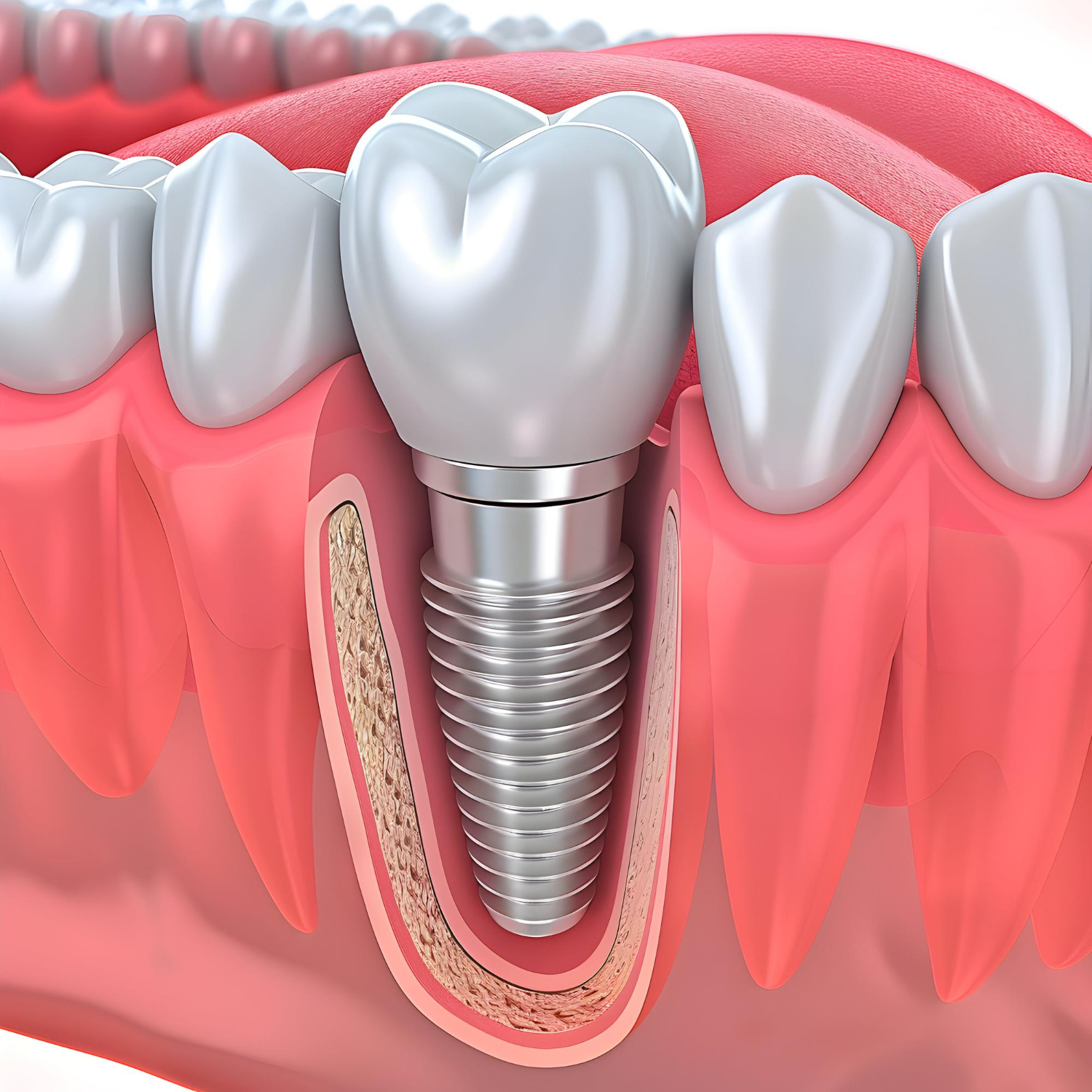
A dental implant replaces the entire tooth, root and all. A small titanium post is placed into the jawbone where the root used to be. Over the following weeks the bone fuses to the post (a process called osseointegration), creating a stable foundation. A custom crown is then attached on top, giving you a replacement that looks, feels, and functions like a natural tooth.
- Consultation and imaging. We evaluate the site, check bone levels, and confirm whether you are ready for placement.
- Implant placement. The titanium post is gently placed into the jaw in a single appointment.
- Healing and fusion. The bone bonds to the post over a few months, while a temporary tooth keeps your smile intact.
- Final crown. Once fused, a custom crown is secured on top, completing your new tooth.
Why patients love it
- Leaves neighboring teeth fully intact
- Stimulates and helps preserve the jawbone
- Most stable, longest-lasting option
- Cleans just like a normal tooth
Things to consider
- Involves a minor surgical procedure
- Takes a few months from start to final crown
- Needs adequate bone (a graft can rebuild it if needed)
Option 2: The Removable Partial
How a partial denture (or flipper) works
A removable partial replaces the missing tooth with a natural-looking prosthetic set into a lightweight base that clasps onto the teeth beside the gap. It lifts out for cleaning and can often be made quickly, which makes it a practical choice when you want to avoid surgery, fill the gap on a budget, or hold the space while an implant heals. A "flipper" is a slim, temporary version of the same idea.
Why patients choose it
- No surgery required
- Lower upfront cost
- Can be ready relatively quickly
- Great as a temporary placeholder
Things to consider
- Removable, so less stable than a fixed tooth
- Does not stop bone loss in the gap
- Needs to be taken out and cleaned daily
- Can feel bulkier at first
Many patients use a partial as a comfortable interim step, then move to an implant when the timing is right. Dr. Sonny and Dr. Jasmine Naderi can map out a plan that fits your goals and your schedule.
Bridge-Free Options at a Glance
| Solution | Surgery needed? | Typical lifespan |
|---|---|---|
| Dental implant | Yes (minor) | 15+ years, often a lifetime |
| Removable partial | No | 5 to 8 years on average |
| Temporary flipper | No | Months (meant to be short-term) |
For comparison, a traditional bridge does require reshaping the two adjacent teeth and usually lasts around 10 to 15 years before it needs replacing.
How to Choose What Fits You
The right answer depends on your mouth, your priorities, and your timeline. A few questions help point the way:
Questions Worth Asking Yourself
- Do I want to protect my jawbone? If yes, an implant is the only bridge-free option that does this.
- Would I rather avoid surgery? A removable partial keeps things non-surgical.
- Is my neighboring tooth structure healthy? If so, an implant lets you keep it untouched.
- Do I need a solution today? A partial or flipper can fill the gap quickly while you plan.
- What is my long-term budget? An implant costs more upfront but rarely needs replacing.
The clearest way to decide is a thorough exam. We will look at your bone, your bite, and your goals, then walk you through the choice that makes the most sense for you.
Affordable Tooth Replacement Near Me
Best Dental keeps pricing transparent and flat, with no surprises after treatment. Here is what bridge-free tooth replacement looks like at our Richmond, TX office:
Worth noting: at $1,995 all-inclusive, a single implant actually comes in below our $2,850 three-unit bridge, so the bridge-free route is often the more economical long-term choice as well.
We accept most major PPO insurance plans and verify your benefits before treatment so you know your coverage in advance. We also offer flexible financing including CareCredit. If you do not have insurance, ask about our in-house Best Dental Discount Plan at $199 per year, which includes member pricing on treatments like implants.
Frequently Asked Questions
Can I replace a missing tooth without touching my other teeth?
Yes. A dental implant is a standalone replacement that anchors into the jawbone, so the teeth on either side of the gap are left completely untouched. This is one of the biggest advantages of choosing an implant over a traditional bridge.
Is an implant really more affordable than a bridge?
At Best Dental, a single implant is $1,995 all-inclusive, while a three-unit bridge is $2,850. Because an implant also tends to last longer and rarely needs replacing, it often costs less over the life of the tooth.
What if I do not have enough bone for an implant?
That is common, and it is solvable. A bone graft (a straightforward $500 procedure at our office) rebuilds the site so it can securely hold an implant. We check your bone levels during your exam and let you know if a graft is recommended.
How long does the implant process take?
From placement to final crown usually spans a few months, since the bone needs time to fuse to the implant. During that window we keep your smile complete with a temporary tooth, so you are never walking around with a visible gap.
Is a removable partial a good permanent solution?
It can work well, especially as a non-surgical or budget-friendly choice, but it does not stop the bone loss in the gap and it is less stable than a fixed tooth. Many patients use a partial as a temporary step and upgrade to an implant later.
What happens if I just leave the gap?
The jawbone in that area gradually shrinks, the neighboring teeth drift and tilt into the space, and your bite can shift over time. Replacing the tooth sooner keeps these problems from compounding and makes treatment simpler.
Ready to Fill the Gap the Right Way?
Find out which bridge-free option fits your smile, your bone health, and your budget. Same-week appointments are available, and new patients are always welcome.
Best Dental, 22377 Bellaire Blvd., Suite 400, Richmond, TX 77407