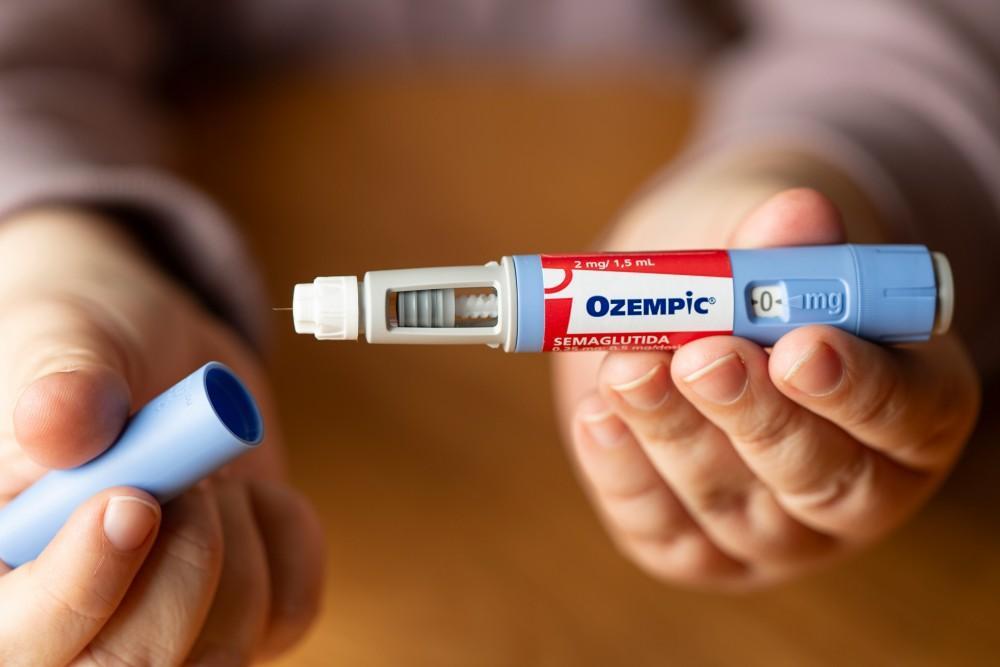
Ozempic & Your Teeth · GLP-1 Dental Guide · 2026

Ozempic Teeth.
What's Really Happening Inside Your Mouth.

"Ozempic teeth" isn't an official diagnosis. But the cavities, dry mouth, and gum problems that GLP-1 patients are reporting are real. Here's the science behind what's happening, what to watch for, and how patients near Houston, Sugar Land, Katy, and Rosenberg are protecting their smiles while staying on the medication.

14MMonthly Ozempic searches
16–20%Patients report nausea
5–9%Report vomiting
3–4 moRecommended cleaning interval
Ozempic Teeth infographic — the three mechanisms (dry mouth, vomiting, less eating) that cause GLP-1 dental damage, with side-effect statistics and a 5-step protection plan from Best Dental in Richmond, TX

What Is "Ozempic Teeth"?

It's the term patients and dentists are using for a cluster of dental problems showing up among GLP-1 medication users. Not a single condition. A pattern.

"Ozempic teeth" is not a clinical diagnosis. You will not find it in a dental textbook. It's a phrase that emerged from social media and patient forums, then got picked up by dentists who started seeing the same pattern in their chairs. The pattern: rapid tooth decay, dry mouth, sensitivity, gum inflammation, enamel erosion, and cracked or loose teeth — developing in patients who recently started Ozempic, Wegovy, Mounjaro, or another GLP-1 medication.

The misconception worth clearing up first is that Ozempic does not directly attack your teeth. Semaglutide is not corrosive. It does not bind to enamel. The damage is collateral — the medication causes side effects, primarily reduced saliva, nausea, and vomiting, that change the chemistry of your mouth in ways that accelerate decay.

For some patients, the change is dramatic. People who never had a cavity suddenly need three fillings six months into their prescription. The speed of the change is what's putting this topic on every dentist's radar.

Why It Happens. The Three Mechanisms.

The dental side effects of GLP-1 medications come down to three biological pathways. Understanding them is how you protect against them.

Mechanism 1
Reduced Saliva & Suppressed Thirst
GLP-1 medications affect the salivary glands and reduce thirst signaling. You produce less saliva and you drink less water. Saliva is the mouth's first line of defense. It neutralizes acids, washes away food, delivers minerals to repair enamel, and contains antibodies that fight bacteria. Less saliva means a more acidic, more bacteria-friendly environment.
Mechanism 2
Nausea & Vomiting
The FDA reports roughly 16–20% of Ozempic patients experience nausea and 5–9% experience vomiting. Stomach acid has a pH around 1.5–3.5, well below the 5.5 threshold where enamel begins to dissolve. Even a few episodes per month strip enamel layer by layer. Patients who brush immediately after vomiting accelerate the damage by scrubbing softened enamel.
Mechanism 3
Reduced Appetite & Nutrient Gaps
When patients eat 30–50% less food, they often eat 30–50% less calcium, vitamin D, and vitamin C. Calcium and vitamin D maintain enamel and bone density that supports teeth. Vitamin C supports gum tissue. A deficiency does not show up in your mouth in week one. It shows up in months three through twelve as gums that bleed easier, enamel that erodes faster, and teeth that feel weaker.

The Six Symptoms of Ozempic Teeth

If you're on a GLP-1 medication and noticing any of these, it's worth a call to your dentist sooner rather than later.

Most Common
Dry Mouth (Xerostomia)
Sticky feeling, difficulty swallowing, burning tongue, frequent thirst at night. The most reported oral side effect. Often the first warning sign.
Frequently Reported
New or Rapid Cavities
Patients report 2–4 new cavities at appointments where they had zero for years. Often along the gumline or between back molars where saliva normally protects.
Acid-Driven
Enamel Erosion
Teeth look thinner, more translucent at the edges, or yellower as enamel wears down and the dentin underneath shows through. Common in patients with frequent nausea.
Inflammatory
Gum Inflammation & Bleeding
Gums that bleed when brushing or flossing. Tender, swollen, or pulling away from teeth. Early gingivitis that progresses faster than expected without intervention.
Sensory
Tooth Sensitivity & Bad Breath
Cold sensitivity from exposed dentin. Persistent bad breath despite brushing, often metallic or chemical, from reduced saliva and ketone production.
Severe
Cracked or Loose Teeth
In advanced cases, teeth weakened by erosion fracture under normal chewing forces. Loose teeth indicate progressive bone loss from untreated gum disease. Both require immediate evaluation.
⚠️ When to call a dentist immediately. Sudden new sensitivity, bleeding gums that don't resolve in two weeks, breath that won't clear with brushing, or any tooth that feels loose or has cracked. These are not "wait until your next cleaning" symptoms. Call (281) 215-3065 for a same-week evaluation.

The Side-Effect Numbers Behind Ozempic Teeth

These are the FDA-reported rates of the side effects that drive Ozempic teeth. The percentages explain why some patients are affected and others are not.

Reported Ozempic Side Effects Linked to Dental Damage
FDA prescribing data. The higher the rate, the higher the risk those side effects accelerate decay.
Nausea
Up to 20% of patients
~20%
Diarrhea
~9%
~9%
Vomiting
5–9%
~9%
Constipation
~7%
~7%
Dry mouth (reported)
Off-label, growing
Reported
"Ozempic Teeth" Search Interest. Past 24 Months.
Google search interest for the term has climbed steadily as more patients on GLP-1 medications report dental changes. Indexed 0–100.
Q1 2024
12
12
Q3 2024
28
28
Q1 2025
48
48
Q3 2025
72
72
Q1 2026
100
100
The Headline Number
14M
Monthly Google searches for "Ozempic" in 2025, up 30% year-over-year. As prescription volume grows, the number of patients potentially affected by Ozempic teeth grows with it.

It's Not Just Ozempic. Every GLP-1 Carries the Same Risk.

Ozempic became the household name. But the same dental side effects show up across the entire class of GLP-1 medications. Here's the full list.

Medication Active Ingredient Approved For Dental Risk
Ozempic Semaglutide Type 2 diabetes High
Wegovy Semaglutide Weight loss High
Mounjaro Tirzepatide Type 2 diabetes High
Zepbound Tirzepatide Weight loss High
Trulicity Dulaglutide Type 2 diabetes Moderate
Saxenda / Victoza Liraglutide Weight loss / diabetes Moderate
Rybelsus Oral semaglutide Type 2 diabetes Moderate

The dental risk tracks with how strongly each medication affects gastric emptying and salivary function. Tirzepatide (Mounjaro, Zepbound) and semaglutide (Ozempic, Wegovy) are the two strongest GI-effect medications in the class. They're also the two most prescribed. The exposure curve and the risk curve overlap.

The good news: switching medications inside the GLP-1 class generally does not reduce dental risk meaningfully. The bad news: the only real way out of the dental risk is either stopping the medication or actively managing the side effects. Most patients choose option two.

What's Reversible. What's Not.

This is the most important section on the page. Some Ozempic teeth symptoms reverse fully. Others are permanent the moment they start. Knowing the difference changes how urgently you act.

Symptom Reversible? What Reverses It
Dry mouth ✓ Fully Hydration, sugar-free xylitol gum, saliva substitutes, prescription rinses
Bad breath ✓ Fully Hydration, treating dry mouth, tongue scraping, antibacterial rinse
Early gum inflammation ✓ Fully Professional cleaning, improved hygiene, fluoride rinse, frequent recall visits
Tooth sensitivity ⚠ Partially Sensitivity toothpaste and fluoride if mild. If from enamel loss, sensitivity is permanent until restored
Enamel erosion ✗ Permanent Enamel does not regenerate. Requires bonding, veneers, or crowns to restore
Cavities ✗ Permanent Once decay penetrates enamel, it requires a filling. Cannot be reversed by hygiene alone
Advanced gum disease ✗ Bone loss permanent Inflammation can resolve, but bone and gum tissue lost to periodontitis do not return
Cracked or fractured teeth ✗ Permanent Requires a crown to restore the tooth. If the fracture extends below the gumline, the tooth may need to be extracted and replaced
⚠️ The bottom line. The first three symptoms reverse easily with the right care. The bottom four are the dollar-cost ones. A single missed cavity becomes a $300 filling. Wait longer and it becomes a $750 root canal plus a $950 crown. The patients who get hurt by Ozempic teeth aren't the ones with dry mouth. They're the ones who ignored the dry mouth long enough for it to turn into something else. Schedule a consultation →

How to Prevent Ozempic Teeth

You don't have to choose between staying on the medication and protecting your teeth. The prevention playbook is straightforward, but it has to be consistent.

💧
Drink Water on a Schedule
Don't wait for thirst. GLP-1 medications suppress thirst signaling, so by the time you feel thirsty, you've been dehydrated for hours. Aim for 8–10 glasses spaced throughout the day. A water bottle with time markers helps.
🦷
Add Fluoride at Two Levels
Fluoride toothpaste twice daily plus a fluoride rinse at night. Patients on GLP-1 medications benefit from prescription-strength fluoride, available through your dentist for around $15–25 per tube.
🍬
Xylitol Gum, Not Mints
Sugar-free gum with xylitol stimulates saliva and actively reduces decay-causing bacteria. Mints, even sugar-free, often contain acids that worsen erosion. Two pieces of xylitol gum after meals is the goal.
🪥
After Vomiting, Rinse — Don't Brush
Stomach acid softens enamel for about 30 minutes. Brushing during that window scrubs the softened layer off. Rinse with water or a baking soda solution, wait 30 minutes, then brush gently.
📅
Cleanings Every 3–4 Months
Standard recall is every 6 months. For GLP-1 patients, that's too long. Bumping to every 3–4 months catches early decay and inflammation while it's still reversible. Ask your insurance about additional cleaning coverage.
📋
Tell Your Dentist
This is the single most important step. Your dentist needs to know you're on a GLP-1 medication so they can adjust your care plan, watch for early signs, and recommend additional protection like fluoride varnish or sealants.
🥦
Front-Load Calcium & Vitamin D
Eating less means getting fewer nutrients. Prioritize what you do eat: leafy greens, dairy, salmon, fortified foods. Many GLP-1 patients add a daily multivitamin specifically to cover the calcium and vitamin D gap.
🌙
Treat Nighttime Dry Mouth
Saliva drops at night naturally. On GLP-1 medication, it can drop to almost nothing. Saliva substitute gels at bedtime or a humidifier in the bedroom both make a meaningful difference for patients with severe dry mouth.
The Best Dental Protocol for GLP-1 Patients
  • 3–4 month cleaning intervals instead of the standard six. Catches decay and gum changes while still reversible.
  • Prescription-strength fluoride toothpaste and rinse. Standard over-the-counter fluoride is enough for most patients but not for the elevated-risk environment GLP-1 medications create.
  • In-office fluoride varnish at every cleaning. About 5 minutes, dries quickly, lasts 3–6 months.
  • Sealants on at-risk molars for adult patients showing erosion. A protective coating that adds a barrier where saliva can't reach easily.
  • Same-week appointments for any new sensitivity, bleeding, or breath change. Don't wait for the next cleaning when something feels wrong.
  • Coordination with your prescribing physician if dental side effects are severe enough to consider medication adjustment.

What to Tell Your Dentist About Your GLP-1 Medication

If you're new to a Best Dental appointment or going to any dentist for the first time since starting Ozempic, here's the information that matters.

The five things to tell your dentist before your appointment
1️⃣
The exact medication and dose
"Ozempic 1mg weekly" tells your dentist more than "a weight loss shot." Dose matters because side effects scale with dose, and dose changes mean side-effect changes worth tracking.
2️⃣
When you started
Side effects often peak in months 1–3 as you titrate up to your maintenance dose. If you're four months in, you're past the worst window. If you're at week three, you're in it.
3️⃣
Frequency of nausea or vomiting
"Once a week" vs. "after every dose" is a big difference for enamel risk. Be honest. Your dentist isn't going to judge. They're going to adjust your protocol.
4️⃣
Dry mouth severity
Mild ("sticky in the morning") vs. moderate ("waking up at night to drink") vs. severe ("constant dryness, difficulty swallowing") all change what your dentist recommends.
5️⃣
Any planned procedures
If you're considering crowns or other restorative work while on a GLP-1, your dentist needs to know. Healing rates can be different and sedation guidelines have specific updates for GLP-1 patients.
⚠️
Sedation note
The American Society of Anesthesiologists has guidance on holding GLP-1 medications before procedures requiring deep sedation due to delayed gastric emptying. If you're scheduled for IV sedation, this matters.

Best Dental Sees Patients on Ozempic From Across Greater Houston

GLP-1 medications are everywhere. Best Dental's Richmond office sees patients on Ozempic, Wegovy, Mounjaro, and Zepbound from Houston, Sugar Land, Katy, and Rosenberg every week.

Houston
~25 min via US-59
Sugar Land
~10–15 min via US-59
Katy
~20 min via Grand Pkwy
Rosenberg
~10 min via US-59
First Colony
~12 min via US-59
Cinco Ranch
~22 min via Grand Pkwy
New Territory
~10 min via US-59
Riverstone
~16 min via Hwy 6
Greatwood
~12 min via US-59
Aliana
~12 min via W Grand Pkwy

Best Dental · Richmond, TX

Central to the Houston, Sugar Land, Katy, and Rosenberg areas. Free parking. Same-week appointments typically available for GLP-1 dental concerns.

📍 22377 Bellaire Blvd Ste 400, Richmond TX 77407 🚗 Central to Houston, Sugar Land, Katy, Rosenberg 🅿️ Free parking

If you're on a GLP-1 medication and noticing dental changes, the right move isn't waiting until your next routine cleaning. It's a focused appointment where Dr. Jasmine Naderi can evaluate exactly what's happening and build a protocol around your medication. Best Dental sees these cases regularly and adjusts the cleaning interval, fluoride protocol, and recall schedule accordingly.

For procedures while on GLP-1 medication, your dentist in Richmond TX at Best Dental handles fillings, crowns, root canals, and emergency dental care in-house. PPO insurance accepted. Cherry and CareCredit financing available.

Frequently Asked Questions About Ozempic Teeth

What is Ozempic teeth?
Ozempic teeth is an unofficial term used by patients and dentists to describe a cluster of dental problems that can develop while taking GLP-1 medications like Ozempic, Wegovy, Mounjaro, and Zepbound. Common symptoms include dry mouth, tooth decay, enamel erosion, gum inflammation, bad breath, tooth sensitivity, and in severe cases, cracked or loose teeth. The medication does not directly damage teeth. The damage comes from side effects like reduced saliva, nausea, and vomiting that create an environment where decay accelerates.
Does Ozempic actually damage your teeth?
Ozempic does not directly damage teeth. The medication causes side effects, primarily dry mouth, nausea, and vomiting, that indirectly create an oral environment where decay, enamel erosion, and gum disease develop faster than normal. Saliva neutralizes acid and washes away bacteria; reduced saliva removes that protection. Stomach acid from vomiting strips enamel. The teeth are collateral damage from the side effects, not the medication itself.
Can Ozempic teeth damage be reversed?
Some Ozempic teeth symptoms reverse when the underlying cause is addressed. Dry mouth and bad breath typically improve with hydration, sugar-free gum, and saliva substitutes. Early gum inflammation reverses with cleanings and improved hygiene. However, enamel erosion and cavities are permanent. Once enamel is gone, it does not grow back. Lost tooth structure requires fillings, crowns, or in severe cases, extraction and replacement. This is why early intervention matters.
How long does it take for Ozempic to affect your teeth?
Most patients who experience Ozempic teeth notice changes within the first 1–3 months of starting the medication. Dry mouth typically appears within weeks. Tooth sensitivity and enamel erosion show up by month 2–3 if nausea and vomiting are part of the side effect profile. New cavities are usually identified at the first dental cleaning after starting, often 6 months in. The earlier you tell your dentist you're on the medication, the earlier they can monitor for these changes.
How do I prevent Ozempic teeth?
Drink water consistently throughout the day, even when you don't feel thirsty. Use fluoride toothpaste twice daily and add a fluoride rinse. Chew sugar-free xylitol gum to stimulate saliva. Rinse with water after any nausea or vomiting episode and wait 30 minutes before brushing. Schedule cleanings every 3–4 months instead of every 6 months while on GLP-1 medication. Tell your dentist you're taking Ozempic so they can monitor for early signs of decay and erosion.
Should I stop taking Ozempic if my teeth are getting worse?
This is a decision to make with both your prescribing physician and your dentist. Stopping a GLP-1 medication has its own consequences, including weight regain and blood sugar changes for diabetic patients. For most patients, aggressive dental management is more effective than stopping the medication. That includes 3–4 month cleaning intervals, prescription fluoride, and prompt treatment of any new decay. If dental damage is progressing despite aggressive management, that's the conversation to have with both providers together.
Does Wegovy or Mounjaro cause the same tooth problems as Ozempic?
Yes. Wegovy and Ozempic both contain semaglutide and have nearly identical dental side-effect profiles. Mounjaro and Zepbound contain tirzepatide, which has similar GI effects (nausea, vomiting, dry mouth) and therefore similar dental risks. The whole GLP-1 medication class shares the underlying mechanism that drives Ozempic teeth: reduced saliva and increased exposure to stomach acid.
Will my dental insurance cover Ozempic-related dental work?
Yes. Dental insurance does not differentiate between cavities caused by Ozempic and cavities caused by anything else. Standard PPO coverage applies: cleanings typically covered at 80–100%, fillings at 80%, and crowns at 50% after deductible. Best Dental verifies your specific benefits before treatment. Crowns and fillings follow the same coverage rules they would for any patient.
Where can I see a dentist for Ozempic teeth near me?
Best Dental at 22377 Bellaire Blvd, Suite 400, Richmond TX 77407 sees patients on GLP-1 medications including Ozempic, Wegovy, Mounjaro, and Zepbound. Located in Richmond and central to Houston, Sugar Land, Katy, and Rosenberg. Same-week appointments typically available. Call (281) 215-3065 or book online.
Key Takeaways. Ozempic Teeth.
"Ozempic teeth" is not an official diagnosis but it describes a real cluster of dental problems showing up across GLP-1 patients.
The damage is indirect. Dry mouth, nausea, and vomiting create the conditions that accelerate decay.
Affects the whole GLP-1 class. Ozempic, Wegovy, Mounjaro, Zepbound, Trulicity, and others.
Reversible: dry mouth, bad breath, early gum inflammation. Permanent: cavities, enamel erosion, bone loss.
Cleanings every 3–4 months instead of 6. Prescription fluoride. Xylitol gum. Hydration on a schedule.
After vomiting: rinse, wait 30 minutes, then brush. Brushing immediately damages softened enamel.
Tell your dentist your exact medication, dose, and side-effect profile. It changes the protocol.
For sedation procedures, follow ASA guidance on holding GLP-1 medication ahead of time.
Best Dental in Richmond TX sees GLP-1 patients from across the greater Houston area with same-week appointments.
On Ozempic? Protect Your Teeth Before
The Damage Becomes Permanent.

Best Dental sees GLP-1 patients from Houston, Sugar Land, Katy, and Rosenberg every week. Same-week consultations. PPO insurance accepted. Custom protocol for patients on Ozempic, Wegovy, Mounjaro, and Zepbound.
Dr. Naderi

Author Dr. Naderi

Dr. Sonny Naderi is a fellowship-trained in oral surgery with over 20 years of experience and 25,000+ wisdom teeth extractions. His expertise in surgical dentistry, implants, and complex procedures, combined with a gentle, patient-focused approach, makes him one of Richmond's most trusted dental professionals.

More posts by Dr. Naderi
Close Menu
Call Now
Request an Appointment
Skip to main content