
Deep Teeth Cleaning Cost
in Houston, TX —
What You'll Actually Pay in 2026
Houston-area deep cleaning (scaling & root planing) typically costs $150–$350 per quadrant — or $600–$1,400 for a full mouth. Best Dental charges $150 per quadrant or $600 for a full mouth, just 25 minutes from Southwest Houston.
What Is Deep Teeth Cleaning?
Deep teeth cleaning — clinically called scaling and root planing (SRP) — is a non-surgical periodontal treatment that removes plaque, tartar, and bacterial deposits from below the gum line. Unlike a regular prophylaxis cleaning that polishes the surfaces of your teeth, deep cleaning targets the roots and the pockets that form between your teeth and gums when periodontal disease sets in.
When bacteria accumulate below the gum line and are left untreated, they cause the gums to pull away from the teeth, forming deepening pockets. Those pockets trap more bacteria, leading to bone loss, loose teeth, and eventually tooth loss. Deep cleaning is the front-line treatment to stop that progression before it reaches stages that require surgery or extractions.
"Deep cleaning doesn't just remove buildup — it reshapes the root surface so the gum tissue can reattach to the tooth. That reattachment is what halts the disease progression."
The procedure is performed in two stages: scaling, which removes tartar and plaque from above and below the gum line using ultrasonic instruments and hand scalers, and root planing, which smooths the root surfaces to discourage future bacterial adhesion and allow healthy gum reattachment. Most patients are surprised by how manageable the procedure is — local anesthesia keeps discomfort minimal, and most people return to normal activity the same day.
Deep cleaning is typically recommended when periodontal pocket depths exceed 4mm, when there is visible tartar buildup below the gum line on X-rays, or when a patient shows signs of active periodontal disease. A routine exam and gum charting at Best Dental will tell you definitively whether you need it — and give you a transparent cost estimate before any treatment begins.
Deep Cleaning Costs in Houston in 2026
Deep cleaning is priced per quadrant — the mouth is divided into four sections. Here's what each scenario typically costs in the Houston metro.
Deep Cleaning vs. Regular Cleaning — What's the Difference?
Patients often confuse the two. They are fundamentally different procedures with different purposes, different tools, and very different price points.
| Factor | Regular Cleaning (Prophylaxis) | Deep Cleaning (Scaling & Root Planing) |
|---|---|---|
| Purpose | Preventive maintenance for healthy gums | Treatment for active gum disease |
| Where It Cleans | Above the gum line (crown surfaces) | Above and below the gum line (roots) |
| Anesthesia Needed | No — no numbing required | Yes — local anesthesia per quadrant |
| Pocket Depths Targeted | Normal (1–3mm) | Diseased (4mm+) |
| Appointment Length | 30–60 minutes | 60–90 min per session (2 sessions typical) |
| Houston Cost | $100–$200 | $600–$1,400 full mouth |
| Insurance Coverage | Usually covered 100% twice/year | Partially covered when medically indicated |
| Follow-Up Required | Next cleaning in 6 months | Periodontal maintenance every 3–4 months |
The most important thing to understand is that a regular cleaning cannot treat gum disease — it can only maintain healthy gums that don't have it. If your hygienist is measuring pocket depths of 4mm or more, bleeding on probing, or seeing bone loss on X-rays, a regular cleaning is the wrong procedure. Performing a prophy on a patient who needs SRP is one of the most common under-treatment errors in general dentistry — and it allows the disease to continue progressing while giving the patient a false sense that their mouth has been treated.
Signs You May Need a Deep Cleaning
Periodontal disease is often silent in its early stages — many patients don't know they have it until a proper examination reveals the damage. Here are the most common warning signs.
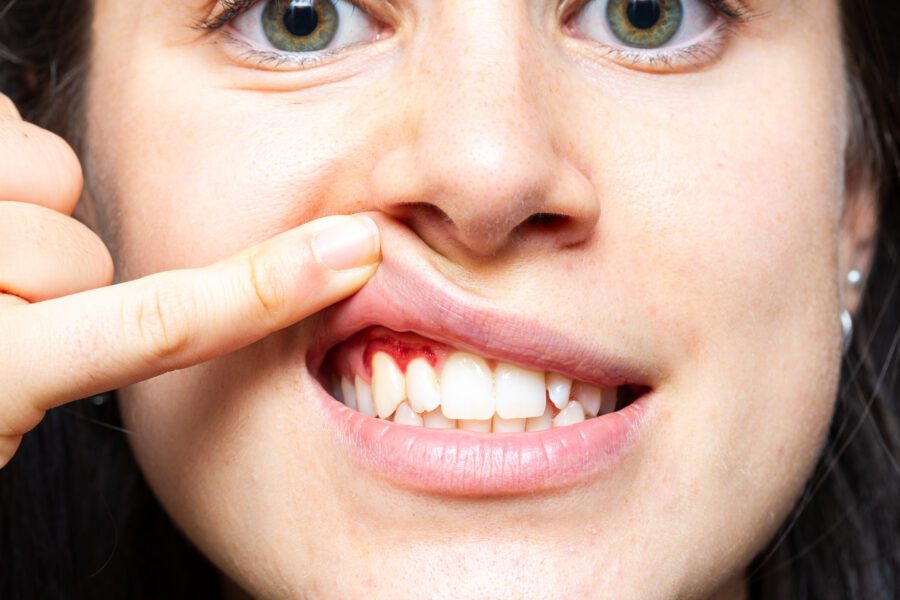
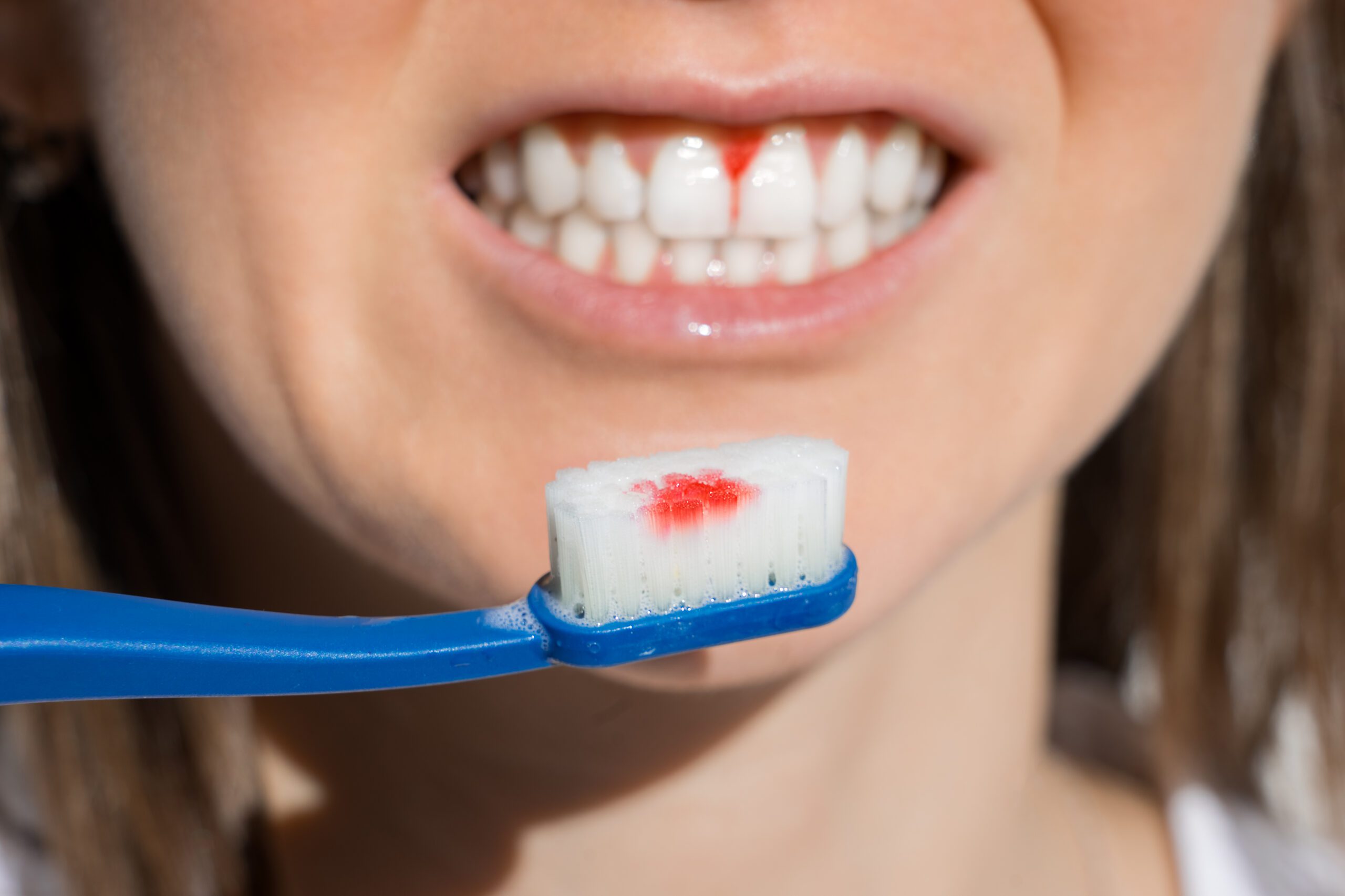
Bleeding is not normal — it signals inflammation. Healthy gums don't bleed from gentle brushing. Persistent bleeding is often the earliest detectable sign of gingivitis or early periodontitis.
At your exam, your hygienist measures the space between tooth and gum. Normal is 1–3mm. Depths of 4mm+ indicate periodontal disease. Depths of 5mm or more usually require immediate SRP treatment.
Halitosis that doesn't resolve with brushing and mouthwash is a classic sign of subgingival bacteria. The pockets formed by gum disease harbor anaerobic bacteria that produce sulfur compounds — the source of the odor.
Gums that look like they are "pulling away" from the teeth — making teeth appear longer — indicate that the attachment between gum and tooth is breaking down. This is a hallmark of advancing periodontal disease.
When bone loss progresses, teeth lose their support structure and begin to feel loose or shift position. This indicates advanced periodontitis that requires prompt treatment to prevent tooth loss.
Calculus (hardened tartar) deposits on root surfaces below the gum line are visible on dental X-rays. This is a definitive indicator that subgingival deposits exist and that deep cleaning is needed to remove them.
Diabetes, smoking, and cardiovascular disease significantly increase periodontal disease risk and severity. Patients with these conditions warrant more frequent periodontal evaluations even without visible symptoms.
Long gaps between dental visits allow plaque and tartar to accumulate in areas that brushing can't reach. A full periodontal evaluation after a prolonged absence frequently reveals the need for SRP before returning to regular maintenance.
What Drives Deep Cleaning Costs Up or Down
Six factors explain most of the price variation you'll see across Houston-area dental and periodontal offices.
What to Expect During Your Deep Cleaning
Most patients are surprised by how straightforward the procedure is. Here's a step-by-step walkthrough of what happens at Best Dental from evaluation through completion.
Deep Cleaning Aftercare & What to Expect
Most patients tolerate deep cleaning very well and return to normal activity the same day. The anesthesia wears off within 2–4 hours, and the most common post-procedure experience is mild soreness and sensitivity — similar to what you'd feel after an unusually thorough cleaning. Here's what to expect in the hours and days that follow:
First 24 hours: Avoid extremely hot or cold foods while sensitivity is elevated. Soft foods are recommended — avoid anything hard, crunchy, or sharp (chips, seeds, popcorn) that could irritate treated tissue. Don't smoke for at least 24 hours, as nicotine impairs healing and reduces the effectiveness of treatment. Rinse gently with warm salt water if your provider recommends it.
Days 2–7: Mild swelling and tenderness are normal and typically peak at 48 hours before subsiding. Over-the-counter ibuprofen or acetaminophen manages most post-procedure discomfort. Your gums may bleed slightly when you brush — this is normal and will decrease as healing progresses. Continue brushing and flossing gently; stopping oral hygiene to "protect" the area actually impedes healing.
Weeks 2–6: Gum tissue heals and begins reattaching to the cleaned root surfaces. You may notice your gums look slightly more receded — this is the swelling resolving, not your gums receding further. Sensitivity to cold typically decreases as the gum tissue stabilizes. Your 4–6 week re-evaluation will measure whether the treatment achieved its goals.
"The treatment doesn't end at the appointment. Periodontal disease is a chronic condition — deep cleaning gets it under control, but consistent maintenance every 3–4 months is what keeps it there."
Long-term: After successful deep cleaning, you transition to a periodontal maintenance schedule — typically visits every 3–4 months rather than every 6 months. These maintenance appointments are more thorough than standard cleanings, targeting the same subgingival areas treated during SRP. Skipping maintenance is the single most common reason periodontal disease recurs after successful treatment.
Insurance & Financing for Deep Cleaning
Deep cleaning is a medically indicated procedure — most PPO plans provide meaningful coverage when gum disease is properly diagnosed.
PPO dental insurance: Most PPO plans cover scaling and root planing at 50–80% after your deductible when periodontal disease is documented and diagnosed. Unlike implants — which are commonly treated as elective — deep cleaning is a disease-treatment procedure that insurance companies generally recognize as medically necessary. Coverage typically requires documented pocket depths of 4mm+ and clinical signs of periodontal disease in the treated quadrants. Best Dental verifies your specific benefits and provides a written estimate before any treatment begins.
Annual maximums: Most PPO plans have an annual maximum of $1,000–$2,000. If your deep cleaning cost approaches that ceiling, we can phase treatment across two calendar years — completing two quadrants in December and two in January — to effectively double your insurance benefit toward the total cost.
CareCredit financing: Qualified patients can finance deep cleaning at 0% interest for 6–24 months through CareCredit. At Best Dental's $600 full-mouth rate, that breaks down to as little as $25/month with no interest. See our full pricing page →
No insurance: Our Dental Discount Plan provides savings on all services including periodontal treatment — no waiting periods, no annual maximums, no claims to file.
Serving Houston, Sugar Land, Missouri City & Fort Bend County
Best Dental's Richmond location brings the same thorough periodontal care Houston patients expect — at significantly lower overhead cost, just 25 minutes away.
Best Dental is located at 22377 Bellaire Blvd, Suite 400 in Richmond, TX — accessible via Grand Parkway 99 from Missouri City, Stafford, Sugar Land, and all of Southwest Houston. Free parking and same-week appointments mean you're not waiting weeks to address an active periodontal condition that continues to progress while you delay.
Every deep cleaning at Best Dental begins with a comprehensive periodontal evaluation — pocket charting, X-ray review, and a frank conversation about what your mouth actually needs. We don't recommend deep cleaning unless the clinical data supports it, and we don't treat more quadrants than necessary. Patients receive a written treatment plan and cost estimate before agreeing to anything.
For Houston-area patients looking for more information about periodontal care available at Best Dental, visit our Houston patient hub or view our full pricing page for a complete picture of what treatment costs.
Frequently Asked Questions
Evaluation Today
Find out if you need deep cleaning — with a thorough exam, pocket charting, and a transparent written estimate before any treatment begins. Serving Houston, Sugar Land, Missouri City, Stafford, and Pearland. Same-week appointments available.