
Impacted Wisdom Teeth Symptoms
Know the warning signs, understand when it's an emergency, and get same-day care at Best Dental in Richmond, TX.
What Are Impacted Wisdom Teeth?
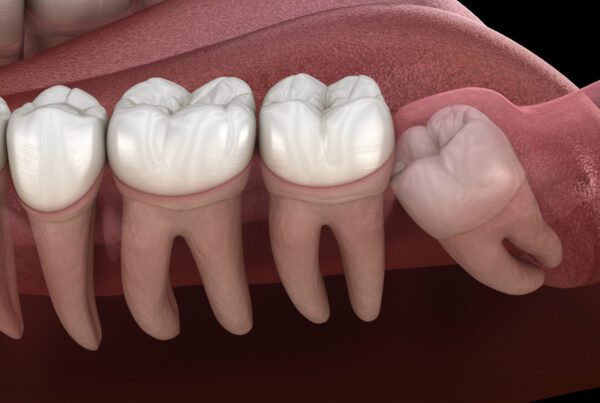
Impacted wisdom teeth develop when your third molars don't have enough room to emerge fully or erupt at the wrong angle — creating a range of symptoms from mild discomfort to serious infection.
"Third molars that are partially or fully impacted carry a significantly higher risk of pericoronitis, cyst formation, and damage to adjacent second molars. Early evaluation with cone-beam imaging allows clinicians to identify and address these risks before acute complications develop."— American Association of Oral and Maxillofacial Surgeons — Wisdom Teeth Guidelines
Your wisdom teeth — the four third molars at the back corners of your mouth — are the last teeth to erupt, typically between ages 17 and 25. Modern jaws have evolved smaller than our ancestors' jaws, which means most people simply don't have enough space for these teeth to emerge properly.
When a wisdom tooth becomes trapped beneath the gumline, wedged against an adjacent tooth, or erupts at an abnormal angle, it is considered impacted. This condition affects an estimated 70–80% of adults and is one of the most common reasons patients visit Best Dental for oral surgery in Richmond.
The key is knowing which symptoms are routine discomfort and which signal a complication that needs same-day attention.
10 Warning Signs of Impacted Wisdom Teeth
Each symptom below is tagged by urgency level. Call us same-day for anything marked as urgent.
Severe Throbbing Pain
Radiating pain from the back molars into the jaw, ear, or temple — especially if it worsens when lying down or intensifies overnight. Pain that disrupts sleep or prevents normal eating requires prompt evaluation.
Gum Swelling & Tenderness
Red, swollen, or inflamed gums around a partially erupted wisdom tooth — particularly a tender flap of gum tissue overlapping the tooth. This is often the first visible sign of pericoronitis, a bacterial infection under the gum flap.
Jaw Stiffness or Limited Opening
Difficulty fully opening your mouth, jaw stiffness, or a sensation of tightening in the jaw muscles (trismus) that persists more than 24 hours. This can indicate an infection spreading into the surrounding muscles and tissues.
Recurring Gum Infections or Pus
Repeated infections in the same area, visible pus drainage near the back teeth, or a gum infection that temporarily improves then returns. Recurring pericoronitis almost always requires extraction — antibiotics alone provide only temporary relief.
Persistent Bad Breath or Metallic Taste
Foul-smelling breath or a metallic, unpleasant taste that persists despite brushing and rinsing. This typically signals bacteria trapped under a gum flap overlying a partially erupted wisdom tooth — a space that is impossible to clean effectively.
Unexplained Headaches or Earaches
Persistent headaches — especially on one side — or earaches without an ear infection diagnosis can be referred pain from an impacted lower wisdom tooth pressing on nerves shared with the ear and temple region.
Sudden Tooth Crowding
Front teeth that have started shifting, overlapping, or becoming crowded after age 18 — particularly in patients who previously had straight teeth or completed orthodontic treatment. Emerging wisdom teeth can exert significant forward pressure on the entire dental arch.
Persistent Food Trapping
Food consistently getting caught behind your last visible molar, even after brushing and flossing. A partially erupted wisdom tooth creates a pocket between itself and the second molar that acts as a permanent bacterial reservoir and is a leading cause of cavities in otherwise healthy adjacent teeth.
Bleeding Gums Behind Molars
Gums that bleed when brushing or eating in the very back of the mouth, behind the last visible tooth. Bleeding in this area is not normal and often indicates gum inflammation driven by bacterial accumulation around an impacted or partially erupted wisdom tooth.
Numbness or Tingling
Loss of sensation or tingling in the lower lip, chin, tongue, or cheek. This may indicate pressure from an impacted lower wisdom tooth on the inferior alveolar nerve — requires immediate imaging to assess nerve proximity and prevent permanent damage.
Go to the Dentist Immediately If You Have These
These symptoms indicate a spreading infection or serious complication. Do not wait for a regular appointment — call us or seek emergency care the same day.
Facial swelling extending to the neck or throat — infection may be spreading into deep tissue spaces
Fever (above 101°F) accompanying jaw pain — indicates systemic infection requiring urgent treatment
Difficulty swallowing or breathing — swelling near the throat can close the airway; this is a medical emergency
Inability to open the mouth more than a finger-width — severe trismus indicating spreading infection in the jaw muscles
Numbness that appeared suddenly — acute nerve compression requires same-day imaging
Call Best Dental immediately at (281) 215-3065. If you have difficulty breathing or swallowing, go to the nearest emergency room.
Types of Wisdom Tooth Impaction
The angle and depth of impaction affects which symptoms you experience and how complex the extraction will be.
Mesial (Angled Forward)
The most common type. The tooth tilts toward the second molar, pressing against it and often causing pain and root damage to the adjacent tooth. Usually requires surgical extraction.
Distal (Angled Backward)
The tooth tilts away from the second molar. Less common, and sometimes able to erupt partially. May cause fewer symptoms but can still lead to cysts or gum problems over time.
Horizontal
The tooth lies completely on its side, pointing directly at the roots of the second molar. Almost always causes significant pain and damage. Requires surgical extraction and bone removal.
Vertical (Fully Impacted)
The tooth is correctly oriented but cannot break through the bone or gum. May cause no symptoms for years, then suddenly develop a cyst or infection. Detected only by X-ray.
Complications of Untreated Impaction
Leaving a symptomatic impacted wisdom tooth untreated doesn't make the problem go away — it allows preventable complications to develop.
Pericoronitis — Recurring Gum Infection
The most common complication of partial eruption. Bacteria accumulate under the gum flap overlying the tooth, causing repeated cycles of painful infection, swelling, and pus. Antibiotics provide temporary relief but the infection returns until the tooth is removed. Untreated pericoronitis can spread to the jaw, throat, and neck.
Damage to the Second Molar
A mesially or horizontally impacted wisdom tooth presses directly against the roots of the adjacent second molar, causing root resorption (the second molar's roots literally dissolve from the pressure), cavities on the contact surface, and bone loss between the two teeth. In advanced cases, the second molar itself may require extraction.
Dental Cysts and Tumors
A fluid-filled sac (dentigerous cyst) can form around the crown of an impacted tooth. These cysts expand slowly, hollowing out jawbone and potentially damaging nearby tooth roots, nerves, and bone structure. Left untreated, they require significantly more complex surgical treatment — including bone grafting to restore lost jaw volume.
Orthodontic Crowding
Emerging wisdom teeth can apply pressure to the full dental arch, causing previously straight teeth to shift, rotate, or overlap — especially in the lower front teeth. This can undo years of orthodontic treatment. Early extraction before full eruption is the most effective way to prevent this outcome.
Bone Loss Around Adjacent Teeth
Chronic infection and physical pressure from an impacted wisdom tooth causes bone loss in the area between the wisdom tooth and second molar. This creates a deep periodontal pocket that can destabilize the second molar — one of the most important chewing teeth in your mouth — and may require bone grafting to restore.
Why Early Detection Matters
Ages 16–25 is the optimal window for wisdom tooth evaluation — before roots are fully formed and complications have time to develop.
Prevents Serious Complications
Identifying impaction risks early — before infections, cysts, and adjacent tooth damage occur — means avoiding the complex, more expensive surgical interventions those complications require. A planned extraction at 19 is a far simpler procedure than emergency surgery at 30 after years of complications.
Simpler Extraction When Roots Are Shorter
Wisdom tooth roots continue developing until the mid-20s. Extracting before roots are fully formed means shorter roots, less bone engagement, and a technically simpler procedure with faster healing. Waiting until the 30s or 40s — when roots are longer and bone is denser — increases surgical complexity and recovery time.
Protects Orthodontic Results
Patients who completed braces or Invisalign are particularly at risk — emerging wisdom teeth can undo alignment results by crowding front teeth. Early removal before pressure builds protects your orthodontic investment.
Planned vs. Emergency Treatment
Elective, scheduled wisdom tooth removal under chosen sedation on a convenient day is a very different experience from emergency extraction during a severe infection. Patients who act on early evaluation almost universally have easier procedures and faster recoveries than those who wait until pain forces the issue.
Our Treatment Process at Best Dental
From your first call to full recovery — here's what to expect when you come to Best Dental for wisdom tooth care.
Rapid Assessment & Pain Relief
Same-day appointments for urgent symptoms. Immediate pain management, infection control, and digital X-rays to evaluate impaction severity and positioning. No waiting through the pain.
3D Imaging & Treatment Planning
Complex cases receive CBCT cone-beam imaging for precise nerve mapping and surgical planning. We review sedation options — local, oral, or IV — and confirm insurance coverage and payment options before any procedure.
Minimally Invasive Extraction
Dr. Sonny Naderi performs all wisdom tooth extractions using minimally invasive surgical techniques. With 25,000+ extractions, his efficiency means less tissue disruption, shorter procedures, and faster healing for patients.
Recovery Support & Follow-Up
Detailed post-op instructions, prescription medications, and direct access to our team for any concerns during healing. Follow-up appointments confirm proper healing and catch any issues early.
Richmond's Wisdom Tooth Specialist
Dr. Sonny Naderi — Fellowship-Trained Oral Surgeon
Dr. Sonny Naderi has performed more than 25,000 wisdom tooth extractions over 20+ years of surgical practice in Richmond, TX. Fellowship-trained in oral surgery, Dr. Naderi is known for efficient, minimally invasive technique and a calm, reassuring approach that puts even anxious patients at ease. He uses 3D CBCT imaging to map nerve proximity and plan every extraction with precision — especially for complex impactions involving the inferior alveolar nerve.
Learn More About Dr. Sonny Naderi →Frequently Asked Questions
Common questions from Richmond patients about impacted wisdom teeth.
Key Takeaways — Impacted Wisdom Teeth Symptoms
Related Resources
More from Best Dental on wisdom teeth and oral surgery.
Don't Wait Out Wisdom Tooth Pain
If you're experiencing any of the symptoms on this page — especially swelling, recurring infection, or jaw stiffness — call Best Dental today. Same-day appointments are available for urgent cases. Dr. Sonny Naderi and our team are ready to help.