

How Long Does Invisalign Take?
Complete treatment timeline — what affects your duration, how to speed up results, and what to expect month by month.
Average Invisalign Treatment Time
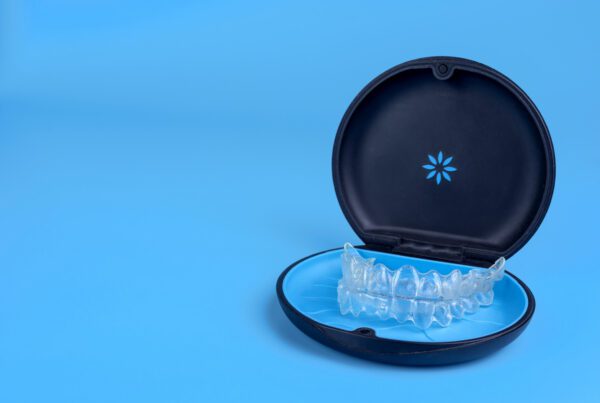
The typical Invisalign treatment takes between 12 to 18 months for most patients. However, this timeframe varies significantly based on case complexity, age, and how closely you follow the treatment plan. Some patients see results in as little as 6 months; others with more complex orthodontic issues may need up to 24 months.
Compared to traditional metal braces — which typically require 18 to 36 months — Invisalign often delivers faster results for mild to moderate cases. That shorter timeline is one of the key reasons adults and teens choose clear aligners over conventional orthodontic treatment.
Factors That Affect Your Timeline
1. Complexity of Your Orthodontic Issues
The severity of your dental misalignment is the most significant factor. Minor spacing issues or slight crowding can often be corrected in 6–12 months, while more complex cases involving significant crowding, bite problems, or rotated teeth may require 18–24 months.
2. Patient Compliance
Your commitment to wearing aligners is crucial. Invisalign requires 20–22 hours of wear per day — removing them only to eat, drink (anything other than water), and brush. Patients who consistently follow this guideline typically complete treatment on schedule or faster. Frequent removal can add several months to your timeline.
3. Age and Bone Density
Younger patients often experience faster tooth movement because their jawbones are still developing and more adaptable. Adults may take slightly longer to achieve the same results, though the difference is typically just a few months.
4. Changing Aligners on Schedule
Most patients switch to a new set of aligners every 1–2 weeks as directed. Staying on schedule is essential — wearing the same set for too long stalls progress and extends your overall treatment time.
Treatment Phase by Phase
Initial Consultation
Comprehensive exam, digital impressions or 3D scans, and a discussion of your goals. We'll determine if Invisalign is right for you and provide an estimated treatment timeline at Best Dental in Richmond.
Treatment Planning
Your digital impressions are sent to Invisalign to create your custom plan. Advanced 3D technology generates a virtual preview of how your teeth will move — and what your final smile will look like.
Receiving Your Aligners
Custom aligners arrive and you return for a fitting. We ensure your first set fits properly, explain wear and care instructions, and send you home with several sets to start treatment.
Active Treatment
Main treatment phase — 20–22 hours of daily wear, new aligner set every 1–2 weeks, and check-up visits every 6–8 weeks to monitor progress and receive additional sets.
Refinements (If Needed)
Some patients need refinement aligners to perfect their smile. This typically adds 2–4 months but ensures optimal results — and refinements are often included in your initial treatment package.
Retention Phase
After active treatment, retainers maintain your new smile. Initially full-time wear, then transition to nighttime only. Skipping this phase is the #1 reason teeth shift back — lifelong retainer use protects your investment.
What Speeds Up or Slows Down Treatment
✓ Ways to Accelerate Treatment
- Wear aligners 22+ hours daily — the more consistent, the faster teeth move
- Use vibration devices — VPro5 or AcceleDent may reduce treatment time by 30–50%
- Maintain excellent oral hygiene — healthy teeth and gums move more efficiently
- Attend all check-up appointments — keep treatment on track
- Change aligners exactly on schedule — follow all care guidelines precisely
- Communicate issues immediately — don't wait; report problems to avoid delays
✗ What Slows Down Treatment
- Inconsistent wear — removing aligners frequently or for long periods
- Missed appointments — skipping check-ups delays progress monitoring
- Not changing aligners on time — staying with one set too long
- Poor oral health — gum disease or cavities can interrupt treatment
- Lost or broken aligners — replacement sets take time to manufacture
- Not using attachments — if prescribed, attachments are critical for certain movements
Invisalign vs. Braces: Time Comparison
Invisalign often has a time advantage for mild to moderate cases. For complex issues, traditional braces may sometimes work faster due to their ability to apply more precise force — but the difference is usually minimal when Invisalign guidelines are followed.
What Happens During Treatment
Initial Adjustment
You'll adapt to wearing aligners throughout the day. Mild discomfort when switching sets fades within a day or two. Many patients begin noticing visible changes within the first 6–8 weeks.
Significant Progress
Substantial improvements become visible. Gaps begin closing, crowding reduces, and teeth start aligning properly. Friends and family will likely comment on your improving smile.
Final Refinements
Fine-tuning bite and perfecting tooth position. Some patients complete treatment here; others need refinement aligners for their ideal result.
Frequently Asked Questions
Key Takeaways
Related Resources
Ready to Start Your Invisalign Journey?
Get a personalized treatment timeline and cost estimate during your consultation at Best Dental in Richmond, TX. Our team will evaluate your smile and create a custom Invisalign plan that fits your goals and schedule.
Best Dental · 22377 Bellaire Blvd, Ste 400, Richmond, TX 77407 · Learn more about Invisalign →