Dental Exams in Richmond, TX
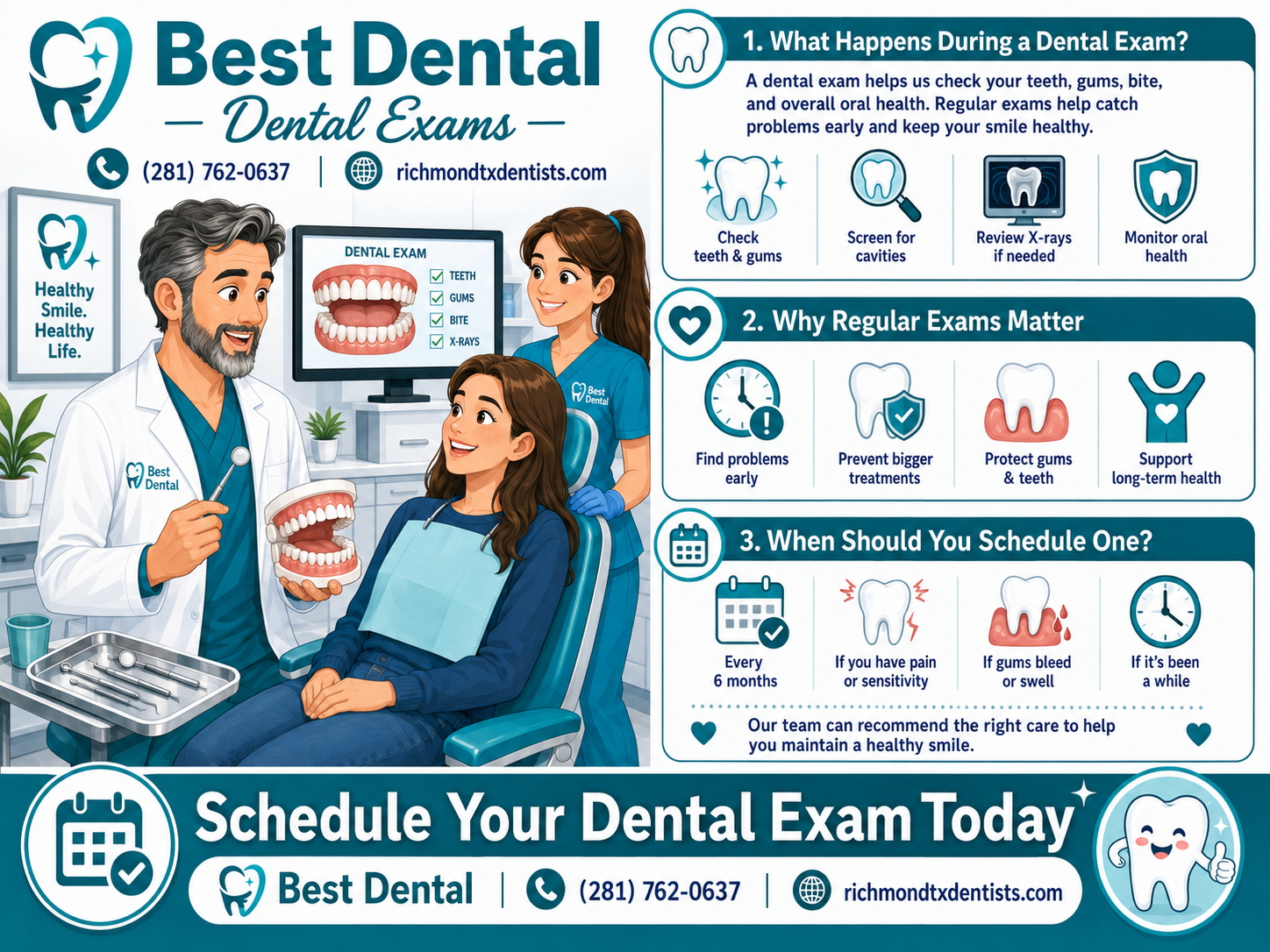
A regular dental exam is your first defense against cavities, gum disease and oral cancer. Drs. Jasmine and Sonny Naderi give careful, gentle checkups with modern tools. They catch problems early, when they are easiest and least costly to treat.
- Covered at 100% by Most Plans
- 10-Point Evaluation
- Recommended Every 6 Months
- Low-Radiation Digital X-Rays
Which exam do you need?
Comprehensive ExamFor new patients. Full X-rays, a chart of every tooth, your health history and a treatment plan.
What Is a Dental Exam?
A dental exam is also called a dental checkup. It is a full check of your teeth, gums, bite, jaw joints and the soft tissues in your mouth, done by a licensed dentist. It is different from a dental cleaning, which removes plaque and tartar. An exam finds problems you have now and spots new ones before you feel them. Think of it as preventive medicine for your mouth. It catches small problems before they turn into big, costly emergencies.
At Best Dental in Richmond, TX, Dr. Jasmine Naderi and Dr. Sonny Naderi give careful exams with modern diagnostic tools. Exams are part of our full preventative dentistry services. Each one is fitted to your age, dental history, risk factors and concerns. We follow the same careful steps every time.
You need regular exams even if you brush and floss well and nothing hurts. Many serious dental problems grow quietly. These include cavities between teeth, early gum disease, oral cancer, cracked teeth and bite problems. By the time they hurt or show, they often need a lot of costly treatment. Exams find them at the earliest stage, when they are simplest to treat.
What’s Included in a Comprehensive Exam
Every comprehensive exam covers ten key areas. We write down what we find and go over it with you.
Three Types of Dental Exams
Comprehensive Exam
A full first-time exam. It includes full mouth X-rays, a chart of everything in your mouth, your medical and dental history, a risk check and a complete treatment plan. It takes 45 to 60 minutes.
Periodic Exam
A standard checkup. We look for changes since your last visit, check for new problems and review X-rays as needed. It usually takes 20 to 30 minutes and is done every 6 months.
Limited Exam
A focused exam for one concern or an emergency, such as sudden pain, an injury or one problem spot. A comprehensive exam may follow for a full check.
Why Regular Dental Exams Matter
Regular exams are more than a formality. They are one of the best things you can do for your mouth and your overall health.
Early Problem Detection
Catch cavities, gum disease, cracked teeth and oral cancer at the earliest stage, when treatment is simplest. Small problems are easy and affordable to fix. Big problems are costly and often painful.
Save Money Long-Term
A $100 exam catches a cavity that needs a $150 filling. If it is ignored, that same cavity can grow into a $1,200 crown or a $1,500 root canal. An exam costs a small part of what treatment costs.
Prevent Dental Emergencies
Regular exams find weak teeth, failing dental work and new infections before they cause bad pain. That helps you avoid sudden emergencies and weekend urgent care visits.
Protect Overall Health
Exams find gum disease, which is linked to heart disease, diabetes problems and lung illness. Caring for your mouth early protects your whole body, not just your smile.
Oral Cancer Screening
Every exam includes a step-by-step oral cancer screening. Oral cancer is much easier to treat when it is found early. The NIH has a plain guide to oral cancer.
Personalized Education
Learn your own risk factors and get brushing and flossing tips that fit you. Understand what is going on in your mouth and get answers to all your questions.
What to Expect During Your Exam
Seven steps, from check-in to your treatment plan. Dr. Naderi explains what was found before you leave, so you understand your oral health.

- 1
Medical History Review
Your visit starts with a review of your medical history, medicines, allergies and any changes since your last visit. Many medicines affect your mouth, and health conditions change how we treat you. Tell us everything. Full information lets us give you safe care that fits you.
- 2
Digital X-Rays
If digital X-rays are due, we take images of areas we cannot see with our eyes. Bitewing X-rays show cavities between teeth and bone levels. Periapical X-rays show whole teeth, including the roots. Full mouth or panoramic X-rays show all your teeth and jaws in one view.
- 3
Visual Examination
Dr. Naderi checks every tooth surface with special tools and magnification. The doctor looks for cavities, cracks, chips, wear, color changes and weak spots. Each tooth is checked one by one, and the findings go into your dental chart.
- 4
Gum Health Evaluation
We check your gums for swelling, recession and disease. A small probe measures the pocket depth around each tooth. Healthy gums have pockets of 1 to 3mm. Deeper pockets point to gum disease that needs treatment. Bleeding, swelling or soreness is a sign of active inflammation.
- 5
Oral Cancer Screening
Dr. Naderi checks your tongue (top, sides and underneath), the floor of your mouth, cheeks, palate, throat, lips and neck. The doctor looks and feels for lumps, white or red patches, sores that do not heal and anything else unusual. This important screening takes just a few minutes.
- 6
Bite & TMJ Assessment
We watch how your teeth come together to check your bite. We look at wear, tooth position and jaw alignment. The TMJ check looks for clicking, popping, soreness or limited jaw movement, which can point to a jaw joint problem.
- 7
Discussion & Treatment Planning
Dr. Naderi goes over everything with you, shows you your X-rays and explains any problems. If you need treatment, the doctor talks through your options, answers your questions and makes a plan that puts the most important things first. You will understand your oral health and your next steps before you leave.
How Often Should You Have Exams?
Most people do well with a dental exam every six months. The right schedule for you depends on your risk factors and dental history. The ADA answers common questions about going to the dentist.
Standard Care
Adults and children with good oral health, a low cavity risk, healthy gums and no active dental problems. This is the most common schedule.
Elevated Risk
Patients with gum disease, a high cavity risk, diabetes, a weak immune system or a history of frequent dental problems.
Periodontal Maintenance
Patients with periodontitis, heavy tobacco users and people with serious health conditions that affect the mouth.
Pregnancy
Hormone changes raise the risk of gum disease during pregnancy. More frequent checks protect both mother and baby.
Don’t Skip Your Exams. Problems Develop Silently.
Many patients feel fine and wonder if they really need regular exams. But cavities do not hurt until they are large and deep. Gum disease gets worse quietly until a lot of bone is lost. Oral cancer grows without pain in its early stages. By the time you feel something, the problem is advanced and costly to treat. Regular exams catch what you cannot see or feel yourself.
Advanced Diagnostic Technology
Best Dental uses modern diagnostic tools. They help us find problems earlier and more accurately, and they make your visit more comfortable.
Cost & Insurance
A dental exam is some of the best-value health care you can get. Most insurance plans cover exams at 100%, with nothing out of pocket.
A $100 exam that finds a small cavity can save you from a $1,500 root canal and crown later. Preventative exams pay for themselves many times over.
What Insurance Typically Covers
- Two exams a year. Covered at 100% by most dental insurance plans.
- Routine bitewing X-rays. Covered at 100% once a year.
- Full X-ray series. Covered at 100% every 3 to 5 years.
- Why plans pay in full. Preventative care lowers their costs by avoiding expensive treatment later.
More Ways We Help
- Our billing team checks your benefits before your visit and helps you use every dollar of coverage you have.
- Our Dental Discount Plan is there for patients without insurance.
- Clear pricing with no hidden fees.
- Exam and cleaning package pricing is available.
Frequently Asked Questions

No. A dental exam should not hurt. The dentist looks at your teeth, uses gentle tools and takes X-rays. If you have gum disease, measuring your gum pockets may feel a little sensitive for a moment. Most patients find exams quick and comfortable from start to finish.
An exam finds problems. The dentist checks for cavities, gum disease, oral cancer and other issues. A cleaning removes plaque and tartar. The hygienist uses special tools to clean your teeth above and below the gum line. The dentist does the exam, and the hygienist does the cleaning. Most visits include both.
A routine periodic exam usually takes 15 to 30 minutes. A comprehensive new patient exam takes 45 to 60 minutes, because we check more and go over your full medical and dental history. A limited exam for one problem usually takes 10 to 20 minutes. With a cleaning, the whole visit is usually 45 to 75 minutes.
No. Bitewing X-rays, which check for cavities between teeth, are usually taken once a year. A full mouth X-ray series is taken every 3 to 5 years. If you are a new patient or have a specific concern, you may need X-rays at your first visit. We only take X-rays when they are needed.
Dr. Naderi will go over what was found, show you your X-rays, explain the problem and suggest treatment options. You get a written treatment plan with priorities and cost estimates. You are never pushed to start right away. You have time to ask questions, think about your options and make an informed choice about your care.
Yes. Our gentle team keeps things calm and supportive. We explain each step before we do it, let you set the pace and give you breaks whenever you need them. For strong anxiety, we offer sedation options, including nitrous oxide, oral sedation and IV sedation, to help you relax.
Great home care is a must, but it is not enough by itself. A professional exam finds problems between teeth, below the gum line and inside teeth that you cannot see or feel. Cavities form in hidden spots. Gum disease grows under the surface. Oral cancer shows up in places you cannot check yourself. Exams catch what daily home care misses.
Brush and floss before your visit. Bring a list of your current medicines and any changes in your health. Write down questions or concerns you want to talk about. If it is your first visit, come a few minutes early to fill out paperwork. Tell us about any pain, sensitivity or problems you have noticed since your last checkup.
Key Takeaways About Dental Exams at Best Dental
- Comprehensive exams find cavities, gum disease, oral cancer and bite problems early.
- Most insurance plans cover two exams a year at 100%, with nothing out of pocket.
- Exams should not hurt, and a routine checkup takes 15 to 30 minutes.
- Recommended every 6 months for most patients, and more often for those at higher risk.
- Finding problems early saves real money by avoiding costly treatment.
- Oral cancer screening is part of every exam. Finding it early can save a life.
- Digital X-rays use up to 90% less radiation than older film X-rays.
- Exams check your teeth, gums, bite, jaw joints and all the soft tissues in your mouth.
- Problems caught early are simpler, less painful and far less costly to treat.
- Regular exams protect your mouth and your overall health. Gum disease affects the whole body.
Serving Richmond & Surrounding Areas
Best Dental serves patients from across Richmond and nearby Fort Bend County communities. Tap your neighborhood to learn more.
Schedule Your Comprehensive Dental Exam
Do not wait for pain or problems to show up. Drs. Jasmine and Sonny Naderi give careful, gentle exams with modern tools. Most insurance plans cover exams at 100%. Whether it has been six months or several years since your last checkup, now is a good time.