

Root Canal Cost
in Houston, TX
Book a Root Canal Appointment
In This Article
- What Affects Root Canal Cost
- Root Canal Cost by Tooth Type in Houston
- The True Total: Root Canal + Build-Up + Crown
- Cost Without Insurance
- Insurance Coverage
- Root Canal vs. Extraction: Which Costs Less?
- What Happens During a Root Canal
- Why Houston Patients Come to Best Dental
- Frequently Asked Questions
Root canals rank among the most anxiety-inducing items on a dental bill — partly because of their reputation, and partly because the pricing is genuinely confusing. The same procedure can cost $700 at one Houston practice and $1,800 at another, depending on tooth location, provider type, and whether the crown that almost always follows is included in the quote.
This guide gives you a real picture of what root canals cost in the Houston area broken down by tooth type, what the true all-in total looks like once you add the crown, and how Best Dental's pricing in Richmond, TX compares to what Houston patients typically pay.
What Affects Root Canal Cost
Root canal pricing varies more than most dental procedures because the complexity of the procedure varies significantly depending on which tooth is involved. It's not a one-size fee.
Which Tooth Needs Treatment
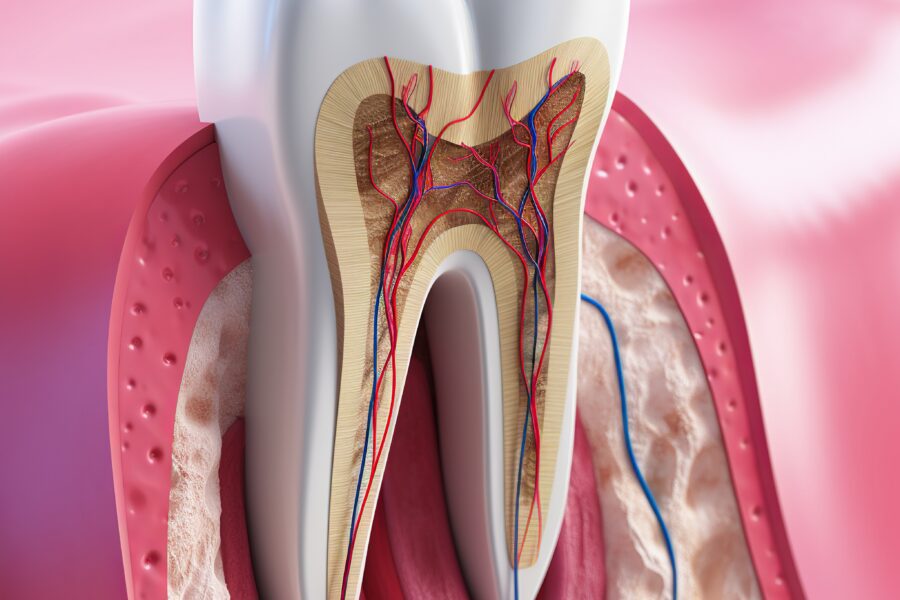
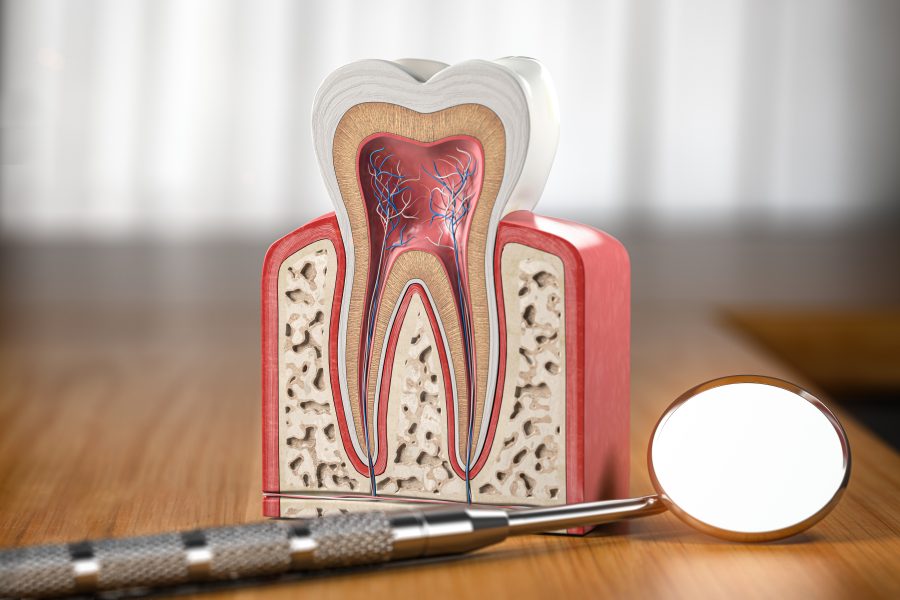
This is the single biggest pricing variable. Front teeth (incisors and canines) have one root canal each — straightforward access, relatively quick. Premolars have one or two canals. Molars have two to four canals, sit further back in the mouth, and require significantly more time and technical precision. A molar root canal typically costs $200–$600 more than a front tooth root canal at the same practice.
Canal Complexity & Calcification
Root canals that are curved, narrow, calcified (hardened with mineral deposits), or have unusual anatomy take longer to clean and shape. Older patients are more likely to have calcified canals. These cases take more time, may require additional imaging, and some practices charge a higher fee for complex anatomy cases.
Infection & Abscess Presence
An active abscess or significant periapical infection can complicate treatment — sometimes requiring antibiotics and a two-visit protocol to fully resolve infection before the canal is sealed. Some practices charge a separate fee for abscessed teeth; others treat it as part of the same procedure. Worth asking upfront.
General Dentist vs. Endodontist
Endodontists specialize exclusively in root canal treatment and charge specialist fees — often $300–$600 more than a general dentist performing the same procedure. For complex cases (curved canals, calcification, prior failed root canal), that specialist premium may be justified. For routine cases, a general dentist with good endodontic experience handles them equally well at a lower cost.
Location & Office Overhead
Practices in the Galleria, River Oaks, or Houston Medical Center area carry higher overhead than suburban Richmond or Fort Bend County offices. That overhead is reflected in procedure fees — not in the quality of the root canal itself, which is determined by the clinician's technique and the tooth's anatomy.
The Crown That Follows
Most teeth that undergo root canal treatment require a build-up and crown afterward to protect the now-brittle tooth structure from fracture. A build-up is a composite core placed to replace missing tooth structure and give the crown something solid to bond to — needed whenever significant decay or the root canal access itself has left insufficient natural tooth remaining. Many Houston practices quote the root canal fee alone — without mentioning the build-up or crown. The true total investment is root canal plus build-up plus crown, and that number is rarely front-and-center on competitor pricing pages. More on this below.
Root Canal Cost by Tooth Type in Houston
Here's what Houston-area patients realistically pay for root canal treatment at different provider types, broken down by tooth location — the most honest way to present this pricing.
Tooth Type |
# Canals |
Houston Range |
Best Dental |
|---|---|---|---|
Front tooth Incisors & canines |
1 |
$700–$1,200 |
$750 |
Premolar Bicuspids |
1–2 |
$800–$1,400 |
$850 |
Molar Back teeth |
2–4 |
$1,000–$1,800 |
$950 |
Endodontist specialist Referral practices |
— |
$1,200–$2,000+ |
No referral needed |
Transparent tiered pricing. No specialist markups.
Best Dental charges $750 for front teeth and canines, $850 for premolars, and $950 for molars — significantly below Houston-area averages at every tier, with all root canal cases handled in-house. See our full pricing page for a complete breakdown of every procedure we offer.
The True Total: Root Canal + Build-Up + Crown
This is where most pricing articles fall short — and where patients get surprised at checkout. The fee quoted for a root canal is almost never the end of the bill. There are typically two additional procedures that follow, each with its own fee.
The build-up
After a root canal, the access opening drilled through the top of the tooth — plus any pre-existing decay that was removed — often leaves insufficient natural tooth structure for a crown to bond to reliably. A build-up (also called a core build-up) is a composite filling placed to restore that missing structure, giving the crown a solid foundation. Not every tooth requires one — a tooth with minimal decay and a small access opening may have enough remaining structure — but many do, particularly heavily decayed molars. At most Houston practices, a build-up costs $250–$500. At Best Dental, a build-up is $199.
The crown
The crown encases the entire tooth to protect the now-brittle root-canal-treated structure from fracture. For back teeth — premolars and molars — this is recommended in virtually every case. Without a crown, a root-canal-treated molar has a high probability of fracturing within a few years under normal chewing forces. At most Houston practices, a porcelain crown runs $1,200–$1,800. At Best Dental, a crown is $950.
When evaluating any root canal quote, the number that matters is the combined cost of root canal + build-up + crown. That's the real bill — and it's rarely disclosed upfront by practices that advertise root canal pricing. The table below uses a molar root canal as the benchmark since it's the most common and most expensive case.
Provider |
Root Canal |
Build-Up |
Crown |
True Total |
|---|---|---|---|---|
Houston general dentist Midrange suburban |
~$1,100 |
~$350 |
~$1,400 |
~$2,850 |
Houston endodontist + dentist Specialist referral path |
~$1,500 |
~$350 |
~$1,400 |
~$3,250 |
Best Dental — molar Worst-case scenario |
$950 |
$199 |
$950 |
$2,099 |
Best Dental — premolar |
$850 |
$199 |
$950 |
$1,999 |
Best Dental — front tooth |
$750 |
$199 |
$950 |
$1,899 |
Root Canal Cost Without Insurance in Houston
If you're uninsured — or if your plan doesn't cover endodontic treatment — you're paying the full out-of-pocket fee. Here's how that looks across the Houston market for a molar root canal plus build-up plus crown, which is the most common and most expensive scenario.
For uninsured patients, the biggest lever on cost is whether the root canal is done in-house or via specialist referral. Best Dental performs root canals on all tooth types in-house — front teeth, premolars, and molars — which eliminates the endodontist referral fee that adds $400–$800 to the total at many Houston general practices. Cherry and CareCredit financing are available to spread costs over time.
Does Insurance Cover Root Canals?
Yes — root canals are covered by most dental PPO plans, but typically at the major services benefit level rather than 100% coverage.
- Typical coverage: 50–80% of the root canal fee after your annual deductible. Front tooth root canals are sometimes covered at a higher percentage than molars under certain plans.
- Annual maximums: Most PPO plans cap benefits at $1,000–$2,000 per year. A root canal plus crown can quickly consume your entire annual benefit in a single treatment — especially if you've already used coverage earlier in the year.
- Waiting periods: Some plans require 6–12 months of enrollment before major services like root canals are covered. If you recently changed insurers, verify eligibility before scheduling non-emergency treatment.
- Pre-authorization: Many plans require pre-authorization for root canals before treatment begins. Best Dental verifies your insurance benefits before your appointment so you know your out-of-pocket cost in advance.
- Crown coverage: The crown following a root canal is typically covered separately under major services at the same 50% rate — but some plans have waiting periods or a tooth replacement clause requiring a certain period since the tooth was last restored.
Root Canal vs. Extraction: Which Costs Less?
This is one of the most common questions patients ask — and the answer is more nuanced than a simple dollar comparison.
Root Canal + Crown
- Saves the natural tooth
- Preserves bone at the tooth site
- No gap in your bite
- Adjacent teeth don't shift
- One-time cost if tooth lasts
- Best Dental total: $1,899–$2,099 (RC + build-up + crown)
Extraction + Implant
- Tooth is gone permanently
- Bone loss begins without implant
- Gap affects chewing and bite
- Adjacent teeth drift over time
- Implant needed to replace tooth
- Best Dental total: $2,245 ($250 + $1,995)
On pure sticker price, extraction alone is cheaper at $250. But extraction without replacement creates a cascade of problems — bone loss, tooth drift, and compromised chewing function — that cost far more to correct later. When you factor in an implant to properly replace the tooth, the total cost of extraction plus implant ($2,245 at Best Dental) is comparable to saving the tooth with a root canal, build-up, and crown ($1,899–$2,099 at Best Dental depending on tooth type) — and the natural tooth is almost always the better clinical outcome.
The calculus changes when the tooth is already severely compromised — cracked below the gumline, extensively decayed with insufficient remaining structure to support a crown, or surrounded by significant bone loss. In those cases, extraction may be the clinically appropriate choice regardless of cost. Your dentist will assess the tooth's restorability and give you an honest recommendation at your appointment.
What Happens During a Root Canal
Root canals have an outsized reputation for pain that doesn't match the reality of modern endodontic treatment. The procedure itself is performed under local anesthetic — most patients report feeling pressure but no pain during the procedure, and describe it as no worse than having a filling placed.
Diagnosis & X-Rays
Your dentist takes periapical X-rays to evaluate the root structure, canal anatomy, and degree of infection at the root tip. This determines the number of canals, any calcification, and whether the infection has spread to surrounding bone.
Anesthesia & Isolation
Local anesthetic is administered around the affected tooth. Once fully numb, a rubber dam (a small sheet of latex or nitrile) is placed around the tooth to isolate it from saliva and keep the area sterile throughout the procedure.
Access & Pulp Removal
An opening is made through the crown of the tooth to access the pulp chamber. The infected or damaged pulp tissue is removed from the pulp chamber and each root canal using progressively sized files. This is the step that eliminates the source of pain.
Cleaning & Shaping
Each canal is cleaned, shaped, and irrigated with antimicrobial solution to eliminate remaining bacteria and debris. The canals are shaped to receive the filling material. This is the most time-consuming step and where molar root canals take significantly longer than front teeth.
Filling & Sealing
The cleaned canals are filled with a biocompatible rubber-like material called gutta-percha, which is compacted and sealed with dental cement. The access opening is then sealed with a temporary or permanent filling, depending on whether a crown will follow at a separate appointment.
Crown Placement
At a follow-up appointment (typically 2–3 weeks later), a crown is placed over the tooth to restore its full function and protect the brittle root-canal-treated structure from fracture. For most back teeth, this step is essential to the long-term success of the treatment.
Why Houston Patients Come to Best Dental
The drive from southwest Houston to Best Dental in Richmond takes 30–40 minutes via US-59/I-69. For a root canal, build-up, and crown, the savings versus a Houston midrange practice typically run $750–$1,200 — and versus the specialist referral path, often more.
What makes the bigger practical difference is the in-house model. Houston patients who present to a general dentist with a molar needing a root canal are frequently told their case needs to go to an endodontist — which means a second office, a second wait for an appointment, and a separate specialist invoice. Best Dental handles the full range of root canal cases in-house on all tooth types, which keeps the treatment under one roof, on one bill, at one price.
For Houston-area patients exploring their options, Best Dental's Houston patient page covers directions, insurance, and what to expect at your first appointment.
Root canal + build-up + crown: $1,899–$2,099 all-in. One office. No referrals.
Best Dental in Richmond, TX treats all root canal cases in-house — $750 front teeth, $850 premolars, $950 molars — with published pricing on every line item and most Houston-area PPO insurance accepted.
Book Your Appointment →Frequently Asked Questions
The questions Houston patients actually ask about root canal costs — answered directly.
Root Canal in Richmond, TX — From $750
Front teeth $750 · Premolars $850 · Molars $950 · Build-up $199 · Crown $950. All-in $1,899–$2,099. In-house on all tooth types. Serving Houston patients via US-59, 30 minutes from southwest Houston.
Best Dental · 22377 Bellaire Blvd, Ste 400, Richmond, TX 77407