Partial Dentures Cost
in Houston, TX
Schedule a Denture Consultation
In This Article
Partial dentures are the most cost-effective way to replace multiple missing teeth when you still have healthy natural teeth remaining. But the pricing in Houston is all over the map — from under $1,000 at volume practices to $2,500+ at cosmetic-focused offices — and the type of partial (metal framework vs. flexible resin) is often used to justify significant price variation even when the clinical result is similar.
This guide gives you the real picture: what metal and flexible partials cost in Houston, how Best Dental's $1,250 per arch flat rate compares, and what you actually need to know to make the right decision for your situation.
What Is a Partial Denture?
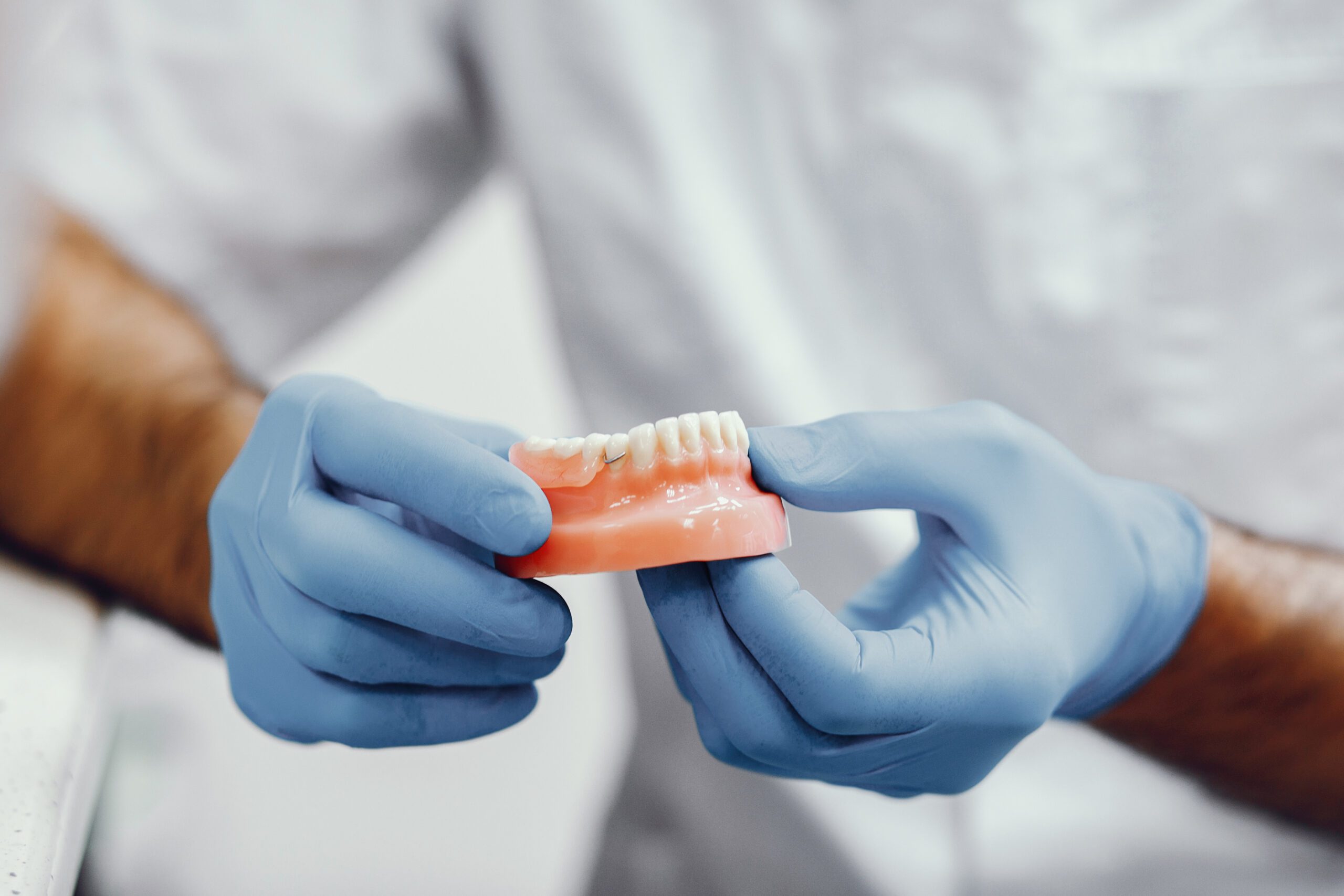
A partial denture is a removable prosthetic that replaces one or more missing teeth in an arch where some natural teeth remain. Unlike a complete denture, which replaces all teeth in an arch, a partial is designed to fit around your existing teeth — filling the gaps, restoring chewing function, and preventing the remaining teeth from drifting into the empty spaces.
Partials are held in place by clasps that hook onto adjacent natural teeth, or by precision attachments that snap onto crowns placed on the anchor teeth. The prosthetic teeth sit on a base — either metal framework or flexible resin — that rests on the gum tissue between the clasps.
Metal vs. Flexible Partials: Which Type Do You Need?
The two most common partial denture materials have real clinical differences — not just aesthetic ones. Here's what actually matters when choosing between them.
Flexible Partial Denture
- Thin, lightweight nylon resin — no metal framework
- Tooth-colored clasps blend with gum tissue
- More comfortable for sensitive patients
- Better aesthetics when front teeth are involved
- More difficult to reline or repair than metal
- Lifespan typically 5–8 years
What Partial Dentures Cost in Houston
Here's the real market picture for partial denture pricing across Houston-area providers, broken down by material type.
Type | Houston Range | Best Dental |
|---|---|---|
Cast metal partial Cobalt-chrome framework | $935–$1,975 | $1,250 |
Flexible partial Valplast / nylon resin | $1,075–$2,500 | $1,250 |
Acrylic flipper Temporary / transitional | $300–$700 | Ask at consultation |
Reline Per arch | $300–$600 | $250 |
Same price regardless of material. You choose what fits.
Metal framework or flexible resin — Best Dental charges $1,250 per arch for either. No material upcharge, no premium tier. See the full pricing page for complete procedure costs.
Partial Denture vs. Bridge vs. Implant: Which Costs Less?
Partial dentures aren't the only way to replace multiple missing teeth. Here's how the cost and clinical trade-offs compare across the three main options.
Best Dental price
Best Dental price
Best Dental price
Partial denture is the most affordable upfront when replacing 3+ teeth in a single arch. It's removable, requires no surgery, and can be made quickly. The trade-off is that it's less stable than fixed options and requires nightly removal and cleaning.
A dental bridge is fixed and more stable than a partial, but requires grinding down the healthy adjacent teeth to support it. For replacing 1–2 missing teeth with solid anchor teeth on either side, a bridge is often the better choice over a partial. A 3-unit bridge (two crowns + one pontic) at Best Dental costs $2,850 — more than a partial, but fixed in place permanently.
Dental implants are the gold standard for single-tooth replacement — no adjacent teeth are altered, bone is preserved, and the result is permanent. For replacing multiple teeth spread across an arch, implants become expensive quickly ($1,995 each). For 4+ missing teeth in a single arch, a partial denture or implant-supported denture is usually the more practical solution.
The Partial Denture Process
Partial dentures typically require 3–5 appointments over 3–5 weeks from start to delivery. Here's what each step involves:
- Consultation & evaluation: Your dentist assesses which teeth are missing, the condition of your remaining teeth, your bite, and determines which type of partial is most appropriate. Any teeth that need extraction before the partial is made are scheduled at this stage.
- Impressions: Detailed impressions of both arches are taken and sent to the dental lab. The lab uses these to fabricate the partial framework and set the replacement teeth.
- Framework try-in (metal partials): The metal framework is tried in before the teeth are set, to verify fit and comfort before the lab completes the partial. Flexible partials typically skip this step.
- Delivery & fitting: The finished partial is placed, adjusted for bite and comfort, and clasps are refined for proper tension. Most patients need 1–2 follow-up adjustment appointments.
- Follow-up adjustments: Small sore spots, loose clasps, or bite irregularities are common in the first few weeks and are addressed at no additional charge. Wear the partial as much as possible between appointments — this helps identify pressure areas faster.
Partial Denture Cost Without Insurance in Houston
Cherry and CareCredit financing are available at Best Dental — a $1,250 partial on a 12-month 0% APR plan is approximately $105/month.
Insurance Coverage for Partial Dentures
- Most PPO plans cover partials at 50% after your annual deductible, under major services. Some plans distinguish between cast metal and flexible resin — verify your specific coverage before assuming both are covered equally.
- Annual maximums of $1,000–$2,000 apply. A $1,250 partial after a deductible may leave you with $300–$500 in out-of-pocket costs after insurance — still manageable with financing.
- Frequency limitations apply: most plans cover a new partial once every 5 years. If your partial breaks or needs replacement sooner, you may be paying out of pocket.
- Missing tooth clause: Some plans include a clause that excludes coverage for teeth that were already missing when the policy began. If you lost teeth before enrolling in your current plan, check whether this clause applies.
- Relines are typically covered at 50% under major services, usually once every 2–3 years per arch.
Why Houston Patients Come to Best Dental
At $1,250 per arch for either metal or flexible partials — without separate upcharges for material type — Best Dental's pricing is straightforward in a market where the same procedure can range from $935 to $2,500 depending on who you ask and which material they push.
The lack of a material upcharge matters practically: at most Houston practices, a patient who would benefit from a flexible partial for aesthetic reasons is charged significantly more for it. At Best Dental, the clinical recommendation drives the decision — not the pricing tier.
For Houston patients weighing the 30–40 minute drive via US-59/I-69, Best Dental's Houston patient page has directions, insurance verification information, and what to expect at your first appointment.
Partial dentures: $1,250 per arch. Metal or flexible — same price.
Best Dental in Richmond, TX fabricates quality partial dentures in-house with follow-up adjustments included. Most Houston-area PPO insurance accepted.
Book a Consultation →Frequently Asked Questions
Partial Dentures in Richmond, TX — $1,250 Per Arch
Metal framework or flexible — same published price. Relines $250/arch. Serving Houston patients via US-59 — 30 minutes from southwest Houston.
Best Dental · 22377 Bellaire Blvd, Ste 400, Richmond, TX 77407