
In This Article
An inlay or onlay sits in a precise middle ground between a composite filling and a full crown — it's the right restoration when decay or damage is too extensive for a direct filling but not severe enough to justify removing healthy tooth structure for a crown. Most Richmond, TX practices don't publish pricing for this procedure, which makes it frustrating to research before your appointment.
This guide covers what inlays and onlays actually cost in Richmond, how pricing varies by material, how this option compares clinically and financially to fillings and crowns, and how Best Dental's fees and financing work. For the full clinical overview of the treatment, visit our inlays and onlays service page.
What Are Inlays and Onlays?
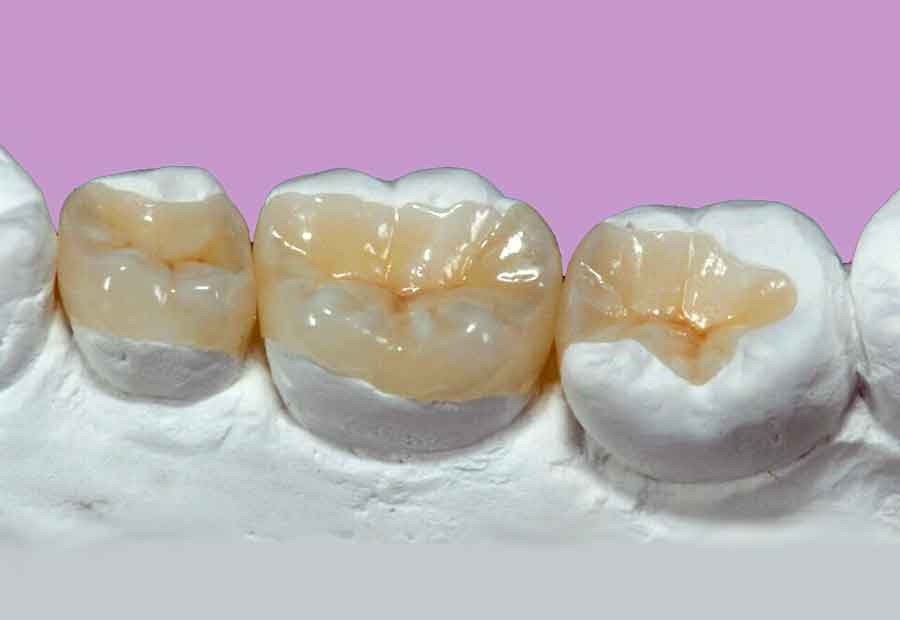
Inlays and onlays are custom-fabricated restorations made in a dental lab and bonded permanently to a damaged or decayed tooth. Unlike a filling, which is packed directly into the tooth in the chair, an inlay or onlay is crafted to precise specifications from a digital impression of your tooth — resulting in a more accurate fit, better marginal seal, and longer lifespan than a large direct filling can achieve.
Inlay vs. Onlay — the clinical difference
The distinction is anatomical. An inlay fits within the cusps of the tooth — it fills the central cavity space without extending over the points of the tooth. An onlay covers one or more cusps in addition to filling the central area — sometimes called a "partial crown" because it extends over the tooth's biting surface. Onlays are used when damage has reached or compromised the cusps, which bear the majority of chewing force.
Both are bonded to the tooth with high-strength resin cement, which actually reinforces the remaining tooth structure. Studies consistently show that inlays and onlays can increase a tooth's strength by up to 75% compared to the tooth with the decay removed — whereas a large amalgam or composite filling can reduce tooth strength by up to 50%.
Inlays & Onlays at Best Dental — Full Service Overview
Candidacy criteria, materials used, what to expect at each appointment, and why this restoration often outperforms large direct fillings on back teeth.
Inlay & Onlay Cost in Richmond, TX
Best Dental prices inlays and onlays per tooth, with the fee varying by material. Here are the published fees alongside the typical Richmond, TX area range — so you can see exactly where Best Dental sits in the local market.
Procedure |
Best Dental — Richmond |
Richmond Area Range |
|---|---|---|
Porcelain inlay or onlay |
$750 / tooth |
$650–$1,200 |
Composite inlay or onlay |
$650 / tooth |
$500–$900 |
Gold inlay or onlay |
$900 / tooth |
$700–$1,400 |
Composite filling (for comparison) |
$125–$175 |
$150–$350 |
Porcelain crown (for comparison) |
$950 |
$1,000–$1,800 |
At $750 per tooth for a porcelain inlay or onlay, Best Dental sits at the lower end of the Richmond market — which ranges up to $1,200 at some practices for the same porcelain restoration. The fillings and crown fees are included for reference because the inlay/onlay decision almost always involves weighing these alternatives.
Cost by Material — Porcelain, Gold & Composite
Three materials are used for inlays and onlays, each with different aesthetic properties, durability, and cost. The right choice depends on which tooth is being restored, your bite forces, and your aesthetic preferences.
Porcelain
Gold
Composite Resin
Inlay vs. Filling vs. Crown — When Each Makes Sense
The most important cost decision isn't which inlay material to choose — it's whether an inlay/onlay is the right restoration at all. Here's how the three options compare by clinical indication and cost.
Composite Filling
Cavity is small to moderate. Damage is confined to one or two surfaces. Enough healthy tooth structure remains to support a direct restoration. No cusp involvement.
Inlay / Onlay
Cavity is too large for a reliable direct filling. Damage involves the cusps (onlay) or spans multiple surfaces. Tooth structure is sufficient to avoid a full crown preparation.
Porcelain Crown
Decay or fracture has destroyed most of the tooth's coronal structure. A root canal has been performed. The tooth is cracked and needs full coverage for protection.
Choosing the right restoration isn't just about cost — it's about preserving maximum healthy tooth structure. The inlay/onlay occupies the middle of that spectrum deliberately: it removes only the damaged tissue, not the healthy cusps and walls that a crown preparation requires. Over a 20-year period, a well-placed onlay typically costs less in total dental spend than the crown-replacement cycle it avoids.
What Affects the Final Price
Material Choice
Composite is the lowest cost ($650), porcelain is the most common middle tier ($750), and gold commands the highest fee ($900) due to material cost and technique. Best Dental's prices are the same whether restoration is classified as an inlay or onlay — the geometry of your specific tooth determines which applies.
Which Tooth
First and second molars experience the highest bite forces and are the most common inlay/onlay candidates. Front teeth rarely receive inlays or onlays. Back tooth restorations are more technique-sensitive due to limited access, but Best Dental's per-tooth pricing is consistent regardless of tooth position.
Practice Location & Overhead
Richmond and Fort Bend County practices have lower overhead than inner-loop Houston offices — which is reflected in fees. Best Dental's $750 porcelain inlay/onlay is at the low end of the Richmond range, well below what Houston proper practices charge for the identical procedure and material.
Dental Lab Quality
Inlays and onlays are fabricated off-site at a dental laboratory. Lab quality affects fit, shade accuracy, and durability. Best Dental uses quality labs that produce precise restorations — contributing to long-term success that makes the cost-per-year lower than a cheaper restoration placed multiple times.
The Two-Appointment Process
Unlike a filling that's placed in a single visit, an inlay or onlay requires two appointments — one to prepare the tooth and take impressions, and one to bond the final restoration. Most patients complete both visits within 2–3 weeks.
Preparation & Impressions
The damaged or decayed tooth structure is removed under local anesthetic. The tooth is shaped to receive the inlay or onlay with precise margins. A digital impression (or traditional impression) captures the exact geometry of the prepared tooth and the surrounding bite. A temporary restoration is placed to protect the tooth while your custom inlay or onlay is fabricated at the dental lab — typically 1–2 weeks.
Custom Fabrication
The dental laboratory mills or fabricates your inlay or onlay to the exact specifications captured in the impression — matching the shade, dimensions, and occlusal contacts of your specific tooth. This precision is what distinguishes an inlay/onlay from a direct filling and what accounts for its superior long-term performance and seal.
Bonding & Finishing
The temporary restoration is removed, and the final inlay or onlay is tried in to verify fit, shade, and bite contacts before bonding. Once confirmed, it's bonded with high-strength resin cement and polished. Your bite is checked and any minor adjustments are made at the same appointment. You leave with a permanently bonded restoration and no restrictions beyond avoiding very sticky foods for 24 hours.
Insurance Coverage for Inlays & Onlays
Most dental PPO plans classify inlays and onlays under the major restorative services benefit — typically covered at 50% after your annual deductible. Here's what that looks like in practice at Best Dental's fees.
Scenario |
Full Fee |
Insurance Pays (50%) |
Your Cost |
|---|---|---|---|
Composite inlay/onlay |
$650 |
$325 |
~$325 |
Porcelain inlay/onlay |
$750 |
$375 |
~$375 |
Gold inlay/onlay |
$900 |
$450 |
~$450 |
- Pre-authorization recommended. For any inlay or onlay over $500, Best Dental submits a pre-authorization request to your insurance carrier before treatment begins — confirming coverage in writing so there are no post-treatment surprises.
- Annual maximum applies. If you're late in your benefit year and your annual maximum is nearly exhausted, it may be worth scheduling in January when your full benefit resets — especially if you need multiple inlays or onlays.
- "Alternate benefit" clauses. Some plans have language paying only for the least expensive restoration that's clinically acceptable. If your plan covers a filling but not an inlay/onlay for a given tooth, your out-of-pocket for the upgrade may be larger. We identify these clauses during benefits verification before treatment.
- No insurance? Best Dental's Dental Discount Plan ($199/year) reduces fees on inlays, onlays, and every other procedure — no annual maximum, no waiting period, no claim denials.
Financing Options at Best Dental
At $650–$900 per tooth, an inlay or onlay is a manageable expense for most patients — particularly with 50% insurance coverage bringing the out-of-pocket to $325–$450. For patients needing multiple restorations or preferring to spread the cost, Best Dental offers three financing options.
In-House 0% Financing
No credit check required. Down payment from $500. Balance divided into monthly payments. Available to all patients.
Cherry Financing
Extended payment terms for larger treatment plans. Soft credit pull for pre-qualification. Useful for multiple inlays or combined restorative work.
CareCredit
12–24 month promotional 0% periods for qualifying balances. Accepted at Best Dental for inlays, onlays, and all other procedures.
For uninsured patients, combining the Dental Discount Plan ($199/year membership) with in-house 0% financing gives you discounted fees paid over time at no interest — the most cost-effective combination for cash-paying patients in Richmond. See the full published pricing page for all procedure fees.
Know your exact cost before you commit.
Best Dental provides a complete treatment plan with published fees and insurance estimate after your examination — before any procedure begins. Book a consultation and leave knowing exactly what an inlay or onlay will cost you.
Book Your Appointment →Frequently Asked Questions
Inlays & Onlays in Richmond, TX — from $650
Porcelain inlays and onlays from $750 per tooth. Published pricing, insurance verified before treatment, and 0% financing with no credit check. Best Dental in Richmond, TX.
Best Dental · 22377 Bellaire Blvd, Ste 400, Richmond, TX 77407