Can a Cracked Tooth Be Saved?
What You Need to Know
The short answer is usually yes — but how long you wait matters more than almost anything else. Here is what determines whether your cracked tooth is saved or extracted.
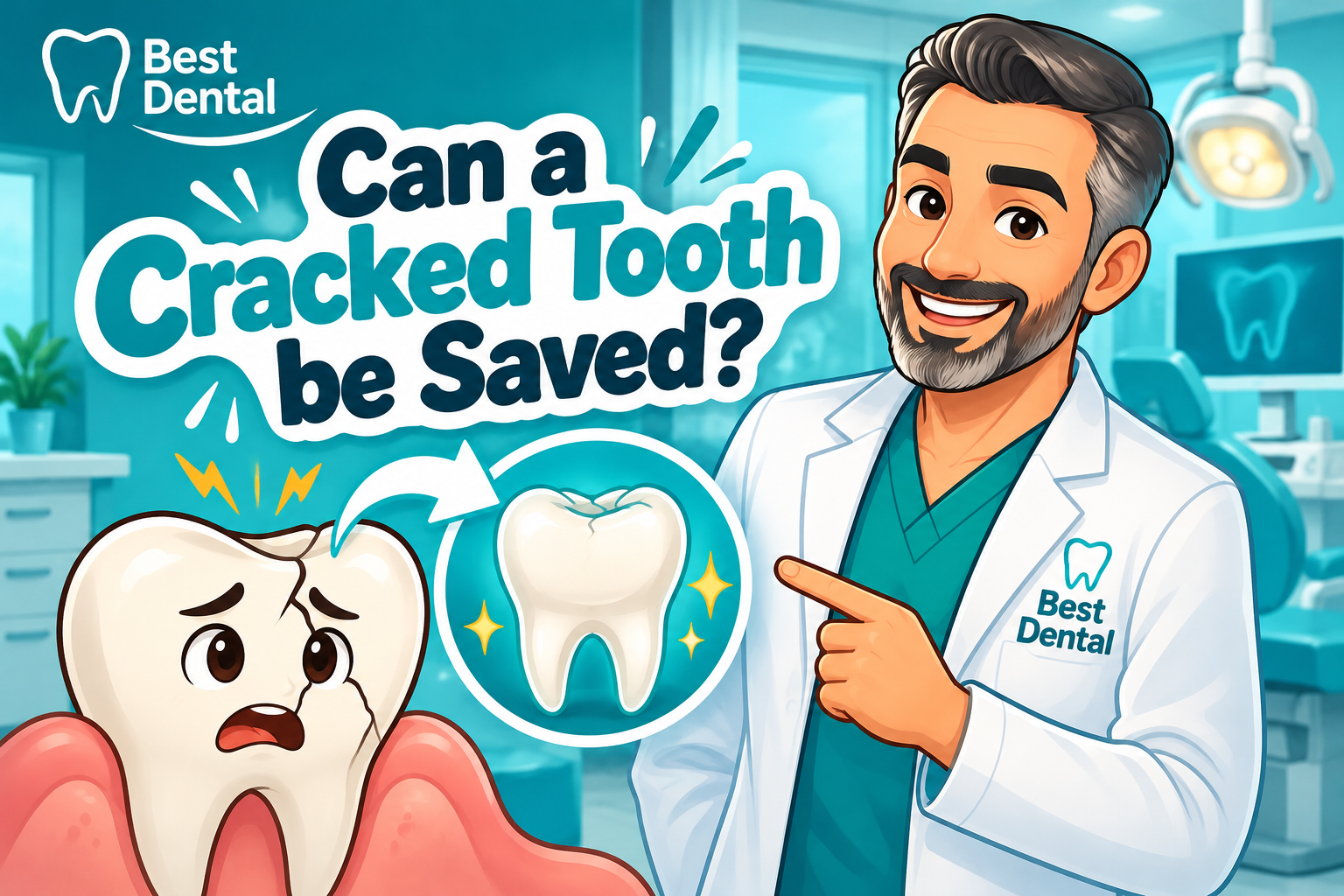
A cracked tooth can usually be saved. It depends on where the crack is and how deep it goes. A surface crack or cracked cusp almost always gets a crown and does just fine. A crack that has hit the nerve needs a root canal and crown, but the tooth is still saveable. A crack that splits the tooth in two or goes deep below the gum line usually means extraction. The most important thing is how soon you see a dentist.
Why Cracked Teeth Are Tricky to Diagnose
Cracked teeth are one of the top causes of tooth loss in adults, and one of the most misdiagnosed problems in dentistry. Unlike a cavity, a crack usually does not show up on an X-ray. Many patients see multiple dentists with vague pain before anyone figures out a hairline fracture is the cause.
The classic sign is pain when you bite down that goes away the moment you let go. That "pain on release" pattern points to a cracked tooth more than anything else. If you also have cold sensitivity that sticks around, random toothaches, or a tooth that looks darker than before, the crack has likely reached the pulp. That is the nerve and blood supply inside the tooth. At that point you probably need a root canal, but the tooth can still be saved.
Sharp pain when you bite and then release is the classic sign of a cracked tooth. It does not go away on its own. The longer you wait, the deeper the crack gets. A tooth that only needs a crown today could need a root canal in a few weeks, and may become unsaveable if ignored long enough.
The Five Types of Tooth Cracks (and What They Mean for Your Tooth)
Not all cracks are the same. Where the crack starts and where it ends determines whether your tooth can be saved and what treatment it needs.
Craze Lines
Tiny, shallow cracks in the outer enamel only. They are extremely common, especially as we age, and they almost never cause pain or require treatment. Your dentist may monitor them at routine visits, but no intervention is typically needed.
Prognosis: Excellent — no treatment neededFractured Cusp
A piece of the chewing surface breaks off, often near an old filling. The pulp is rarely affected, so the fix is usually a crown or a new filling. Pain is typically mild and the tooth is almost always saved.
Prognosis: Very good — crown or fillingCracked Tooth (Incomplete Fracture)
The crack runs from the chewing surface down toward the root but has not split the tooth yet. This is the most common situation patients come in with. If the crack has not reached the pulp, a dental crown alone can save it. If it has reached the pulp, you need a root canal and crown, but the tooth is still very likely saveable.
Prognosis: Good to fair — depends on depthSplit Tooth
The crack has gone far enough that the tooth is now in two pieces. A complete split cannot be reversed. Most of the time the tooth needs to come out. In rare cases with a multi-rooted tooth, a dentist can remove one root and keep the other, but this is uncommon.
Prognosis: Poor — extraction usually requiredVertical Root Fracture
The crack starts at the root and travels upward. It often causes no symptoms for a long time, which is what makes it dangerous. These are most common in teeth that have already had root canals. By the time pain shows up, the crack is usually too far gone. Extraction is almost always the only option.
Prognosis: Very poor — extraction in most casesHow Your Dentist Figures Out What Kind of Crack You Have
Cracks often do not show on X-rays. So your dentist uses a few different tools together to figure out what is going on:
- Bite test (tooth sleuth). You bite down on a small rubber instrument, one cusp at a time. The exact cusp that produces pain on release locates the crack.
- Transillumination. A bright fiber-optic light shines through the tooth. Cracks scatter the light and show up in a way that is invisible to the naked eye.
- Dye test. A blue or pink dye is applied to the tooth. It seeps into cracks and stains them so the dentist can map exactly where they go.
- X-rays and CBCT imaging. Standard X-rays miss most cracks, but they rule out other causes and can show bone changes near the root tip. A cone-beam CT scan gives a full 3D view for complex cases.
- Periodontal probing. A deep, narrow pocket around one tooth can be a sign of a crack that has gone into the root, because the surrounding bone breaks down around it.
Which Treatments Can Save a Cracked Tooth?
Treatment depends entirely on where the crack ends. Here is a clear breakdown:
| Crack Type | Crack Reached Pulp? | Treatment | Tooth Saved? |
|---|---|---|---|
| Craze lines | No | Monitor only | Yes |
| Fractured cusp | Rarely | Crown or filling | Yes |
| Cracked tooth (shallow) | No | Crown | Yes |
| Cracked tooth (deep) | Yes | Root canal + crown | Usually yes |
| Split tooth | Yes | Extraction → implant or bridge | Usually no |
| Vertical root fracture | Yes | Extraction → implant or bridge | Almost never |
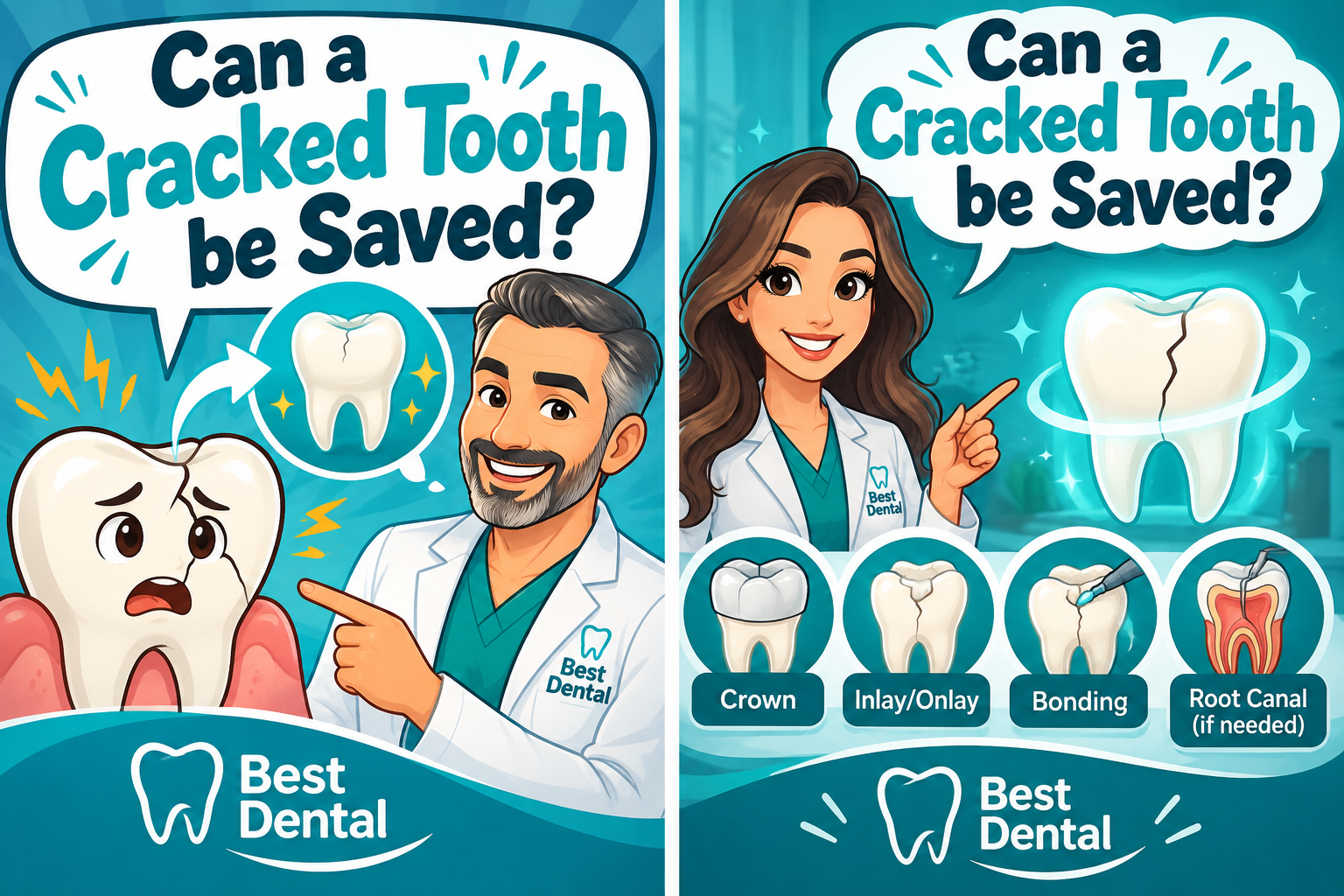
Crown Alone
A crown covers and binds the tooth, stopping the crack from flexing open every time you chew. For cracks that have not reached the pulp, this is often all that is needed. At Best Dental, a dental crown is $950. Many PPO insurance plans contribute toward crown treatment, and we verify your benefits before you commit to anything.
Root Canal and Crown
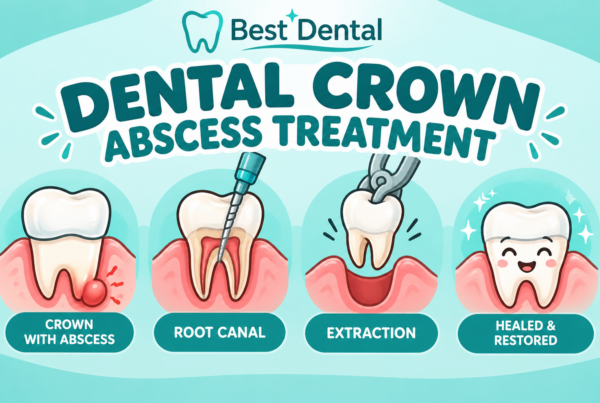
When the crack has reached the pulp, the nerve tissue becomes infected or inflamed. A root canal removes that tissue, cleans and seals the canals, and removes the source of pain. A crown then goes over the tooth to protect and seal it. At Best Dental, root canal treatment is $750 to $950 depending on the tooth, making a complete cracked-tooth case $1,700 to $1,900. This is significantly lower than most Houston area quotes for the same treatment.
Extraction and Replacement
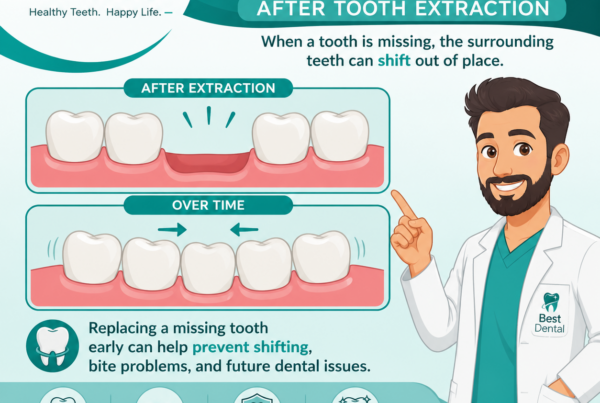
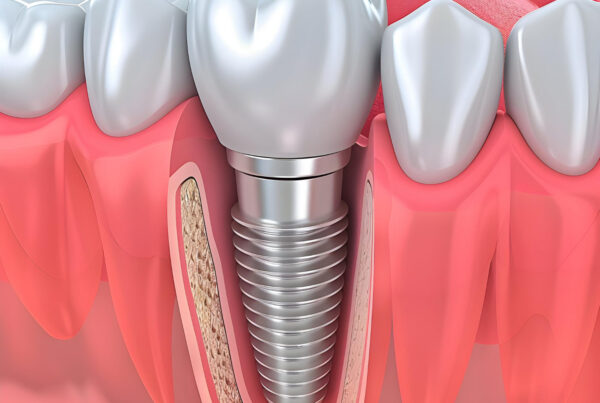
When a crack has split the tooth or gone too deep into the root to be reliably treated, extraction removes the tooth and ends the infection or pain. The tooth is then replaced with a dental implant, a dental bridge, or a partial denture. At Best Dental, a complete single-tooth implant is $1,995 — roughly half the price most Houston offices charge for the same procedure.
This is worth saying plainly: a cracked tooth that is treated early almost always costs less and ends with a better outcome. A tooth that needs only a crown today may need a root canal in a month if the crack deepens. A tooth that could be saved with a root canal and crown this week may need extraction in three months if an abscess develops. If you are in the Houston or Richmond area and are putting off a tooth you know is cracked, the worst financial decision is also the one that feels like doing nothing.
What to Do Right Now If Your Tooth Is Cracked
If you suspect a crack — especially if you have pain on biting and releasing — here is what to do before you can get to the dentist:
Avoid chewing on that side
Every bite flexes the crack open. Chewing on the cracked tooth speeds up how fast the crack deepens. Stick to soft food and keep pressure off it until your appointment.
Take over-the-counter pain relief
Ibuprofen (Advil, Motrin) reduces both pain and inflammation and tends to work better for dental pain than acetaminophen. Follow the package directions and do not apply aspirin directly to the gum — it can burn the tissue.
Rinse with warm salt water
A warm salt water rinse (one teaspoon of salt in eight ounces of warm water) helps keep the area clean and can reduce inflammation. Do this two to three times a day, especially after eating.
Call your dentist the same day
A cracked tooth is a dental urgency, not something to schedule three weeks out. Best Dental offers same-week appointments for patients in pain — call (281) 215-3065 or book online.
Watch for abscess symptoms
Swelling in the cheek or jaw, a pimple-like bump on the gum, fever, or severe throbbing pain are signs of a dental abscess — a bacterial infection that needs treatment the same day. If you experience any of these, do not wait for a scheduled appointment; call immediately or go to an emergency dentist.
Facial or jaw swelling, fever, difficulty swallowing or opening your mouth, or severe throbbing that does not respond to over-the-counter pain medicine are signs of a serious dental infection. These require emergency dental treatment the same day — not a wait-and-see approach.
What Makes a Cracked Tooth Worse Over Time
The physics of a cracked tooth are working against you. Every time you chew, the two sides of the crack are pushed apart and then spring back together. This cyclical movement — called crack propagation — slowly drives the crack deeper with each meal. A crack that sits at the ideal boundary today (treatable with a crown) may cross into root canal territory after a few weeks of chewing. Once a crack passes the level of the supporting bone, extraction becomes unavoidable.
Several factors accelerate crack progression: grinding and clenching (bruxism), which creates enormous forces on teeth during sleep; biting ice or hard candies; and existing large silver amalgam fillings, which expand and contract with temperature changes and slowly wedge teeth apart from the inside.
How to Prevent a Cracked Tooth
You cannot guarantee you will never crack a tooth, but these habits meaningfully lower your risk:
- Wear a custom nightguard if you grind your teeth. Over-the-counter guards reduce some pressure but do not distribute forces the way a custom guard does. Ask your dentist if you wake up with a sore jaw or worn enamel.
- Avoid chewing ice, hard candy, popcorn kernels, and hard bread crust. These are the most common culprits behind sudden cusp fractures.
- Never use your teeth to open packaging, cut tape, or hold objects. It sounds obvious until it is your tooth.
- Replace old silver (amalgam) fillings proactively when they become large. Large amalgam fillings are associated with a higher risk of tooth fracture as the tooth ages.
- Attend regular dental visits. Dentists can spot craze lines and early cusp cracks before they become painful, and treat them cheaply while the window is open.
Cracked Tooth Treatment Near Houston at Best Dental
Best Dental is in Richmond, TX — about 20 minutes from Southwest Houston via Grand Parkway 99. We treat cracked teeth at every stage, from a simple crown for a cracked cusp to a root canal for a tooth that has been painful for months. If the tooth cannot be saved, we handle the extraction and replacement in-house, including dental implants at $1,995 — a price that covers the post, abutment, and crown, and that is $1,500 to $4,500 less than most Houston area quotes.
If you have a tooth that hurts when you bite, call us the same day. Same-week appointments are available, and we will tell you honestly at the consultation whether the tooth can be saved and exactly what it will cost before any treatment starts.
Cracked Tooth? Don't Wait.
The sooner you come in, the better the odds of saving the tooth — and the lower the cost. Best Dental is about 20 minutes from Southwest Houston. Same-week appointments are available.