Full Mouth Reconstruction
Cost in Richmond, TX
Schedule a Consultation →
In This Article
Full mouth reconstruction is the most significant dental investment most patients will ever make — and the most frustrating to research, because almost no practice in Richmond, TX publishes real pricing. The standard answer is "it depends on your case, call for a consultation" — which is true, but not useful when you're trying to understand whether this is even in your range before you book anything.
This guide takes a different approach. Because Best Dental publishes its fees for every individual procedure, we can show you exactly how reconstruction costs are built — procedure by procedure, scenario by scenario — so you can develop a realistic estimate before your first appointment. For a full overview of what the treatment involves clinically, see our full mouth reconstruction service page.
What Full Mouth Reconstruction Actually Involves
Full mouth reconstruction isn't a single procedure — it's a coordinated treatment plan that addresses the teeth, gums, bite, and bone across the entire mouth. The specific procedures vary dramatically by patient, which is why cost ranges so widely. What determines the price is which procedures your mouth actually needs.
Common components include:
- Foundation work: Periodontal treatment (scaling and root planing), tooth extractions, and bone grafting to prepare the mouth for restorations
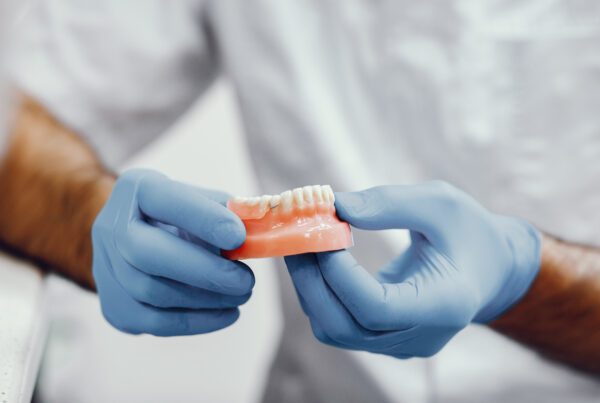
- Tooth replacement: Dental implants, implant-supported dentures, traditional dentures, or fixed bridges to replace missing teeth
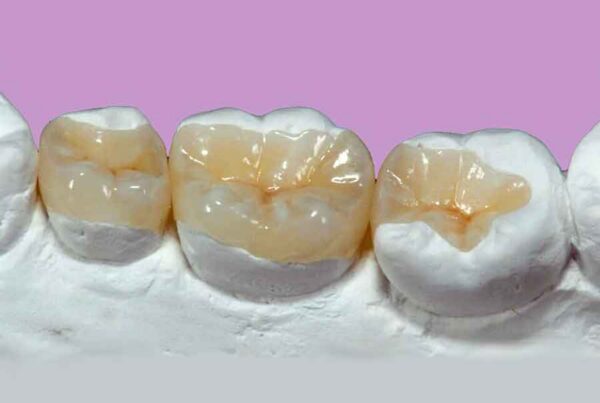
- Tooth restoration: Crowns to protect and rebuild damaged or root-canal-treated teeth, and large composite fillings for remaining decay
- Bite correction: Occlusal adjustment and sometimes orthodontic alignment if bite issues are contributing to wear or damage
- Cosmetic refinement: Veneers or bonding for front teeth after structural work is complete, if desired
Not every patient needs all of these. A patient missing most teeth with significant bone loss needs a very different treatment plan than one with all teeth present but severely damaged by grinding. The first step at Best Dental is a comprehensive exam — X-rays, periodontal charting, bite analysis — that maps exactly what your mouth needs before any cost discussion happens.
Per-Procedure Cost at Best Dental
Every reconstruction is built from individual procedures. Here are Best Dental's published fees for the procedures that most commonly appear in reconstruction treatment plans — the building blocks of your total cost.
Procedure |
Best Dental Fee |
Richmond Area Range |
|---|---|---|
Tooth extraction (all types, incl. impacted) |
$250/tooth |
$200–$600 |
Bone graft |
$500 |
$400–$1,200 |
Dental implant (post + abutment + crown) |
$1,995/tooth |
$2,500–$5,000 |
Implant-supported denture (per arch) |
$5,000/arch |
$4,000–$12,000+ |
Full denture (per arch) |
$1,250/arch |
$1,400–$3,500 |
Porcelain crown |
$950/tooth |
$1,000–$1,800 |
Build-up (before crown on root-canal tooth) |
$199 |
$200–$400 |
Root canal — molar |
$950 |
$1,000–$2,000 |
Root canal — premolar |
$850 |
$900–$1,600 |
Root canal — front tooth |
$750 |
$800–$1,400 |
Dental bridge (3-unit) |
$2,850 |
$2,500–$5,000 |
Composite filling (1–3 surfaces) |
$125–$175 |
$150–$350 |
Deep cleaning (scaling & root planing, per quad) |
$250/quad |
$200–$450 |
Porcelain veneer |
$999/tooth |
$1,200–$2,500 |
IV sedation (if needed for extensive treatment) |
$500/session |
$500–$1,000+ |
See the full published pricing page for every procedure Best Dental offers. These fees are the same for all patients — no hidden charges, no fee adjustments after treatment begins.
Total Cost by Treatment Approach
Full mouth reconstruction can be accomplished through several different approaches depending on how many teeth are missing, what condition remaining teeth are in, and the patient's goals and budget. Here are three realistic scenarios using Best Dental's published fees — showing how the procedure components add up to a total.
Implant-Based Reconstruction
Implant-Supported Dentures
Crown, Bridge & Root Canal Reconstruction
Dental Implants at Best Dental — $1,995 Complete
Full implant (post + abutment + crown) at $1,995 — among the lowest published implant pricing in Fort Bend County. See candidacy criteria, the procedure, and what's included.
What Drives the Final Price
Two patients walking in for "full mouth reconstruction" can have total costs that differ by $15,000 or more. Here are the variables that account for that range.
Number of Teeth Involved
The single biggest cost driver. A reconstruction addressing 8 teeth costs roughly half what a 16-tooth plan costs. The exam determines which teeth can be saved, which need root canals and crowns, and which need extraction and replacement.
Bone Loss & Graft Requirements
Significant bone loss — common in patients with long-term periodontal disease or teeth missing for years — requires bone grafting before implants can be placed. Each graft site adds $500 at Best Dental. Severe bone loss may require multiple graft sites across an arch.
Implant vs. Denture vs. Bridge
The replacement approach for missing teeth is the most significant cost fork. Individual implants ($1,995 each) provide the best long-term outcome but highest per-tooth cost. Implant-supported dentures ($5,000/arch) are more economical for full-arch replacement. Traditional dentures ($1,250/arch) are the lowest cost option.
How Many Teeth Can Be Saved
A tooth that can be treated with a root canal and crown ($750–$1,148 all-in at Best Dental) costs significantly less than extracting and replacing it with an implant ($1,995+). Preserving salvageable teeth is almost always the more economical path — when the tooth structure allows it.
Gum Disease Severity
Active periodontal disease must be treated before restorations are placed. Mild cases need standard cleanings; moderate-to-severe disease requires deep cleaning (scaling and root planing, $250/quadrant at Best Dental). Untreated gum disease will undermine even the best restorative work.
Sedation
For patients with dental anxiety or extensive single-session work, IV sedation is available at Best Dental for $500 per session. Many reconstruction cases span multiple appointments, each potentially requiring sedation for severely anxious patients. Sedation is optional and available, not mandatory.
Phasing Treatment to Manage Cost
One of the most effective ways to make full mouth reconstruction financially manageable is to phase the treatment — completing it in stages over 12–36 months rather than all at once. Best Dental coordinates phased plans specifically around your budget, insurance benefit cycle, and clinical priorities.
Phase 1 — Foundation (Months 1–3)
Extractions of non-restorable teeth, periodontal treatment, emergency pain relief. This phase addresses anything causing active infection or pain. It's clinically necessary before restorations begin and often partially covered by insurance as basic or major services. Cost varies by severity — typically $1,000–$5,000 for this phase alone.
Phase 2 — Structural Restoration (Months 3–12)
Root canals, build-ups, and crown placement on salvageable teeth. Bone grafting at implant sites (if applicable) — grafts need 3–6 months to heal before implants are placed. This phase restores chewing function and addresses the teeth with the most structural compromise. Often the most expensive phase, spanning $5,000–$15,000+ depending on scope.
Phase 3 — Tooth Replacement (Months 12–24)
Implant placement (after bone graft healing if applicable), bridge placement, or denture fitting. This phase addresses gaps left by extracted teeth. Implants are placed and allowed to integrate for 3–6 months before the crown is attached. This phase is the most commonly phased for budget reasons — implants can be planned in sequence over multiple benefit years.
Phase 4 — Cosmetic Refinement (Optional)
Veneers on front teeth, final shade matching, and bite adjustment. Many patients are satisfied with the result after Phase 3 and don't proceed to cosmetic refinement. For patients who want front-tooth aesthetics addressed beyond what crowns provide, veneers ($999/tooth) are added here.
What Insurance Covers
Full mouth reconstruction is not covered as a single procedure — but many of its component procedures are covered individually under most PPO dental plans. Here's how insurance typically applies:
- Extractions: Covered at 50–80% under basic or major services after deductible. Simple extractions typically fall under basic coverage; surgical and impacted extractions under major.
- Bone grafts: Coverage varies significantly by plan — some cover bone grafts at 50% when required for implant preparation; others exclude them as not medically necessary. Verify before treatment.
- Root canals: Covered at 50% under major services on most PPO plans. Root canals are one of the most consistently covered procedures in reconstruction plans.
- Crowns: Covered at 50% under major services. Most plans require the tooth to meet clinical criteria (structural compromise, existing restoration failure) — cosmetic crowns are typically excluded.
- Bridges: Covered at 50% under major services. Watch for missing tooth clauses — some plans exclude bridge coverage for teeth missing before the policy's effective date.
- Dental implants: Coverage varies by plan. Some PPO plans include implant coverage at 50%; many exclude implants entirely or impose waiting periods of 12–24 months. The crown on an implant is often covered even when the implant itself is not.
- Dentures: Covered at 50% under major services on most plans. Replacement dentures are typically only covered after 5–10 years.
- Periodontal treatment: Covered at 50–80% depending on plan and whether it's classified as basic or major. Required documentation of disease severity.
For a patient with a $2,000 annual maximum, insurance might contribute $800–$1,200 per year toward a multi-year reconstruction plan — meaningful savings when applied across a phased treatment schedule. Best Dental handles all benefits verification, pre-authorizations, and claim submissions. Visit our dental insurance page for the full list of accepted plans.
Financing Options at Best Dental
Given the investment involved in full mouth reconstruction, virtually all patients use some combination of insurance and financing. Best Dental offers three financing pathways — and our Dental Discount Plan for uninsured patients reduces the fee on every procedure before financing is even applied.
In-House 0% Financing
No credit check. Down payment from $500. Balance divided into monthly payments across your treatment period. Available to all patients.
Cherry Financing
Extended terms up to 36+ months for larger balances. Soft credit pull for pre-qualification. Useful for reconstruction cases exceeding $10,000.
CareCredit
Dedicated healthcare financing with 12–24 month promotional 0% periods. Useful if you already have an existing CareCredit account.
Dental Discount Plan for uninsured patients
If you don't have dental insurance, Best Dental's Dental Discount Plan ($199/year) reduces fees on every procedure — from cleanings to crowns to implants. For a reconstruction plan totaling $15,000–$30,000, the membership savings can easily reach several thousand dollars. The plan has no annual maximum, no waiting periods, and no claim denials — you pay the reduced member rate at each appointment.
For patients with significant reconstruction needs, combining the Discount Plan with in-house 0% financing gives you discounted fees paid out over time at no interest — the most cost-effective combination available for uninsured patients in Richmond, TX.
Know your real cost before you commit to anything.
Best Dental provides a complete, itemized treatment plan with published fees after your comprehensive exam — before any treatment begins. No estimates, no "call for pricing." Book a consultation and leave with a clear plan and a clear number.
Book Your Consultation →Frequently Asked Questions
Full Mouth Reconstruction — Richmond, TX
Published fees. Itemized treatment plans. 0% financing with no credit check. Best Dental in Richmond, TX serves Fort Bend County and the greater Houston area.
Best Dental · 22377 Bellaire Blvd, Ste 400, Richmond, TX 77407